
Key Takeaways
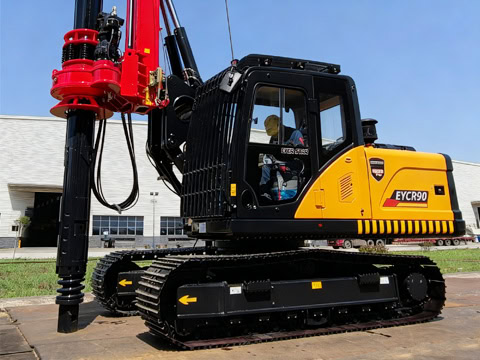
- Modern rotary drilling rigs are engineered for deep foundation work, supporting heavy structures with advanced hydraulic systems.
- Everstar Machinery specializes in rotary drilling rig tools for large-scale applications.
- Advances in hydraulic systems, automation, and monitoring support accurate pile positioning, continuous operation, and high performance.
- Understanding soil behavior, pile length, and access constraints helps determine which equipment scale makes the most sense.
- Piling rigs offer excellent stability, lower fuel consumption, and simplified logistics for many construction projects worldwide.
A piling rig is a core foundation equipment used to install piles that transfer structural loads into the ground. The construction industry rely on piling with massive drilling rigs designed for large-scale pile foundations.
Large drilling rigs are engineered for deep foundation work and heavy structures. Such drilling machines require complex drilling systems, extensive excavation, and significant site preparation. They are commonly used where deep penetration, long pile lengths, and high load capacity are required.
As foundation practices evolve, modern construction increasingly follows recognized engineering and safety standards and updated methods. Where piles interact with concrete elements, guidance from organizations such as the American Concrete Institute (ACI) helps inform best practices for concrete quality and structural durability.
At the same time, advances in hydraulic systems and machine design are reshaping pile-driving workflows, producing compact rigs capable of delivering reliable, controlled performance.
Evolution of Piling Drilling Rigs and Methods
Piling rigs have evolved alongside construction demands, moving from basic mechanical tools to highly engineered systems. Early pile installation relied heavily on manual force and gravity, while modern piling rigs are designed for precision, safety, and efficiency.
Historically, some pile installation methods relied on diesel systems or vibratory hammers mounted on a crane or excavator. These approaches were commonly used for driving steel sheet piles, but they offered limited control over vertical alignment, vibration, and penetration depth. Excessive vibration and unpredictable upward movement during extraction were frequent challenges when operating an older machine.
Today, the industry clearly distinguishes between large foundation drilling rigs for maximum depths, complex pile foundations, and compact piling rigs for surface-level work. This distinction allows contractors to select foundation equipment that matches soil behavior, pile length, and project scope, rather than relying on oversized machines.
From Basic Drop Hammers to Modern Hydraulic Rigs
Early pile-driving hammers were suspended from cranes, relying on gravity to drive wood, steel, or timber piles into the ground. These systems offered limited control, uneven penetration, and inconsistent results, especially in variable soil and ground conditions.
Modern piling rigs use advanced hydraulic systems to deliver controlled energy through a hydraulic hammer. Regulated crowd force ensures steady penetration while minimizing vibration and structural stress. Many rigs feature a self-erecting leader, eliminating the need for crane-assisted setup and improving jobsite efficiency.
A carefully engineered machine layout with a low center of gravity improves balance and stability during pile driving operations. Some configurations may include compressed air systems for auxiliary functions, depending on site requirements.
Beyond the large-scale pile driver applications where Everstar excels, the company also applies modern hydraulic rigs principal on a compact scale. Its pile driver systems combine optimised operating weight, engineered stability with controlled hammer output for moderate structural applications, driving piles typically between 3 and 6 meters for small foundations and light structures.
In addition to deep installations requiring heavy-duty rigs, Everstar pile drivers machines also prioritize mobility and productivity, installing up to 200–300 piles per day under optimal conditions. Free operator training is provided, and the equipment is intended for use on level ground only.
Variety of Piling Methods on Today’s Rigs
Today’s piling rigs support several installation approaches depending on project requirements and equipment capability.
Bored piles involve drilling holes that are later filled with concrete. This approach requires large foundation drilling rigs, rotary tools, drilling fluid, and extensive excavation, making it unsuitable for compact piling rigs.
Deep foundation comparison methods, such as Flight Auger (CFA) systems, use continuous auger drilling with pumped concrete and are exclusively used with heavy rotary drilling rigs.
Screw piles are installed through rotational drilling and extraction methods using specialized equipment.
Thus, Everstar’s large rotary drilling rigs are better suited for deep drilling, displacement drilling, and complex foundation work.
Key Innovations in Modern Piling Rigs
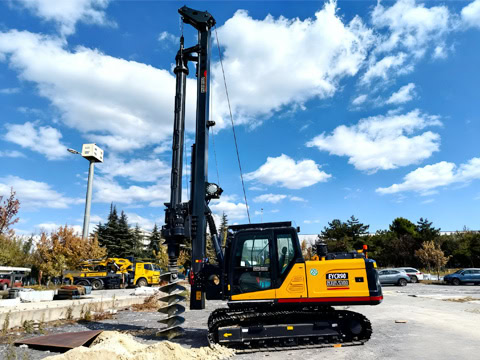
Innovation in piling rigs today focuses on control, efficiency, and operator safety rather than sheer size. Both large and compact machines benefit from targeted technologies that improve performance and reliability.
Automation, Positioning, and Monitoring
Modern piling rigs incorporate automation and monitoring systems that improve safety and accuracy.
Load and penetration monitoring systems measure resistance and depth in real time, helping operators adapt to changing soil conditions and maintain vertical alignment. These systems reduce overdriving and improve installation consistency.
Operator assistance systems regulate hammer output, stabilize machine movement, and reduce vibration. Together, these features improve control, productivity, and overall rotary drilling operations.
Energy Efficiency and Emission Reduction
Advances in hydraulic systems and engine design have significantly reduced fuel consumption while maintaining high performance. Optimized hydraulic flow supports smooth, continuous operation and minimizes energy loss.
For compact piling rigs, efficient fuel use reduces operating costs, extends service life, and lowers emissions. Reduced fuel demand also supports construction projects in sensitive or populated areas where environmental impact matters.
Matching Rigs to Foundation Projects
Not all projects require the same scale of equipment. Choosing the right piling rig depends on pile length, soil behavior and soil type, drilling depth, and site access.
Large drilling rigs are required for deep construction involving ground improvement, full displacement systems, and challenging ground such as hard rock. They deliver high load capacity but require significant space, transport planning, and support equipment.
Large Foundation Rigs
Large rigs are engineered for deep foundations supporting major structures, including bridges, tunnels, and office buildings. They handle long piles, deep drilling, and complex soil profiles, but their size, weight, and logistical demands are substantial.
Planning Mobilization, Access, and Support Equipment
Rig size has a direct impact on mobilization and jobsite logistics. Large rigs often require heavy transport logistics, crane support, and extensive setup before drilling begins.
Factors such as rig weight, frame length, center of gravity, and load distribution determine whether a low-bed, modular, or extendable deck is best. Selecting the right trailer is critical for safely transporting essential components such as towers, rotary systems, mud pumps, and compressed air units.
To ensure secure mounting, use cranes, jacks, and locking systems. Well-designed rigging provides stability during transit and protects delicate drilling equipment from damage.
FAQs – Foundation Piling Rig
What types of foundation work require a full-size piling rig?
Full-size piling rigs are required for deep foundation work involving extensive drilling, concrete placement, and ground improvement. These projects include bridges, large infrastructure, and multi-story construction where piles extend deep into the ground and require high load capacity and complex drilling systems.
How do modern piling rigs improve safety compared to older equipment?
Modern piling rigs improve safety through better machine stability, controlled hydraulic systems, reduced vibration, and real-time monitoring. Enclosed operator cabins, regulated hammer output, and positioning assistance reduce manual handling and improve overall jobsite safety.
Can small pile drivers replace large piling rigs on light construction projects?
Yes. For solar installations, fencing, guardrails, and light structures, for example, compact pile drivers can effectively replace large rigs. These projects involve shorter piles and limited drilling depth, making smaller machines more efficient, easier to transport, and more cost-effective.
Conclusion: Choosing the Right Level of Piling Innovation for Each Project
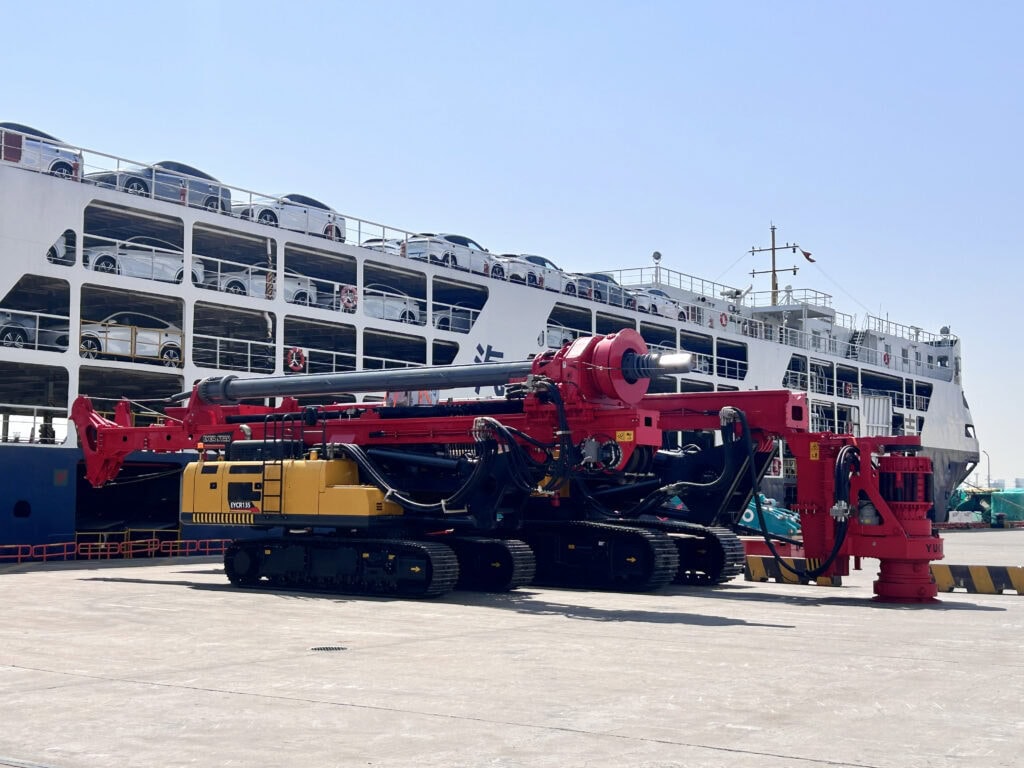
In summary, selecting the right piling solution starts with understanding the relationship between foundation depth, project scale, and equipment capability. Large piling rigs are essential for deep and complex construction that demands extensive drilling and high load capacity.
Rotary drilling rigs are the backbone of modern deep foundation engineering. Their advanced technology ensures stability, safety, and efficiency for the most demanding construction projects.
Everstar Machinery’s rotary drilling rigs are purpose-built for large-scale projects, offering performance and efficiency in one piling rig equipment.
Speak with Everstar About Piling Rigs Solutions for Your Foundations
Choosing the right rotary drilling rig depends on soil conditions, pile depth, and structural load requirements, Everstar Machinery offers engineered solutions designed for reliability and efficiency.
For more specifications, please contact Everstar’s professional consultants today to determine which piling rig best suits your construction needs.

