
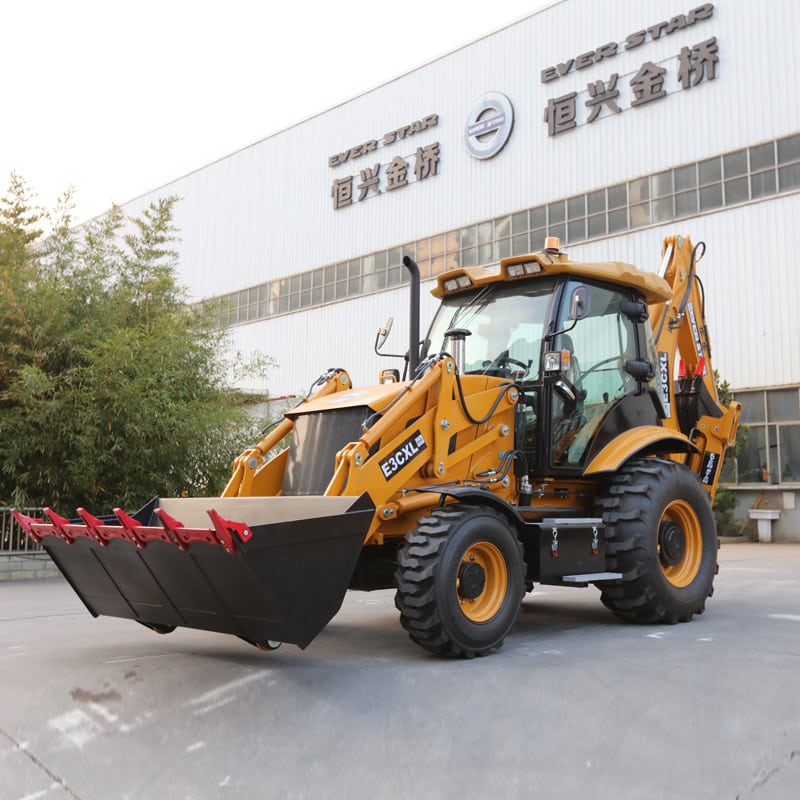
Key Takeaways
- EVERSTAR’s E3CXL combines an 85 kW engine, 7300–8000 kg operating weight, 1 m³ loader bucket, and 36 kN digging force for light to medium construction and utility work.
- The E4CX weighs 9500 kg and uses a 1.2 m³ loader bucket, with 46 kN digging force for compacted ground and higher-volume loading.
- EVERSTAR’s E3CXL and E4CX are versatile machines designed to perform tasks that would otherwise require separate digging and loading equipment.
This backhoe loader size guide helps you match bucket capacity, digging force, machine weight, and dimensions to your actual job.
A residential drainage project and a utility trench through compacted fill may require a similar digging depth, yet place very different demands on the equipment. Soil resistance, material volume, access, and the amount of digging performed each day all influence the appropriate backhoe size.
This guide compares specifications, project suitability, ground conditions, and site-clearance limits.
Project Type Sizing: What Each Model Is Built For?
The first distinction between EVERSTAR’s two backhoe models is the type of work expected from the machine. Wheel loaders are well suited to moving material, but they do not provide the rear digging capability of a backhoe loader.
With a front loader and rear excavator assembly in one machine, a backhoe can switch between loading and digging without bringing another piece of equipment to the site.
E3CXL Sizing Profile: Combined Dig and Load on Light to Medium Construction Projects
The E3CXL backhoe loader uses an 85 kW engine and has an operating weight of 7300–8000 kg. Its 1 m³ loader bucket is paired with 36 kN of digging force and a telescopic digging depth of 5200 mm.
Those specifications make this backhoe a practical fit for residential drainage, utility trenching to 5000 mm, landscaping, irrigation systems, light construction support, and smaller commercial earthmoving projects.
The 4WD drivetrain and 40 km/h road speed also suit contractors working across multiple sites who want to move the loader without arranging transport for every short relocation.
Mini backhoes below 4,000 kg can handle light landscaping and similar work, while a mini excavator may be preferable where digging is the primary task and loading is not required.
The E3CXL fills a different role: it provides construction-grade digging depth together with a front loader bucket for material handling.
E4CX Sizing Profile: Digging Depth for Demanding Ground and Larger Projects

The E4CX backhoe loader has a 75 kW engine, 9500 kg operating weight, 1.2 m³ loader bucket, 46 kN digging force, and a telescopic digging depth of 5300 mm.
Hydraulic performance and arm geometry allow the E4CX to deliver greater digging force, which becomes important in compacted soil and rocky terrain.
This backhoe is better suited to deeper utility connections on commercial construction projects. The larger loader bucket also reduces loading cycles where more material must be moved into trucks during the working day.
The added rear counterbalance also supports stability during digging operations. Where the excavator arm is being used near its working reach, digging depth, lift height, ground resistance, and machine stability should be considered together.
When Under-Sizing and Over-Sizing Both Cost More Than the Right Machine
Choosing a backhoe based only on initial budget without planning the specific needs of your project for the long term can create expenses elsewhere.
A machine that is too small may spend more time completing each cycle, while an oversized loader can add fuel, specialized transport logistics, and equipment and site preparation costs that the project never recovers.
Backhoe loaders typically provide horsepower from 68 to over 124 HP, so choosing more power than the workload needs can reduce cost effectiveness. These factors affect efficiency and cost control, and bucket choice brings its own important factors.
Under-Sizing: What Happens When the Machine Cannot Meet the Ground Conditions
Putting an E3CXL backhoe loader into consistently compacted ground that requires the E4CX’s 46 kN digging force can slow trenching and increase the amount of time spent on each digging cycle.
The issue becomes more noticeable when heavy materials are involved. Smaller backhoe loader buckets may require additional cycles, while working close to the machine’s digging limit for long periods places greater demand on the drivetrain.
Over-Sizing: Higher Daily Cost Without a Corresponding Output Gain on Light Projects
The reverse also applies. An E4CX backhoe loader used mainly for residential drainage, small utility connections, or light construction support may spend much of its time below its available capacity.
Loose soil and other light materials do not necessarily move faster simply because the loader bucket is larger. If a 1 m³ bucket already matches the required production rate, moving to a 1.2 m³ bucket and more weight provides little benefit.
Also, transport requirements and operating costs have therefore been weighed against the actual output expected from the backhoe.
Site Access, Ground Bearing, and Mobility: Size Variables Beyond Backhoe Loader Buckets and Engine Power
Backhoe loader buckets and digging force describe what the equipment can do once it is in position. They do not determine whether the machine can reach that position safely.
Access width, turning radius, ground bearing capacity, and room for attachments or outriggers can rule out an otherwise suitable backhoe before work begins.
Site Access Width and Turning Radius: Machine Dimensions That Affect Project Logistics
The E3CXL measures 6150 x 2350 mm and has a 6580 mm turning radius. Its compact size can be useful on residential and urban sites, where gates, structures, stored material, and existing utilities limit movement.
The E4CX measures 6500 x 2500 mm but has a tighter 4200 mm turning radius. Despite being the larger backhoe, it can therefore maneuver effectively in certain tight spaces, particularly when positioning for rear digging.
A physically larger loader can sometimes turn within less space, while a smaller machine may still need more room to change direction.
Ground Bearing Capacity and Soft Site Requirements by Model
At 7300–8000 kg operating weight, the E3CXL is better suited to many residential and light commercial ground conditions. The E4CX reaches 9500 kg, so soft soil, recently disturbed ground, and residential lawns deserve closer assessment before deployment.
Both backhoe models require stable, level ground for outrigger deployment before rear excavation begins. The same assessment becomes more important when attachments change the working load or when the backhoe is handling material away from the machine’s centerline.
Pallet forks and other attachments can expand lifting capacity and make the loader useful for more than excavation. On uncertain ground, selecting a lower backhoe size can reduce the risk of outrigger settlement.
FAQs — Backhoe Loader
What project types are best suited to the EVERSTAR E3CXL vs. E4CX backhoe loader?
The E3CXL backhoe loader is suited to residential drainage, landscaping, utility trenching, and light to medium construction where lower operating weight and mobility are useful. The E4CX is intended for compacted ground, deeper utility work, rocky terrain, and higher-volume loading.
What types of ground conditions determine which backhoe loader size is practical?
At 9500 kg, the E4CX needs a bearing check before it goes onto soft, recently disturbed, or lawn sites; the E3CXL’s 7300-8000 kg usually doesn’t. Turning radius tells a different story: despite measuring 6500 x 2500 mm, the E4CX turns inside 4200 mm, tighter than the E3CXL’s 6580 mm.
Contact EVERSTAR for Backhoe Loader Size Selection Matched to Your Project
Contact us today, our team can provide model dimensions and other sizing information across its wide assortment of construction equipment, helping you choose a backhoe that fits your work.

