
Key Takeaways
- Mini skid steer loader models are specifically designed to access confined spaces that exclude standard compact track loaders, easily passing through narrow gates and corridors.
- Machine weight and width, rather than raw power or rated capacity, are the key factors on restricted job sites.
- These compact loaders offer consistent value in landscaping and utility tasks, replacing manual labor where larger equipment can’t reach.
- A wide range of attachments, like buckets, augers, and forks, provides versatility for grading, digging, and material handling.
- Simpler logistics, faster setup, and single-operator control make mini skid steers the efficient choice for confined projects.
When a project site is hemmed in by fences, walls, or narrow access points, the machine that fits through the gate is the one that gets the work done.
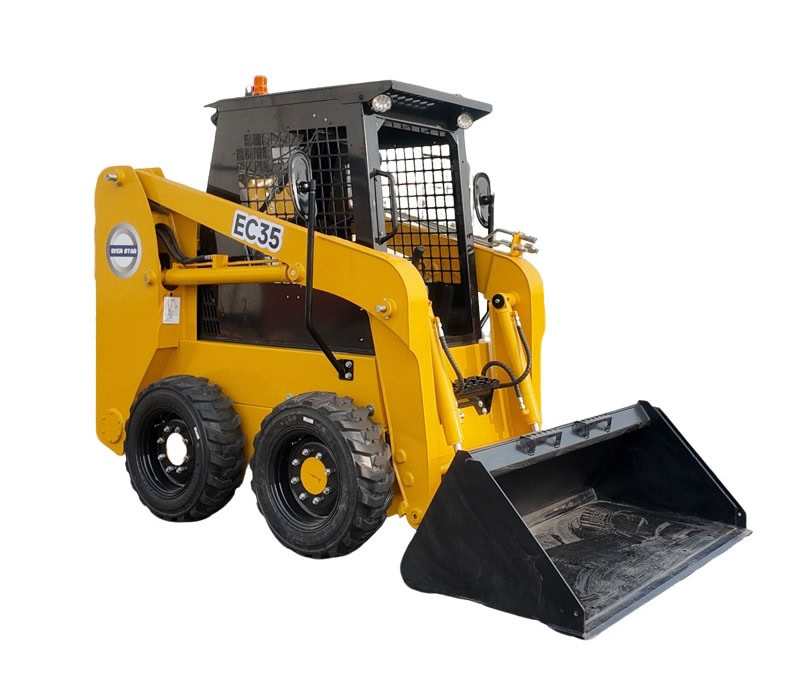
A mini skid steer loader is purpose-designed for these environments: compact enough to pass through standard residential gate openings and navigate tight spaces, yet powerful enough to handle grading, clearing, and material movement tasks that would otherwise require a full manual crew.
For contractors operating across landscaping, utility, and residential construction work in confined spaces, these compact track loaders close the gap between what the job demands and what the site allows.
Why Compact Dimensions Are the Primary Performance Variable in Confined Work
On open construction sites, machine selection centers on rated operating capacity, lift height, and engine power. On confined job sites, those specifications become secondary.
What determines whether a machine can perform is whether it can get to the work area at all. Track loader width, overall weight, and turning radius decide operational viability before any other factor comes into account. Mini skid steer models are designed around this reality.
Their dimensions are the performance feature that makes them suitable for environments that exclude standard compact track loaders entirely.
Narrow Pathways and Gate Access: Movement Through Limited Entry Points
Standard residential gates typically measure between 36 and 48 inches wide. Most compact track loaders designed for open-site construction cannot clear these openings.
Mini skid steer models are built to pass through them. Their reduced width and tight turning radius allow the machine to maneuver through gate entries, traverse narrow corridors, and reposition between work areas without requiring structural modification to site access points.
For landscaping contractors and utility crews, this access capability determines whether a machine can be deployed at all.
Indoor and Backyard Access: Operating in Low-Clearance and Residential Environments
Low overhead clearance in covered patios, garden structures, and garage access points limits machine height. Soft lawn surfaces and finished concrete are sensitive to heavy tracks and high ground pressure.
Mini skid steer tracks distribute weight across a wider footprint than wheels alone, reducing surface damage on soft ground.
Their compact turning geometry allows the operator to work close to fixed structures without contact, making them appropriate for residential environments where larger machines would cause unacceptable ground or property disturbance.
Landscaping and Utility Work: The Primary Job Categories for Mini Skid Steer Loaders
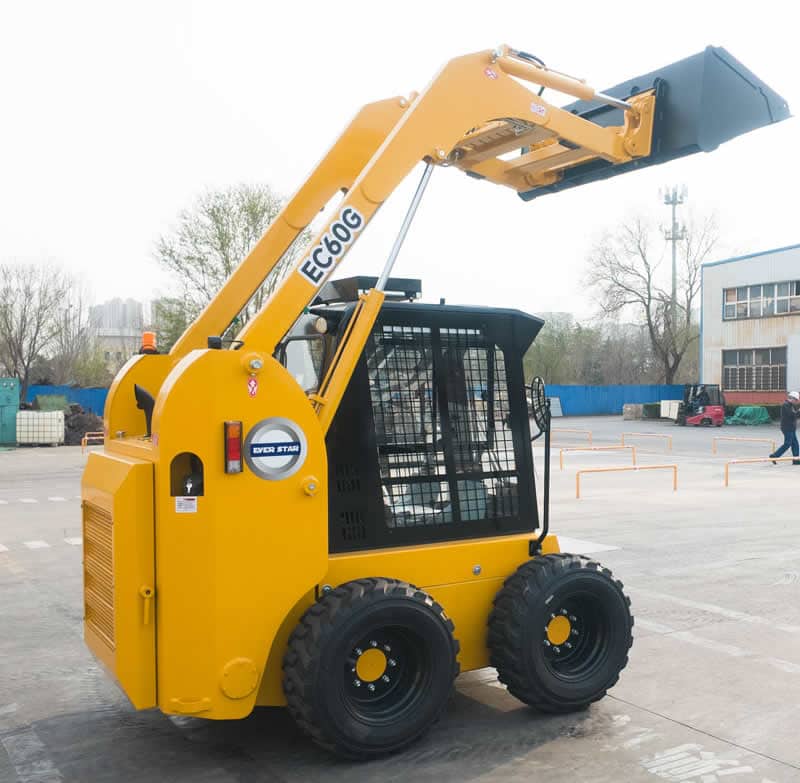
Two job categories account for the majority of mini skid steer loader deployments: landscaping support and utility maintenance work, both of which share a common characteristic.
Tasks that are too large for efficient manual execution but confined to spaces too small for standard equipment.
These compact track loaders occupy the sweet spot between those two constraints, delivering machine-level output in environments where machine access was previously impractical.
Landscaping Support: Grading, Clearing, and Material Movement in Tight Sites
Landscaping tasks in confined residential and commercial outdoor spaces cover a consistent range: grading uneven ground, clearing debris and rocks, moving soil and mulch, and digging for drainage or planting.
Executed manually, these tasks are slow and expensive in labor hours. Executed with a full-size track loader, they often cannot be performed at all because the machine cannot reach the work area.
Mini skid steer models with bucket attachments handle grading and material movement tasks efficiently within these constraints.
Additional attachments, including augers for digging post holes and grapple buckets for clearing debris, extend versatility without requiring a larger piece of equipment.
Utility Work Support: Trench Access, Patching, and Tight-Site Service Operations
Utility installation and maintenance work in urban and residential corridors creates confined access challenges that mirror those of landscaping.
Trench spoil must be removed and stockpiled in areas where there is no room for large equipment. Surface patching material, including concrete or aggregate, must be carried and placed in sections of roadway or pathway too narrow for a standard loader to enter.
Mini skid steers are also capable of performing heavy duty tasks and carrying heavy loads in these confined spaces. Also, this model addresses all of these tasks using standard bucket and plate compactor attachments.
Mini track loaders generally offer superior stability on sloping or uneven terrain due to their lower center of gravity and wider footprint, compared to mini skid steers, which may be more prone to tipping.
Compact Machine Efficiency: Output, Logistics, and Operator Control
Access is the first consideration on confined job sites, while operational efficiency is the second, with the speed of mini skid steer loaders allowing for quick task completion and enhanced productivity.
Mini skid steer models are designed to perform as self-sufficient, single-operator machines that reduce the logistical complexity of confined-site construction and maintenance work.
Additionally, mini skid steers generally have lower fuel consumption and maintenance costs than full-sized loaders, making them ideal for smaller businesses or residential projects.
Simpler Jobsite Logistics: Transport, Setup, and Repositioning
Mini skid steer loader weight and overall dimensions mean that most models can be transported on a standard trailer without requiring specialized heavy-haul equipment.
Diesel, gas, and electric-powered models are available to match fuel supply options and emissions requirements at different job sites.
Lighter machine weight reduces the overhead associated with getting equipment on and off site and simplifies on-site repositioning between task areas within a confined work zone.
For contractors running multiple small projects across residential and commercial sites, this transport simplicity can save meaningful time across a working week and help account for tighter project schedules.
FAQs — Mini Skid Steer Loader
What are the key operational differences between a compact skid loader and a standard skid steer?
Compact skid loaders are smaller and designed for tight spaces, offering better maneuverability and access through narrow gates and corridors. Mini skid steer loaders are equipped with four wheels or tires, which enable maneuverability on hard surfaces. Common mini skid steer attachments include soil conditioners, trenchers, augers, backhoes, and hydraulic breakers.
What attachments are most useful for landscaping and utility work on a mini skid steer loader?
Common attachments include buckets for grading and material movement, augers for digging post holes, forks for lifting, and grapples for debris clearing. Plate compactors assist in surface patching, while trenchers and hydraulic breakers handle specialized utility tasks. This versatility allows mini skid steers to perform a wide range of landscaping and utility jobs efficiently within confined spaces.
Contact EVERSTAR to Find the Right Mini Skid Steer Loader for Your Project

Consult us on our website to learn about the mini skid steer loader models and attachment configurations suited to specific site access constraints, task types, and workload requirements.
Contact EVERSTAR directly to discuss your project plan requirements and get model-specific recommendations.

