
Planning Outdoor Jobs with Rough Terrain Scissor Lifts
Key Takeaways
- A rough terrain scissor lift is engineered for outdoor projects where uneven ground, mud, sand, and slope demands challenge standard equipment.
- Proper trailer selection, ramp setup, and weight distribution protect the machine and improve jobsite productivity.
- Smart staging improves stability, supports crews, and maximizes platform capacity on rough terrain.
- Electric and dual fuel rough terrain scissor models reduce maintenance, improve power efficiency, and support long outdoor shifts.
- Coordinated workflow between lift operators and heavy equipment increases safety and overall job performance.
Outdoor construction environments rarely provide level concrete pads. Instead, contractors face uneven surfaces, soft ground conditions, mud, sand, debris, slopes, and constant terrain variation. That is where a rough terrain scissor lift becomes essential.
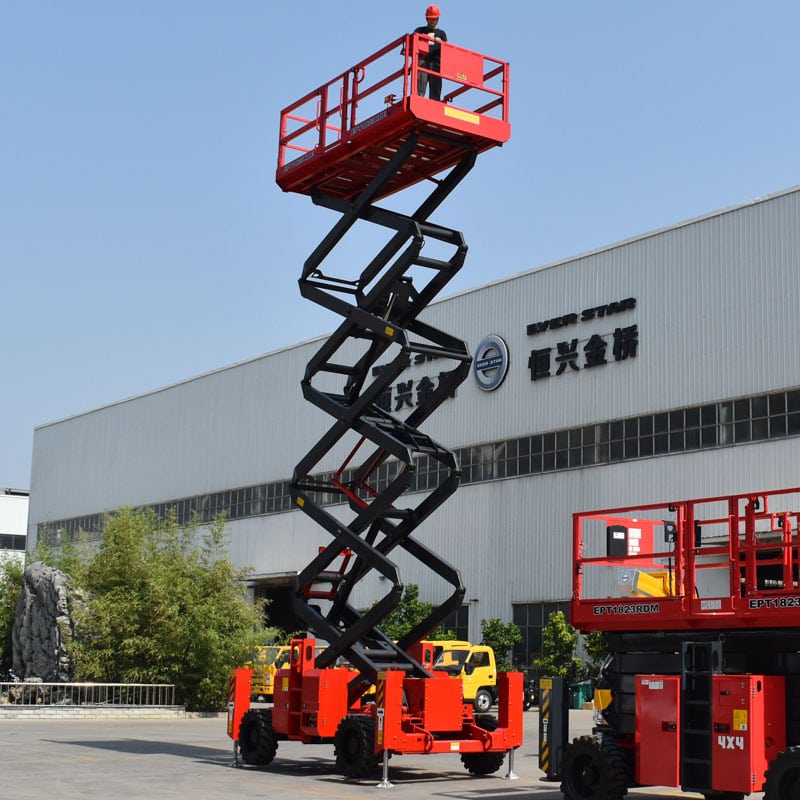
EVERSTAR offers rough terrain scissor lift models delivering platform height options from 18 ft to 42 ft, strong platform capacity ratings from 365 kg to 680 kg, and gradeability up to 25–40°. Designed specifically for rough terrain demands, each terrain scissor lift is equipped with four wheel drive, positive traction control, heavy duty tires, and reinforced chassis systems to maintain stability across uneven ground.
Unlike a standard indoor scissor lift designed for smooth concrete floors, a terrain scissor lift is purpose-built for outdoor use where ground conditions vary based on site preparation and weather exposure. Whether the job involves façade installation, steel erection, maintenance work, mining operations, or general construction tasks, selecting the correct rough terrain scissor lift improves safety, productivity, and overall job performance.
According to the U.S. Bureau of Labor Statistics (BLS), falls and equipment-related incidents remain among the leading causes of construction injuries. Proper lift selection and planning – especially when working on rough terrain – directly reduce risk exposure for operators and workers.
On-Site Staging Strategies

Positioning a terrain scissor lift correctly on rough terrain directly impacts stability and safety.
Leveling zone selection (pre-survey)
Before operating a rough terrain scissor lift, conduct a jobsite survey to evaluate:
- Soil compaction.
- Soft spots caused by rain.
- Potholes and areas affected by debris or loose sand.
- Slope percentage relative to 25–40° climb capability.
Deploy outriggers only on firm ground. If the terrain scissor lift is equipped with positive traction control and four wheel drive, it can safely reposition across uneven slopes. Still, proper staging ensures platform capacity remains within rated limits.
Multi-unit layout (clearance buffers)
When multiple rough terrain scissor lift units operate simultaneously, spacing matters.
Maintain at least 3m clearance between each scissor lift to allow a safe turning radius and maneuvering. Larger models reaching 42 ft working height may require additional clearance due to platform size and extension deck reach.
If cranes operate nearby, establish defined handoff zones and communication protocols. Crews should review movement signals before lift elevation begins.
Proper spacing reduces collision risk and improves productivity across the jobsite.
Battery Planning for Long Outdoor Shifts
Electric rough terrain scissor lift models are increasingly popular for outdoor work due to lower emissions and reduced maintenance demands.
To support full 8–12 hour shifts:
- Begin with a full electric charge.
- Monitor battery indicators throughout the day.
- Schedule opportunity charging during breaks.
- Confirm charger availability near staging zones.
Electric terrain scissor lift systems offer predictable power delivery and low noise for urban outdoor environments. Additionally, dual fuel models combine engine flexibility with extended runtime where charging access is limited.
Safety and Cost Benefits of Electric Lifts for 8–12 Hour Days
An electric rough terrain scissor lift delivers:
- Zero emissions for indoor and outdoor transitions.
- Lower noise compared to engine-powered equipment.
- Reduced maintenance costs.
- Improved productivity through consistent power output.
Unlike diesel-only machines, dual fuel terrain scissor models provide flexibility for long shifts. Electric systems also reduce fuel purchasing costs and simplify the maintenance process.
Battery management systems, proportional lift controls, and charge indicators ensure safe elevation control during long shifts.
Runtime monitoring protocols
Monitor the hour meter daily to track usage and plan maintenance. On engine or dual fuel models, watch low-fuel alerts, especially when operating a rough terrain scissor lift on slopes up to 40° or traveling across extended rough terrain.
For remote outdoor jobsites, keep approved backup fuel cans at ground level. For electric terrain scissor lift units, check battery levels before long elevation cycles to maintain safe and consistent lift performance.
Coordination with Heavy Equipment
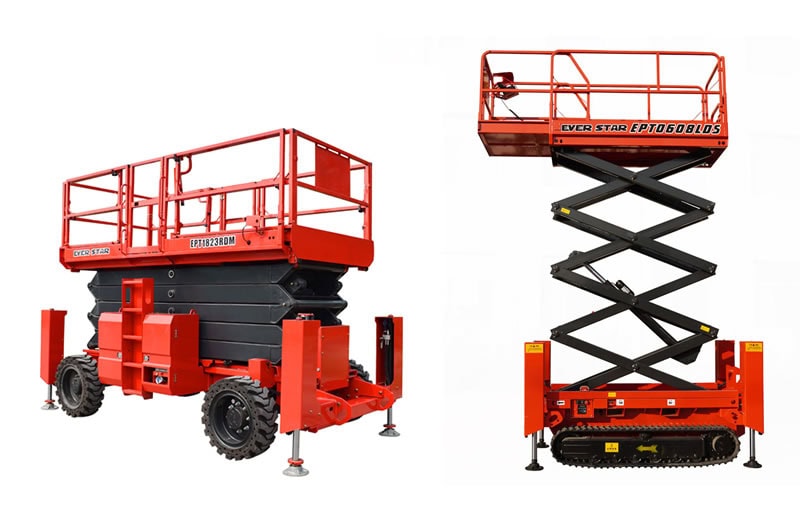
Rough terrain scissor lift performance improves when sequencing aligns with other jobsite equipment.
Excavator/dozer sequencing
A terrain scissor lift should operate after the grading equipment stabilizes ground conditions. Excessive vibration from rollers can impact stability.
EVERSTAR models feature reinforced frames and engine tray access for supervision. However, lift positioning should remain outside active grading zones.
Communication between machine operators and lift crews ensures safe workflow.
Crane/forklift handoff zones
When coordinating a rough terrain scissor lift with cranes or forklifts, establish clearly marked handoff zones on stable ground. Many terrain scissor lift models support platform loads of up to 320 kg, allowing workers to safely receive materials at height.
Use the extension deck for controlled overhead drops, keeping the platform centered under the load path. Operators must maintain communication with ground equipment teams to protect platform capacity limits and ensure safe lift positioning on rough terrain.
FAQs – All-terrain Scissor Lift
Can you use a scissor lift on uneven ground?
A standard indoor scissor lift should not operate on uneven surfaces. However, a rough terrain scissor lift is specifically designed for uneven terrain. With four wheel drive, positive traction control, reinforced frames, and heavy duty tires, a terrain scissor lift can safely operate on compacted soil, gravel, mud, or slopes when properly staged and leveled.
Which type of tires are suitable for rough terrain on a scissor lift?
A rough terrain scissor lift typically uses heavy duty tires features with deep tread patterns to improve grip on mud, sand, and loose terrain. Some terrain scissor lift models also offer non-marking tires for mixed indoor and outdoor use, depending on ground conditions and job requirements.
Conclusion: Terrain-Proof Planning Wins
Narrow planning determines success. A properly selected rough terrain scissor lift, matched with the correct project features including trailer, ramp system, and staging layout, ensures seamless outdoor execution.
From 18 ft models to 42 ft working height units, EVERSTAR rough-terrain scissor lifts are engineered for the demands of hard terrain. With strong platform capacity, four wheel drive traction, electric and dual fuel power options, and advanced safety features, these machines support crews across challenging terrain conditions.
Get smart transport planning, lift capacity and positioning, platform height requirements, runtime monitoring, and equipment coordination transform complex outdoor jobs into controlled, productive operations.
EVERSTAR Rough Terrain Lift Logistics Guide
Planning a project on rough terrain? Get additional information and expert guidance on selecting the right rough terrain scissor lift for your jobsite conditions, platform height, and platform capacity needs.
Sign a free consultation to help contractors review model options, availability, rentals, and financing solutions.
Contact EVERSTAR today to receive your “Rough Terrain Lift Logistics Guide” and plan your terrain scissor lift strategy with confidence.

