
Key Takeaways
- Torque monitoring improves screw pile installation by confirming that each pile reaches the required depth and load capacity, strengthening long-term foundation stability.
- Real-time data helps crews maintain accuracy during helical pile placement, reducing errors and supporting consistent field performance.
- Visual and operational checks during installation confirm rotation, pressure, and angle, creating reliable field notes for reporting and project review.
- Integrated accessories streamline field work, making installation monitoring easier through direct operator observation and manual logs.
In construction, ensuring that a pile is installed correctly, securely, and able to handle its design load is essential. The interaction between soil resistance and the pile’s load-bearing capacity determines the long-term stability of the structure.
Key roles of screw pile torque monitoring include verifying load capacity, enabling real-time quality control, detecting installation problems early, maintaining regulatory compliance, and improving efficiency while reducing costs. Proper torque measurement directly impacts reliability and structural safety.
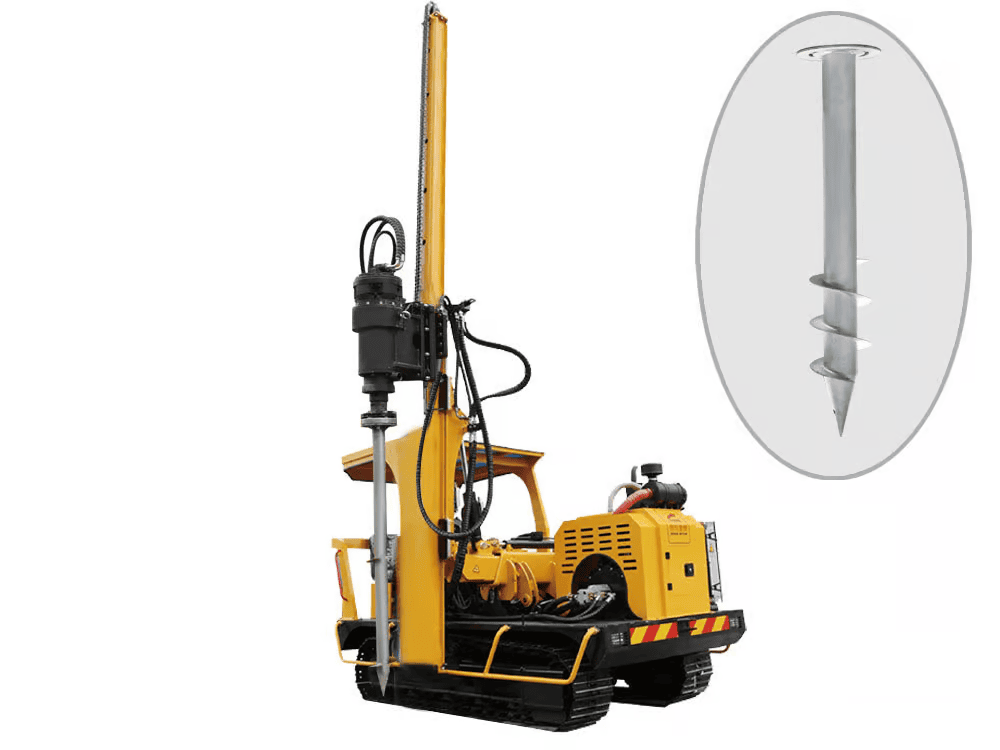
This article explores torque systems, data management, accessory selection, and practical applications. Everstar’s pile driver accessories—including hydraulic hammers, augers, DTH systems, and rotary drives—support controlled, precise installations through reliable mechanical performance.
Torque Monitoring Overview
Torque monitoring practices and careful adherence to the pile driver’s specifications help measure the rotational force applied during screw pile installation. It provides real-time analysis to ensure each pile reaches the correct depth and meets the required load-bearing capacity.
System Calibration and Validation
Accurate readings and reliable monitoring depend on proper field practices, thorough documentation, and regular equipment calibration. Recommended procedures include:
- Full equipment checks: Includes hydraulic systems, rig components, and visual alignments to ensure consistent performance.
- Establish a pressure-depth reference: Correlates applied hydraulic pressure to pile advancement for each rig and pile type.
- Regular maintenance: Keeps measurements reliable over time. Pre-operation warm-up prepares equipment. Monitor depth and resistance manually. Assess soil conditions to interpret resistance.
- Soil condition assessment: Understand local soil characteristics and identify any early sign of unexpected resistance.
- Operator training: Ensures personnel are proficient in operation, calibration, and troubleshooting.
Installation Quality

Torque measurement enhances anchoring quality by confirming that each helical pile meets depth and load requirements. This process reduces errors, guides installers with precision, and gives engineers peace of mind throughout the project.
Real-time Monitoring in the Field
During installation, operators track shaft rotation, pile head position, down pressure, and angle through direct observation. Installers can immediately identify deviations, adjust procedures, and maintain consistent quality across every pile, thereby improving site safety and efficiency.
Helical Piles in Action
Helical piles are engineered to provide stable anchoring across diverse soil conditions, ensuring each pile reaches the correct depth and target load capacity, reducing installation errors and enhancing long-term foundation stability.
Documentation
For compliance, client reporting, and long-term reference, manual field logs capture each pile’s ID, rotation observations, advancement, down pressure, and angle, critical factors of screw pile monitoring.
Helical Piles in Action
Helical piles are engineered to provide stable anchoring across diverse soil conditions, and real-time observations ensure each pile reaches the correct depth and achieves its target load capacity, reducing installation errors and enhancing long-term foundation stability.
Accessory Selection and Site Application
Everstar’s pile driver accessories support precise installations across site conditions. Selecting the right combination of tools ensures durable installations, reduces downtime, and allows crews to work efficiently across varied projects.
Choosing the Right Accessories
Accessory selection depends on project type, soil conditions, and pile specifications. Options include hydraulic hammers for dense clay or compacted soils, augers for sandy or loose layers, DTH systems for rocky strata, and rotary drives for uniform penetration in mixed soils.
With Everstar, you can access custom guidance and compatible equipment to achieve precise installation. This ensures installers can adjust setups effectively, maintain alignment, and complete projects efficiently.
Application for Unique Soil or Pile Needs
Custom settings, shaft adjustments, and accessory choices help installers handle challenging soils, such as dense clay, rocky layers, or loose sandy deposits, by controlling penetration speed, maintaining vertical alignment, and preventing equipment stall or pile deflection.
FAQ – Torque monitoring
Why is torque monitoring critical for screw piling?
Installation checks is critical for screw pilling as it confirms that each pile is installed to the required depth and load specification. Operator monitoring also detects issues, reduces errors, supports compliance, and provides professionals with reliable data to evaluate structural performance across the project.
What accessories are available?
Everstar offers hydraulic hammers, augers, DTH, and rotary drives that can be customized based on project needs, soil type, or pile design. Experts provide guidance on selecting durable tools to maintain accuracy, safety, and efficient installation.
How do I assess installation resistance?
Resistance observations indicate soil engagement. Consistent advancement confirms proper installation; spikes or drops signal issues. Compared against project specifications to adjust procedures and avoid errors before completion.
Conclusion: Achieving Secure Foundations with Torque Monitoring

Precise installation practices evaluate soil interaction, verify capacity, and ensure accuracy. Everstar’s accessory ecosystem supports controlled workflows for confident foundations.
These methods ensure piles are installed with confidence, precision, and predictable long-term results.
Contact Everstar for Torque Monitoring and Screw Pile Installation Support
Contact Everstar’s accessory specialists for guidance on equipment and project recommendations, helping engineers and installers achieve safe, efficient pile installations.

