
Key Takeaways
- Most common skid steer issues trace to fluids, filters, tires, wiring, and loads above rated capacity.
- Check slow lift in order: fluid level, filter condition, hose leaks, then oil temperature.
- Smoke, stalling, and power loss usually trace to the fuel system, a blocked air intake, or overloading.
- Uneven travel, worn tires, and battery faults behind a no-start each have safe checks an operator can run first.
- A daily walkaround prevents most faults; pump, valve, and internal engine work belongs to a technician.
Hydraulic and Engine Performance Problems
Weak lift, slow cycles, and lost power are the common skid steer problems that cost the most working time. Most start in the hydraulic system or the fuel system, and each fault below lists causes in the order to check them.
Slow or Weak Lift: Low Fluid, Clogged Filters, and Overheating
Slow hydraulic functions usually have a simple cause. Lower the loader arms to the ground, shut off the engine, and check:
- Fluid level. Low hydraulic fluid levels let the pump draw air, so lift turns slow and spongy. Top up with the correct grade and find the leak.
- Filter condition. A restricted hydraulic filter starves the hydraulic pump. Replace it at the listed interval, and sooner on dusty sites.
- Hose leaks. Wet fittings or drips under the skid steer point to hydraulic hoses or hydraulic lines leaking oil. Tighten fittings and replace damaged hoses. Trace pinhole leaks with cardboard, never a bare hand.
- Oil temperature. Overheating thins the oil and cuts lift force. Clean the oil cooler and confirm the hydraulic fluid grade.
If lift stays weak after all four checks, call a technician. Relief valve settings, worn cylinder seals, and pump wear inside the hydraulic system need pressure gauges and trained hands.
Engine Performance Issues: Fuel, Air Filtration, and Power Loss
Engine problems can show up in a variety of ways, including black smoke, bogging under load, and difficulty starting in cold weather. Three causes explain most of them:
- Fuel contamination. Water or dirt in the tank blocks fuel filters and wears the fuel pump. Drain the water separator, replace dirty fuel filters, change them according to the manufacturer’s guidelines, use clean fuel of good quality, and inspect fuel lines for cracks because a lack of proper fuel flow can also trigger stalling. Engine stalling soon after refueling usually points to bad fuel.
- Blocked air filter. A restricted intake starves the engine of air, causing black smoke, low power, and poor fuel efficiency. Clean or replace the element and check the intake clamps.
- Overloading. Rated load runs from 380 kg on the EC25 to 1,500 kg on the EC120. On any skid steer, loads above the rated operating capacity strain engine components and the hydraulic system together.
Glow plugs help warm the engine in cold conditions, so hard starts in low temperatures can point to glow-plug trouble.
A clean fuel system and fresh filters restore most lost power. If the skid steer’s engine still smokes or stalls with new filters and a load within rating, a technician should test injection and compression.
Drive, Tire, and Electrical Problems
Faults in travel, steering, and starting can stop a skid steer outright. Each symptom below points to its most likely cause.
Drive and Steering Faults: Four-Wheel Drive and Skid Steering Wear
On an EVERSTAR wheeled skid steer such as the EC35, four-wheel drive powers wheels independently suspended on the transmission box, with no front or rear axles. Steering works by varying left and right wheel speed, so both sides must deliver equal drive.
- Uneven travel or pulling to one side: check tire pressure on all four wheels, then look for mismatched tire sizes, uneven wear between sides, or a weak drive motor.
- Grinding or whining noise: low gear oil in the drive housing or worn wheel bearings.
- Loss of drive: a parking brake that has not released, a failed drive motor, or a fault in the pilot control system.
- Jerky joystick controls: contaminated pilot oil or a sticking spool in the hydraulic control system.
Run every check with the arms down and the engine off, following OSHA safe servicing practices. On ETS track loaders, the same symptoms point to track tension and sprocket wear.
Tire Wear and Electrical Faults: Sidewall Damage, Battery, and Wiring
Skid steering scrubs tires on every turn, so gravel, broken concrete, and demolition debris wear tread and cut sidewalls fast. Models such as the EC60GH and EC100 use a dedicated all-terrain tire configuration, and the EC65GH runs abrasion-resistant tires.
- Hold tire pressure at the manual’s value; underinflated tires flex and crack at the sidewall.
- Rotate tires between positions to balance uneven wear patterns.
- Replace tires with cuts, bulges, or exposed cords.
Electrical issues usually appear as a no-start or a warning light. In the skid steer’s electrical system, check the battery charge and terminals first, then fuses, then the starter and its wiring. Loose connections cause most intermittent electrical system issues, because vibration works ground straps and connectors loose.
Preventing Skid Steer Problems
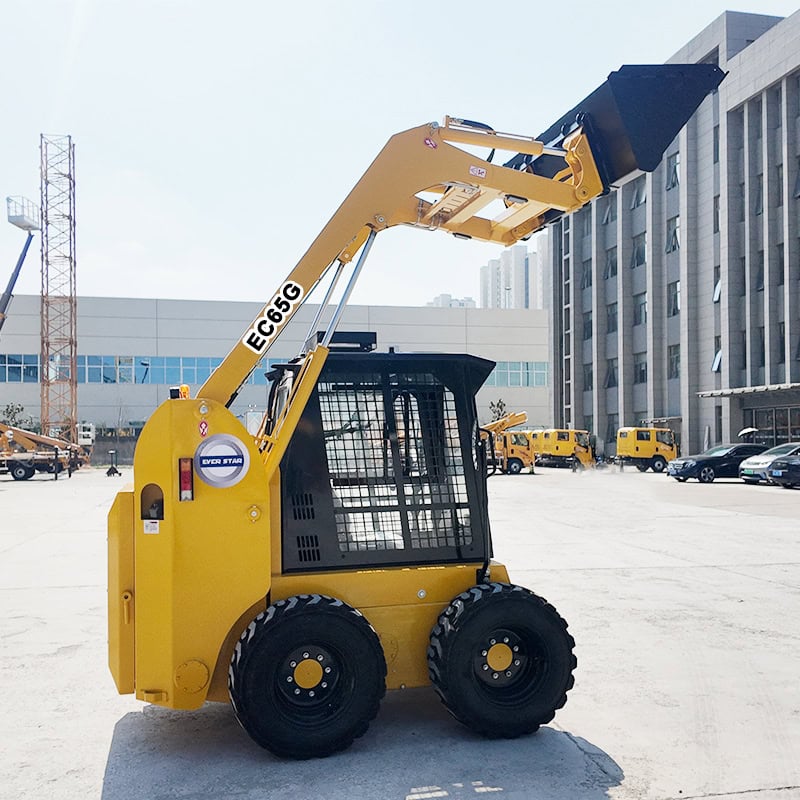
Routine checks and good operator habits remove most faults and protect the skid steer’s performance over time.
Daily and Scheduled Checks That Catch Faults Early
EVERSTAR’s rear-mounted engine layout gives simple access for faster service, so daily checks take little time. Before each shift:
- Fluids: engine oil, coolant, fuel, and hydraulic fluid levels, checked on level ground.
- Filters: air filter restriction, plus fuel filters and hydraulic filters at the listed hours.
- Tires: pressure, tread depth, sidewalls, and wheel nuts.
- Leaks: under the frame and at cylinders, hoses, and fittings.
- Electrical: battery terminals, lights, and warning indicators at startup.
A regular maintenance schedule ties each skid steer check to service hours and intervals. Poor maintenance turns small faults into breakdowns, so log every check.
Operator Habits and Limitations: When to Call a Service Technician
Match each attachment’s flow demand to the machine’s hydraulic system; a tool that needs more flow than the circuit supplies runs hot and slow. Keep loads within the skid steer’s rating, and avoid holding a cylinder at full stroke, which forces oil over the relief valve and causes overheating.
Call a service technician for these skid steer issues:
- Weak lift after fluid, filter, and leak checks
- Hydraulic pump or drive motor noise
- Smoke or stalling with fresh fuel filters
- Repeated blown fuses or burnt wiring
- Cracks in the loader arms or frame
EVERSTAR Machinery supports owners with troubleshooting guidance and spare parts. As a manufacturer, it does not provide rental or contracting services.
FAQs — Skid Steer Loaders
How is the engine accessed for service on an EVERSTAR skid steer loader?
An EVERSTAR skid steer uses a rear-mounted engine, designed for simple access. Daily engine checks, including engine oil, coolant, and the air intake, are made from the back of the machine. The operator’s manual for each EC and ETS model shows the exact service points and intervals.
When should I repair a skid steer problem on site and when should I call a technician?
Repair on site anything that needs basic tools and no disassembly. Topping up fluids, replacing a clogged hydraulic/fuel filter, tightening fittings, setting tire pressure, cleaning battery terminals, and swapping fuses are operator-level work. Call a technician for pump, motor, valve, or internal engine work, and for any fault that returns after a basic fix.
Contact EVERSTAR for Skid Steer Service Support and Spare Parts
Owners of EC and ETS series machines can contact EVERSTAR Machinery for troubleshooting guidance, service manuals, and spare parts. Share the model, symptoms, and service hours for a faster answer.

