
Key Takeaways
- The backhoe vs skid steer decision rests on dig frequency, depth, and whether the crew needs the skid steer for other tasks.
- Dedicated backhoe loaders reach 14-18 ft dig depth; a skid steer backhoe attachment reaches 8-10 ft, similar to a mini excavator.
- A skid steer with a backhoe attachment is more cost-effective on mixed-task jobs where digging is one of several activities.
- Fleet price and shipping logistics favor the single-machine attachments approach for small operations.
- A mini excavator is a third option for access-restricted sites needing compact dig depth without loader utility.
Choosing between a backhoe loader and a skid steer comes down to dig frequency and depth. Both machines move dirt, handle service work, and are versatile enough to cover a wide construction range with the right attachments.
The cost of a second unit adds up, so operators should weigh that cost against dedicated dig capability.
EVERSTAR manufactures backhoe loaders and skid steer loaders sized for small crews and mixed-task construction jobs.
The skid steer’s attachments ecosystem, spanning backhoe attachments, excavator-style attachments, bucket tools, grading attachments, and material handling attachments, covers most of a small crew’s working year.
Core Capability Difference: What the Dedicated Backhoe Delivers
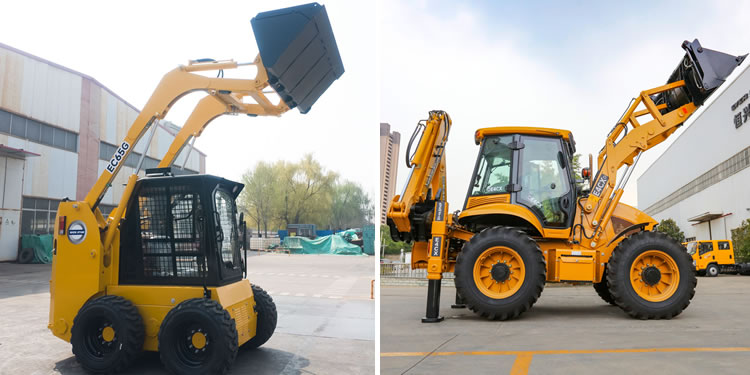
A dedicated backhoe loader is purpose-built for loading at the front and digging at the rear.
The three-joint boom arm swings 180 degrees, the tractor base provides stability for deep trenches, and stabilizer legs steady the machine through heavy dig cycles. These features produce performance an attachment cannot replicate.
EVERSTAR builds five backhoe models, from compact 2,800-4,000 kg units for urban sites and light excavation to standard 5,900-8,200 kg units with a 1 m³ front bucket and 0.3 m³ rear bucket.
Cycle Speed and Stabilizers: Faster Output on Dig-Intensive Sites
Boom geometry, stabilizer footprint, and swing arc give the dedicated machine faster cycle times than an attachment setup.
A skid steer running the backhoe tool must disconnect it for front loader work, while the dedicated tractor handles loading and trenching without attachments swaps.
When the Attachment Is Enough: The Skid Steer on Mixed-Task Sites
Mini excavator-class attachments bring excavator-style dig capability without the price and shipping logistics of a standalone excavator.
The job site type, not the brand, is the primary filter: the attachments approach beats two machines when task variety, access, and fleet price are the deciding filters.
Mixed-Task Efficiency: One Machine for Digging and Support
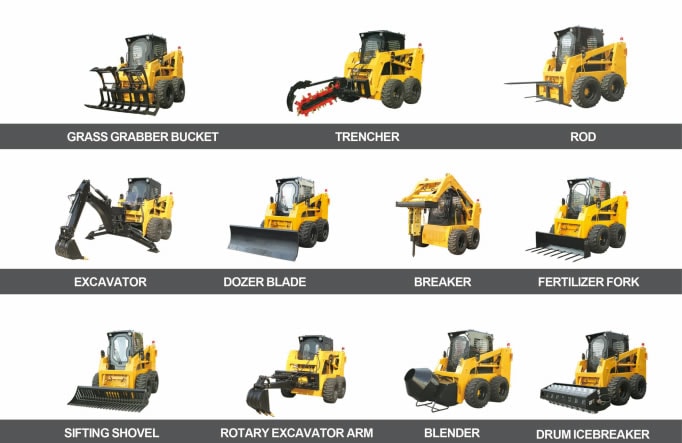
Attachment versatility is the skid steer’s core advantage. An operator swaps between the backhoe attachment, pallet forks, a bucket, and other attachments via the quick-attach plate, compressing jobs where excavating sits alongside loading and hauling.
EVERSTAR’s EC skid steer models cover this profile. The EC35 (2,600 kg, 500 kg rated load) handles pallets, material movement, and attachment-based digging on small construction and maintenance sites. The EC75 (3,460 kg, 1,050 kg rated load) extends to heavier work with the same attachments catalog.
The EC models account for different size classes, from 1,460 kg (EC25) to 4,000 kg (EC120), giving operators the ability to weigh the right model for each job site.
A skidsteer running backhoe attachments on the EC75 can move dirt, rock, and debris within the 8-10 ft range, then shift to loading pallets or utilities material.
On soft ground, the ETS tracked series runs the same attachments and its skidsteer tracks keep traction on variable terrain. With the right tools fitted, the same machine can also handle grading, trenching, and snow removal.
Shallow Utility Work, Solar Farm Trenching, and Restricted Sites
Shallow connections and cable runs under 6 ft, solar farm trenching for example, fall within the skid steer’s capability. Its compact footprint, tight turn radius, and tracks compatibility fit where a full backhoe cannot, and a moderate operating weight helps on confined jobs.
A mini excavator is a third option here: compact machines reaching 8-12 ft with lower ground pressure and a lower shipping price than a full backhoe, suited to confined utility work even though loader utility is limited. EVERSTAR’s skid steer range covers the full attachments library for these applications.
Task Frequency and Fleet Economics
The attachments route is the rational choice when the skid steer already covers the fleet’s daily jobs. The price of a backhoe attachment is a fraction of the price of a dedicated machine, and ETS tracks options let a tracked unit lay into soft ground and pull loads without the shipping and trailer costs of a second machine.
Operators should weigh two variables: days per month of dedicated digging, and whether the skid steer stays free for other attachment needs while a second machine digs. When both filters point to occasional, shallow excavation, the attachments approach wins on cost, price, and efficiency.
Fleet Simplicity: The Single-Machine Advantage
Dropping the dedicated backhoe cuts shipping and trailer logistics, keeps machines easier to maintain, and holds capital proportionate to scale.
One skid steer with forks, a bucket, and a compact tools set can accomplish most construction and maintenance work small crews encounter, and skidsteer attachments store on a single trailer.
Two machines beat one versatile machine when spring and summer trenching runs at full capacity, deep utilities work and rock breaking account for over half of job hours, and the skid steer stays occupied elsewhere.
A mini excavator and skid steer combination is popular then: the mini digs deep while the loader hauls. Skidsteer tracks options span wheeled and rubber tracks models, adding tracks versatility for alternating ground.
Match the Configuration to Dig Frequency, Depth, and Access
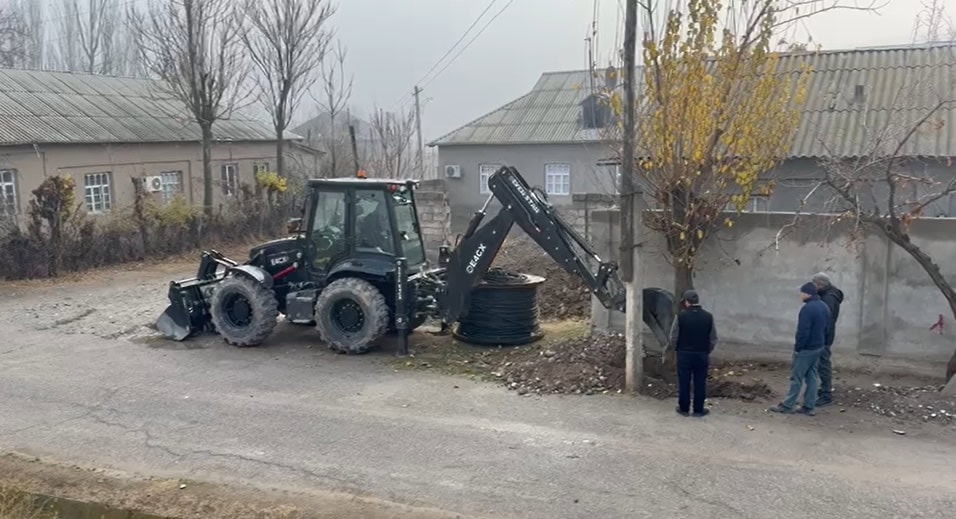
Frequent, deep trenches justify a standalone backhoe; occasional shallow work justifies the attachments route on any compatible skid steer model.
Take a utility crew digging service lines twice a week and hauling the rest of the time as an example: the attachment wins. The decision resolves with three questions: how deep, how often, and whether the job needs the skid steer for other tasks.
According to OSHA (Occupational Safety and Health Administration), the guidelines on excavation, matching equipment to trench depth and soil type directly affects operator safety; features like stabilizer legs play a direct role in safe trench work, making equipment selection an efficiency and a safety decision.
FAQs — Backhoe vs. Skid Steer
How does dig depth compare between a backhoe loader and a skid steer backhoe attachment?
EVERSTAR backhoe loaders reach 14-18 ft; the attachment reaches 8-10 ft. The gap matters for deep trenching and below-footing work; runs under 6 ft stay within the attachment’s reach. This difference is crucial for projects requiring deeper excavation, where the backhoe’s greater reach and stability improve productivity and safety, while the attachment suffices for shallower, less frequent digging tasks.
What task types suit a skid steer with a backhoe attachment?
Shallow connections, solar farm cable runs, and mixed-task operations where digging sits alongside pallet forks use and general work. Sites that need loader duty and attachments versatility in the same period benefit most.
Contact EVERSTAR for Equipment Guidance
Consult our website for backhoe loader and skid steer models, lift equipment, and configurations suited to your site conditions, task types, and workload.
Also, you can contact EVERSTAR directly to discuss your project plan and get recommendations matched to your crew size, task frequency, and price filters.

