
Key Takeaways
- Most solar pile installation shortfalls trace to operator decisions; a solar drilling machine is only as efficient as the team running it.
- Attachment selection is the highest-impact variable on daily output: the wrong tool for the ground type increases wear, slows the drilling rig, and reduces solar piles driven per shift.
- Depth calibration errors and vertical misalignment are the leading causes of structural rework on solar power station projects.
- EVERSTAR solar pile drivers require flat terrain; operating on inclines compromises pile precision and creates safety risks.
A solar power station construction schedule rarely fails because of equipment. The drilling rig runs reliably, site conditions are workable, and the project scope fits the rig’s capability.
Schedules fail because crews make wrong decisions, such as wrong attachments, skipped ground assessments, or misread GPS, compounding across hundreds of solar piles daily.
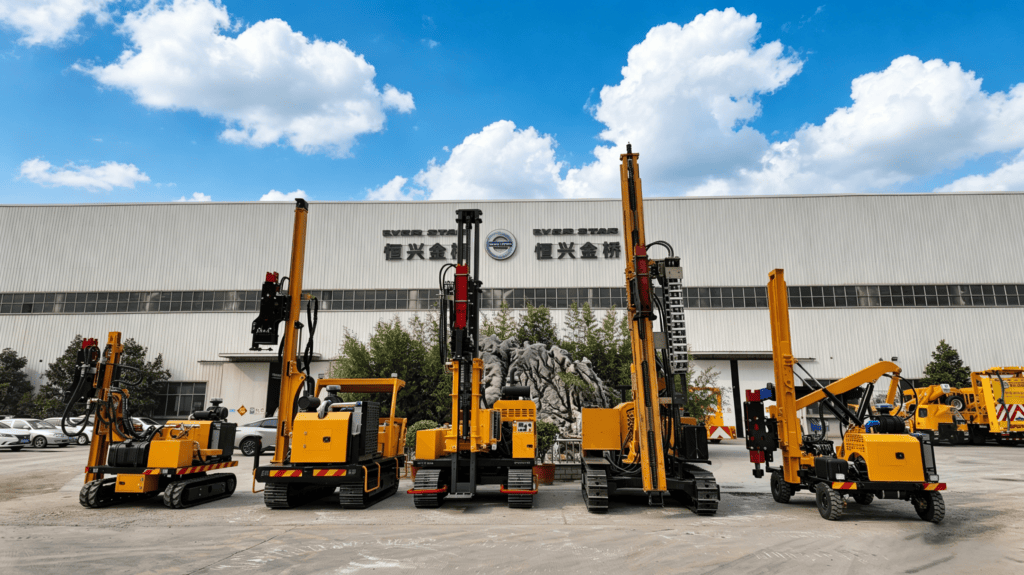
EVERSTAR’s solar pile drivers operate as photovoltaic drilling rigs delivering 200–300 piles per day under optimal conditions. That output ceiling is only reachable when operators execute the drilling process correctly at every step.
This guide covers the six most common drilling errors on solar farms and power plants, for installation teams, site supervisors, and EPC contractors involved in the construction process.
Why Operator Decisions Drive Drilling Rig Output More Than Machine Capability
A well-specified solar drilling machine and correctly configured pile driver accessories define the output ceiling. On properly scoped deployments with stable site conditions, the operator is the limiting factor.
Solar power station construction involves repetitive, high-volume drilling tasks where a ten-percent shortfall costs 30 piles per day. Operator development and training are the most direct investment a project manager can make to meet growing global demand.
Attachment Selection Errors: Using the Wrong Tool for the Ground Type
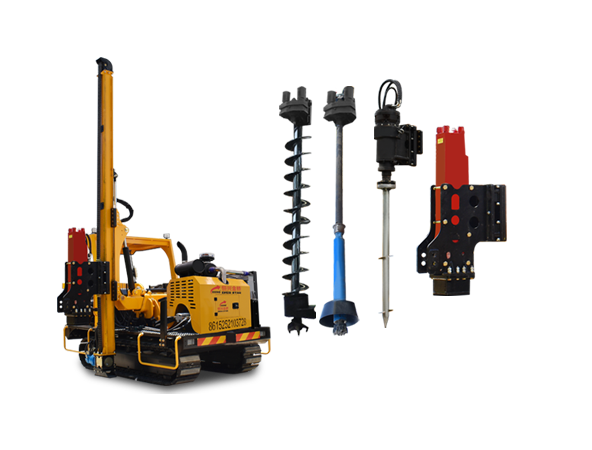
The two most damaging mismatches in solar pile installation are applying the hydraulic pile hammer on ground that requires DTH drilling, and running the auger in loose conditions where the borehole cannot hold shape.
Solar drilling machines support pre-drilling pilot holes across different soil conditions and adapt to various hole sizes before larger installation begins.
EVERSTAR’s pile driver range covers the full attachment spectrum, each engineered to minimize vibration transfer to the pile:
- Auger drill handles soft soil, clay, and sand to 4,000mm;
- DTH drill hammer addresses hard rock and concrete to 3,500mm (with lower maintenance than blast hole drilling);
- Hydraulic pile hammer handles standard conditions to 6,000mm pile height.
Using the wrong attachment slows drilling, accelerates wear on solar piles, and reduces daily pile count, impacting the overall construction process.
Skipping Ground Assessment: The Upstream Error That Compounds Downstream
When varying soil conditions across a site aren’t mapped in advance, operators encounter unexpected resistance mid-run.
Soil shifts from soft clay to compacted ground force the rig past safe parameters or cause unplanned tool changes, losing time at the hardest construction point.
The corrective procedure: walk the site in sections before drilling, log resistance by zone. This helps crews plan attachment configurations per area, ensuring the solar drilling machine operates within capability across the solar power station footprint.
Errors That Affect Pile Quality and Structural Consistency
Correct panel alignment starts with correctly driven solar piles. The panel is only as precise as the pile beneath it.
Costly operator errors pass visual inspection on drilling day but surface during panel mounting, load testing, or post-installation survey.
Depth shortfalls, vertical misalignment, and positional deviation all fall here. Misaligned piles mean misaligned panels, and rework compresses the schedule at its hardest point.
Depth Calibration Errors: Piles Driven Too Shallow or Too Deep
Soft ground allows faster advancement without dwell time adjustment; resistant ground causes operators to stop short to maintain pace.
Depth calibration errors, with deviations outside the 3–6m range, compromise panel foundation integrity and productivity.
Accurate depth control is vital across flat terrain since the drill mast controls depth, angle, and vertical alignment, making checks essential for safe and capable drilling tasks.
Misalignment at Setup: How Vertical Angle Errors Accumulate Across Rows
A small vertical angle error at one pile is invisible individually.
Across 50 or 100 piles, errors accumulate into visible misalignment: the operator must set up the rig carefully and understand that small angle errors accumulate, causing panel installation delays and rework costs.
Pre-drive alignment checks with a plumb line or digital inclinometer add seconds per cycle and eliminate risk, especially when repositioning between rows or changing panel orientation.
Getting rig setup right at the start helps meet alignment across each row, protecting project quality efficiently.
Operational Errors That Create Safety and Equipment Risk
The third category of operator errors creates safety and equipment risk: slope operation, GPS misuse, and pile specification overrun.
Advanced hydraulic pile drivers improve stability, minimize pile damage, and support safer, faster work, so reducing equipment risk should be a priority on job sites.
EVERSTAR’s free operator training, included with every machine purchase, covers these areas and makes safety the top priority.
Slope Operation: Why EVERSTAR Solar Pile Driver Requires Flat Terrain
EVERSTAR solar pile driver machines cannot operate on inclines or slopes. Driving force direction, rig stability, and pile angle precision all require level terrain.
Track-mounted drills provide stability and maneuverability on uneven terrain, but EVERSTAR’s range is designed for flat-terrain photovoltaic projects.
On gradients, rig footing becomes unstable, pile angle deviates, and driving force misaligns, creating safety risks and structural failure.
The EVERSTAR model for slope operations is a portable handheld pile driver for small tasks.
Sloped sections require separate equipment; some rigs are engineered for uneven ground, but EVERSTAR’s range requires flat terrain.
GPS Automation Misuse: Treating Fixed-Point Positioning as Full Autopilot
EVERSTAR’s GPS provides fixed-point positioning automation across large solar power plants.
It ensures precise placement, but the operator must still adapt to site conditions rather than rely on it for vertical alignment, depth calibration, or attachment selection.
Treating GPS as full autopilot is the most common technology error on solar sites.
GPS determines pile location but does not replace operator judgment. GPS helps meet layout accuracy but cannot handle depth, angle, or tool-choice decisions alone. Rig output, precision, and panel alignment depend on this distinction every cycle.
FAQs — Solar Drilling Machine for Tough Terrain
What is the most common operator error on solar farm pile installation sites?
The most common error is attachment mismatch, using the hydraulic pile hammer on ground needing DTH drilling or running the auger where boreholes cannot hold shape. This reduces daily pile count and increases wear. Pre-mobilization ground assessment by zone helps crews handle soil changes.
How do I choose the correct attachment for different soil types on a solar drilling machine?
Select attachments based on soil conditions: use auger drills for soft soil and sand, DTH drill hammers for hard rock, and hydraulic pile hammers for standard conditions. Proper attachment choice ensures efficient drilling tasks and reduces wear.
Does EVERSTAR provide operator training with machine purchase?
Yes. EVERSTAR offers free operator training with every machine purchase, covering attachment selection, depth calibration, GPS use, terrain limits, and maintenance. This training ensures efficient, high-output performance and supports crew well-being in demanding drilling environments.
Correct Operator Decisions Unlock the Drilling Rig’s Full Output
EVERSTAR solar pile drivers reach 200–300 piles per day when operators make correct attachment and setup decisions.
Each of the six errors here is preventable. Correctly run piles form the foundation every solar panel array depends on.
According to the EIA (Energy Information Administration of US), global solar power demand is expanding rapidly, making rig efficiency and pile precision more critical than ever.
Drilling efficiency determines project timelines, equipment utilization, and construction profitability industry-wide.
In conclusion, future solar piling rig development focuses on improved hole drilling techniques and better slope capabilities to optimize solar panel installation.
Consult EVERSTAR for Solar Drilling Machine Selection
Solar farm developers, EPC contractors, and site managers can visit EVERSTAR, specializing in solar pile drivers and drilling equipment.
Contact EVERSTAR today to choose equipment designed for project needs, including difficult areas like solid bedrock and wind energy drilling site development.

