
Telescopic Boom Lift: 3 Jobs Where Straight Reach Wins Every Time
Key Takeaways
- Telescopic boom lifts deliver unmatched straight-line vertical and horizontal reach, outperforming articulating boom lifts on open job sites.
- EVERSTAR models offer working heights from 20–63 m, platform capacity up to 480 kg (1,000 lb), and 360° continuous rotation.
- Faster positioning, longer horizontal outreach, and stable load charts make straight boom lifts ideal for towers, poles, billboards, and facades.
- Diesel telescopic boom lifts with track drive dominate rough terrain and outdoor construction, while electric models support zero-emission indoor and urban maintenance.
- Proper boom lift certification ensures operators manage load charts, outreach limits, and safe operation at full extension.
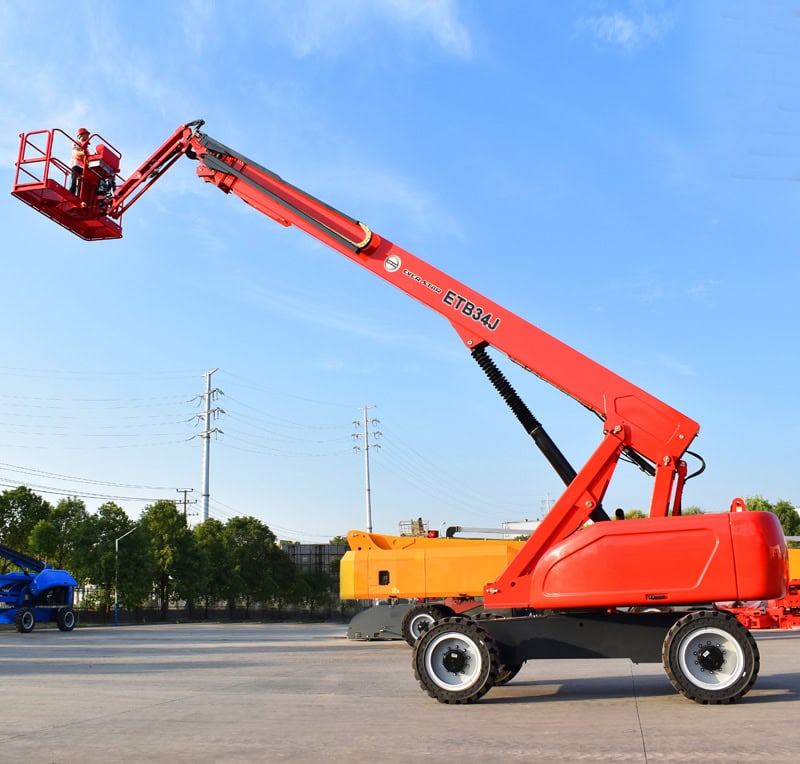
A telescopic boom lift, also known as a straight or telescoping boom lift, is purpose-built for elevated work requiring maximum vertical height and horizontal outreach. Unlike articulated boom that rely on jointed arms, a telescopic boom extends in a straight line, allowing operators to elevate workers directly to the work area with fewer movements and faster positioning.
EVERSTAR Machinery designs telescopic machines offering versatility specifically for open-access environments such as commercial construction, infrastructure projects, and exterior maintenance. Its product range includes:
- Diesel: 20–63 m working height, up to 480 kg platform capacity, 360° continuous rotation, and 5 km/h stowed drive speed.
- Electric: offering 22–44 m working height, identical capacity ratings, zero emissions, and easier maneuverability for sensitive or indoor work.
For tasks involving high-rise structures, long reach, and minimal obstacles, telescopic boom lifts consistently outperform other types of aerial lifts by maximizing speed, reach, and stability across work sites.
1. Straight-Line Reach vs Articulating Flexibility: Understanding the Difference
The defining advantage of a telescopic boom is its ability to extend outward in a straight line, increasing effective boom length to reach distant work areas. This design maximizes horizontal reach, platform height, and usable work envelope, making it ideal for jobs that require distance rather than “up-and-over” navigation.
Straight boom lifts features where:
- The work area is open.
- Obstacles are minimal.
- Maximum height or outreach is required.
- Fast repositioning improves productivity.
Reaching the Tallest Structures with 63 m Working Height
EVERSTAR’s largest boom lift models, with optional jib, reach up to 63 m working height, placing them among the highest-capacity straight boom lifts available. This maximum platform height allows operators to access:
- Cell and communication towers.
- High-rise building facades.
- Tall signage and billboards.
- Steel structures and bridge components.
Because the boom extends directly upward, operators maintain better alignment and stability at height compared to articulating arms that flex under load. A 5 km/h stowed drive speed, for quick repositions and efficient transport, also allows faster transport across large sites without repeated retraction.
2. Speed of Positioning: Why Straight Booms Work Faster
Fast extension is where straight boom lifts clearly outperform multi-joint machines. By eliminating complex arm sequencing, telescopic boom lifts move directly into the work envelope, reducing setup time and keeping crews productive on open construction sites.
Single-Lever Extension Under 60 Seconds
Speed matters on large commercial sites, even in muddy terrain, where crews must operate equipment efficiently to stay on schedule. Telescopic boom lifts use oil hydraulic systems that allow operators to extend the boom rapidly using single-lever proportional controls.
Reaching 30 m of height or horizontal outreach can take under 60 seconds, compared with articulated lifts that require multiple joint movements and careful sequencing. This faster positioning reduces idle time, limits machine repositioning, and improves overall workflow efficiency.
Rough-Terrain Performance on Construction Pads
Diesel telescopic boom lifts are engineered for demanding outdoor environments. Standard features include:
- Four wheel drive for traction.
- High ground clearance.
- Foam-filled or lug-tread tires.
- Optional track drive for muddy terrain.
- Gradeability up to 40%.
These capabilities allow operators to extend and retract the boom safely, even on uneven ground, making straight boom lifts ideal for infrastructure and heavy construction projects.
3. Tower Work and Utility Pole Setting Jobs
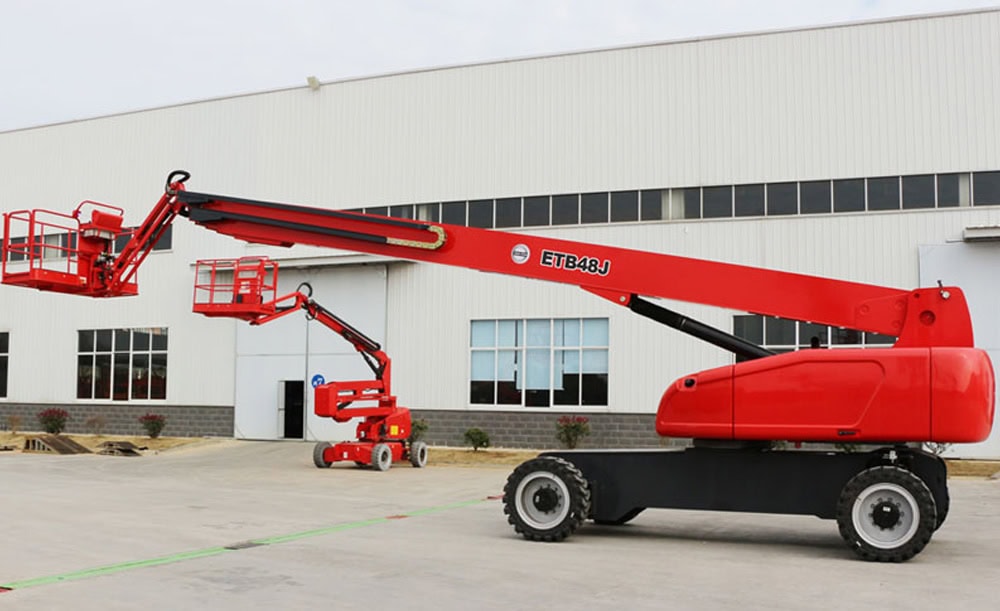
Few aerial lifts perform better than telescopic boom lifts when working at extreme height with minimal obstructions. Their straight-line geometry provides unmatched vertical precision.
Antenna and Cell Tower Maintenance
For telecommunications work, telescopic boom lifts allow workers to access antennas, cables, and mounts at 50 m and above without constant repositioning. The platform remains aligned with the structure, reducing sway and improving tool control.
With 300 kg capacity, crews can carry heavy equipment, test instruments, and replacement components securely. Continuous 360° rotation allows operators to circle towers without moving the chassis.
Utility Pole Installation and Maintenance
During pole setting and electrical work, stable tip load matters. Telescopic boom lifts support transformer hoists, insulators, and cabling with predictable load behavior.
Compared with articulated boom lifts:
- Extend outward more efficiently.
- Maintain better stability at full reach.
- Reduce ground repositioning on open sites
This makes them the preferred solution for power, lighting, and communications infrastructure.
Billboard Installation and Facade Access Jobs
Billboards, signage, and building facades often sit far from accessible ground. Telescopic boom lifts dominate these applications thanks to long horizontal outreach.
Billboard and High-Sign Replacement
With 40–50 m horizontal reach, telescopic boom lifts allow crews to work over highways, in limited spaces, medians, and restricted zones without placing equipment directly below the work area.
Straight boom lifts reach outward cleanly, carrying panels and equipment safely to height. Diesel power ensures reliable performance in outdoor conditions, while platform stability improves installation accuracy.
Straight-Line Building Facades
For window installation, cladding, and exterior maintenance, telescopic boom lifts enable smooth vertical travel along flat building faces. Operators can retract and extend boom sections quickly, servicing multiple floors without relocating the machine.
On paved commercial sites, non-marking tires and controlled rear swing radius protect finished surfaces while maintaining narrow width and excellent maneuverability.
FAQs – Telescoping Boom Lift
What is the difference between a telescoping and an articulating lift?
A telescopic unit extends in a straight line, offering maximum vertical height and horizontal reach for open sites. Articulated lifts use jointed arms to reach over obstacles in confined spaces. Straight boom lifts prioritize speed, reach, and load stability, while articulating models provide flexibility around obstructions.
What is the maximum height for a telescopic boom lift?
The maximum working height for EVERSTAR brand telescopic boom lifts reaches 63 m on diesel models, making them suitable for towers, bridges, and tall facades. Zero-emission telescopic models reach 22–29 m, ideal for indoor or urban maintenance. Always confirm load charts and certification requirements before operation.
What is the Telescopic boom capacity at extension?
Platform capacity ranges from 480 kg in unrestricted zones to 230–300 kg at full extension, depending on reach and boom angle. These capacities support workers, tools, and materials securely when operators follow load charts as part of certification training.
Conclusion: Why Telescoping Boom Lifts Dominate Straight-Reach Jobs

For tower work, pole setting, outdoor billboard installation, facade access, and high-reach construction, telescopic boom lifts remain unmatched. Their straight-line extension delivers superior working height, faster positioning, and reliable capacity where articulating boom lifts fall short.
EVERSTAR’s diesel and electric telescopic boom combines industry-leading reach, stable load performance, and rugged terrain capability to lift field workers reliably and efficiently across demanding construction environments.
Match Your Job to the Right Telescoping Boom Lift
Use EVERSTAR’s Telescopic Job Match Tool to analyze load charts, working height, and outreach for your specific project. Simulate capacity at extension and compare from diesel vs electric models to telescopic boom lift rentals to find the safest, most productive aerial platform for your next job.

