
Key Takeaways
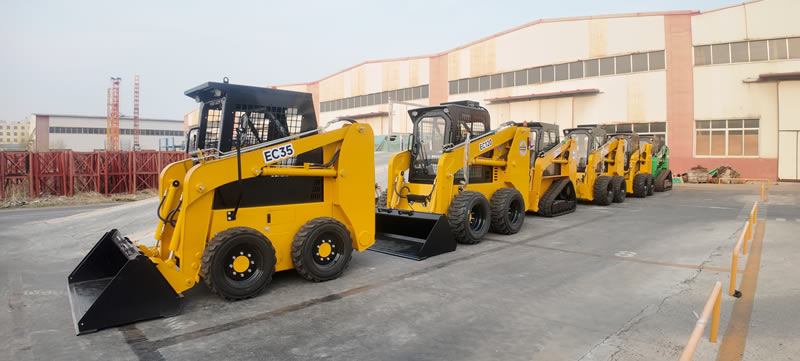
- Skid steers excel in tight jobsite environments with zero-radius turning, making them ideal for confined urban and indoor operations.
- Wheel loaders handle higher load volumes per cycle, suiting open sites with large material demands.
- Consider ground conditions, operator visibility, and needed attachments alongside space constraints.
- Skid steer loaders and compact track loaders share footprints but differ in traction; tracks perform better on soft or uneven ground.
- Choosing compact equipment based on site variables (space, volume, surface) improves productivity more than defaulting to familiar machines.
Both machine types are proven performers with decades of industry experience.
Manufacturers across the market have expanded the features, power, and versatility of skid steer loaders and wheel loaders alike, making the selection decision more nuanced than ever.
The selection decision should always begin with three filters: available maneuvering space, required load volume per shift, and surface conditions underfoot.
How Each Machine Behaves in Restricted Spaces
Turning radius and machine footprint are the primary performance variables in confined environments.
In restricted spaces, the wrong machine causes knock-on delays across the entire site.
Skid Steer Turning Capability: Why Zero-Radius Movement Changes Site Access
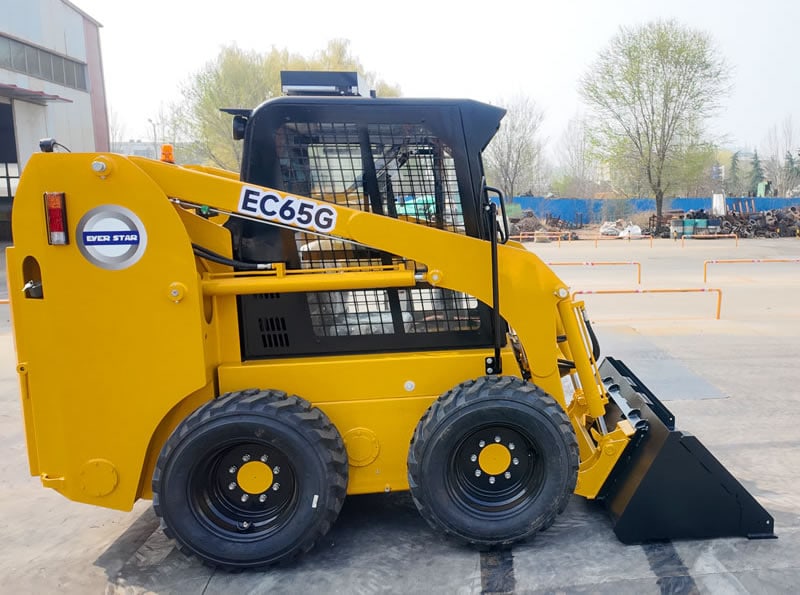
Skid steers achieve directional change by driving wheels on opposing sides at different speeds or in reverse, allowing the machine to spin on its own axis without requiring forward or reverse travel to complete the turn.
In narrow corridors, enclosed barn conversions, urban construction sites with tight lot lines, and indoor demolition environments, this movement characteristic allows operators to reposition the machine where a wheel loader simply cannot complete a turning arc.
The practical result is faster cycle times and reduced operator fatigue: fewer multi-point maneuvers, less reverse travel, and more direct forward progress toward the next load point.
Tracked skid steer loaders offer the same zero-radius agility as wheeled skid steers with the addition of track-based ground contact.
Compact track models improve stability and traction on soft or uneven surfaces without sacrificing maneuverability, making them a strong performer in landscaping, excavation, agriculture, and farm environments.
Wheel Loader Capacity in Open Sites: Where Size Becomes an Asset
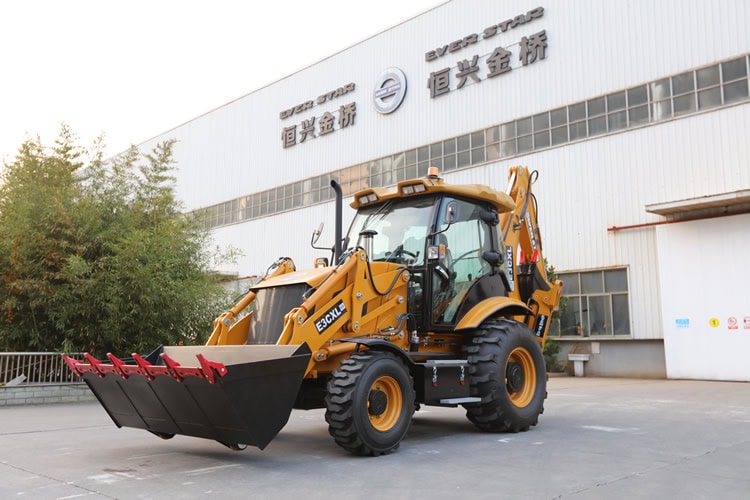
On open and unrestricted sites, the wheel loader’s turning radius disadvantage disappears. In aggregate yards, large earthmoving operations, and stockpile management areas, space is no longer a constraint.
Compact wheel loaders bridge the gap between skid steer loaders and full-size machines, offering a balance of rated operating capacity and maneuverability.
Full line wheel loaders carry larger bucket loads, higher lift capacity, and greater operating weight that translate directly into higher material throughput per cycle.
For bulk earthmoving, aggregate loading, and high-volume landscaping operations on open ground, the loader’s size becomes a productivity asset.
Agriculture operations benefit most from this volume-per-cycle advantage, including grain handling, silage loading, general construction support, and large-scale land clearing on the farm.
Material Handling Speed: Cycle Time vs. Load Volume
Material handling productivity is shaped by two competing metrics: cycle time and load volume per cycle. Fast cycle time and high load volume per cycle favor different machines depending on the job type.
Fast Repetition Jobs: Where Shorter Cycles Drive Higher Output
Feeding a crusher, loading trucks in rotation, clearing debris in short runs, or supporting general construction tasks in space-constrained areas, these are jobs where completing a high number of loading cycles quickly outweighs moving more material per cycle.
Skid steer loaders excel in these scenarios. Their compact footprint allows operators to reposition rapidly between the material source and the load point.
Combined with responsive hydraulic flow systems and attachments designed for quick-connect compatibility, skid steer loaders maintain high cycle frequency throughout a shift.
The vertical lift path available on certain skid steer models improves dump clearance into truck beds or trailers without requiring the machine to drive up a ramp.
Vertical lift steer loaders equipped with specialized attachments (including forks, buckets, and snow removal implements) perform reliably across general construction, landscaping, and agriculture environments.
Bulk Material Jobs: When Volume Per Cycle Justifies the Machine Size
For bulk earthmoving, rock handling, and stockpile management on open sites, the priority shifts to moving the largest possible volume per cycle.
Wheel loaders carry larger bucket loads, fill in fewer passes, and require less total machine movement to clear equivalent material volumes.
In agriculture and farm applications (grain handling, silage loading, large-scale land clearing), this volume-per-cycle advantage compounds across an entire working day.
Fewer cycles means lower engine hours, better energy efficiency per ton of material moved, and reduced wear on drive components over the life of the machine, according to the Bureau of Labor Statistics. Agriculture dealers consistently recommend this approach to expand operational output on high-volume sites.
Operator Control, Site Visibility, and Ground Conditions
Beyond machine size and turning radius, three additional factors shape which equipment type performs more reliably on any given jobsite: operator sightlines, control responsiveness, and surface conditions.
Visibility and Maneuvering Control in Obstacle-Dense Environments
Skid steer loaders cab designs position operators closer to the work zone, improving forward visibility during loading cycles. However, rear and side visibility can be restricted in some models, which operators must account for when reversing in congested areas.
Wheel loaders generally offer better all-around cab visibility on open sites, but their larger footprint makes managing proximity to obstacles more demanding in tight spaces.
Features like rear-view cameras, proximity alerts, and ergonomic cab layouts reduce operator fatigue and support safety outcomes across both machine types. Dealer service teams and rental fleets should prioritize cab safety features when specifying equipment for high-traffic jobsite environments.
Surface Conditions and Ground Type: How They Shift Machine Performance
Ground type directly affects traction, stability, and drive performance. On firm, paved, or compacted surfaces, wheeled skid steer loaders and wheel loaders both deliver reliable traction and predictable handling.
On soft, muddy, or uneven ground, which is common in landscaping, excavation, and agriculture, compact track loaders gain a clear performance advantage over wheeled steer loaders.
Tracks distribute machine weight over a larger contact area, reducing sinkage and maintaining forward traction where tires would lose grip.
Compact track models deliver the durability and reliability that demanding ground conditions require, and tracks hold up across the industry’s most punishing agriculture and landscaping applications.
FAQs — Skid Steer Loaders
Which machine performs better in tight or access-restricted job sites?
Skid steers and compact steer loaders consistently outperform wheel loaders in tight environments. Their zero-radius turning capability allows full repositioning where a wheel loader cannot complete a turning arc, particularly on urban work sites, snow removal assignments, and congested jobsite conditions.
Which machine delivers faster material handling output on open, unrestricted sites?
On open sites with high daily material volumes, wheel loaders deliver greater output due to their higher bucket capacity and rated operating capacity per cycle. Fewer total cycles are needed, reducing engine hours and improving fuel efficiency per ton of material handled over a full working day.
Contact EVERSTAR for Compact and Loading Equipment Selection Guidance
EVERSTAR’s equipment specialists work with project managers, site operators, and procurement teams to match the right compact or loading machine to specific site access constraints, material handling requirements, and ground conditions.
Whether your project demands the agility of a skid steer loader, the traction reliability of compact track loaders, or the bulk capacity of a full line wheel loader, contact EVERSTAR to discuss the right fit for your next job innovation.

