
Key Takeaways
- EVERSTAR’s backhoe loaders dig with the rear excavator arm and load spoil with the front bucket in the same trench cycle — no spoil handoff, no waiting compact excavator.
- The backhoe loaders reach a 5200 mm telescopic digging depth on the E3CXL and 5300 mm on the E4CX, beyond the 2500 to 4000 mm range of most compact excavators under 6 tons.
- The E4CX’s 46 kN digging force keeps trench rate steady in compacted clay and gravel-bound fill.
- A compact excavator paired with a separate loader still wins high-volume trenching where both machines stay busy the whole shift.
- Track compact excavators hold better on steep slopes and saturated ground than wheeled backhoe loaders.
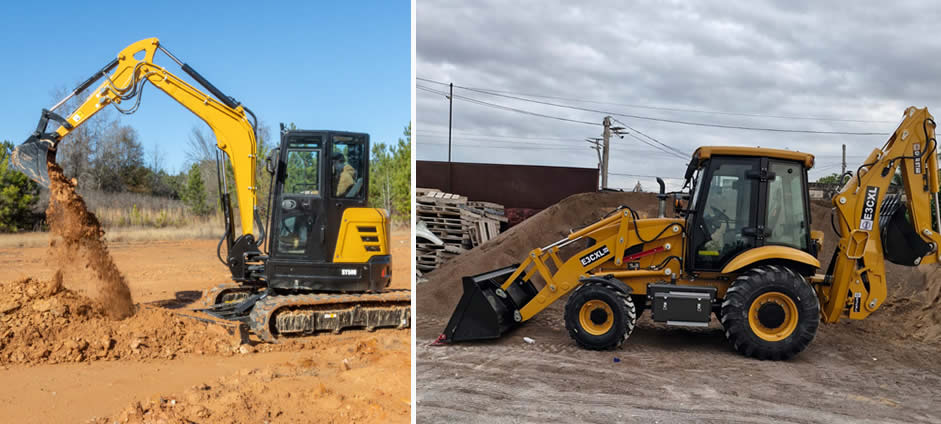
A trench crew hits the same bottleneck on almost every utility job: the digging arm outpaces spoil clearing. On the backhoe loader vs mini excavator for trenching call, EVERSTAR backhoe loaders usually win — same machine, rear arm digs and front bucket loads.
Mini excavators under 6 tons lose time to spoil handoff and give up depth and force in compacted ground.
EVERSTAR’s E3CXL and E4CX handle both halves of the job. Digging depth: 5200 mm and 5300 mm. Digging force on the E4CX: 46 kN for hard ground.
Send in only a compact excavator and dirt piles up beside the cut. Work width shrinks. Somebody stops digging trenches to shovel, wheelbarrow, or wait on a loader. The backhoe vs. compact excavator call flips on high-volume runs where both machines stay busy, or on saturated basement digs and steep slopes.
The Spoil Handoff Problem: Why Two Machines Create a Workflow Bottleneck on Trench Sites
Two machines on one trench line schedule against each other before the first bucket touches ground. Backhoe loaders skip that — one chassis, backhoe arm at the back, loader up front.
How Spoil Management Works on a Mini Excavator Trench Site Without a Loader
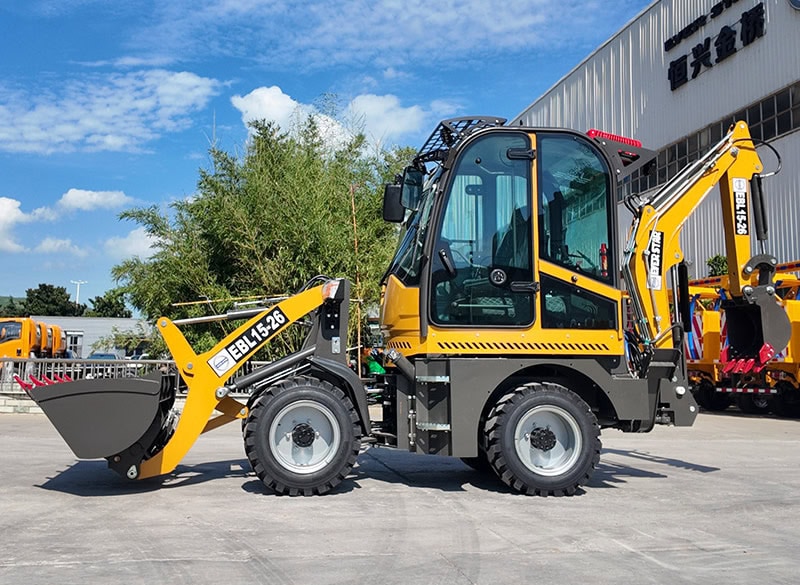
It digs the trench and sets spoil on the adjacent strip as it advances. Without a loader on site, that spoil gets stockpiled next to the cut, moved by wheelbarrow, or left until a separate loader arrives. Each option breaks the trench run.
Backfill waits on spoil, and clearing it means pausing the dig to do it by hand.On tight residential lots close to existing structures, spoil buildup crowds the tight spaces the crew still needs for material handling.
How the Backhoe Loader Eliminates the Spoil Handoff in the Same Trench Cycle
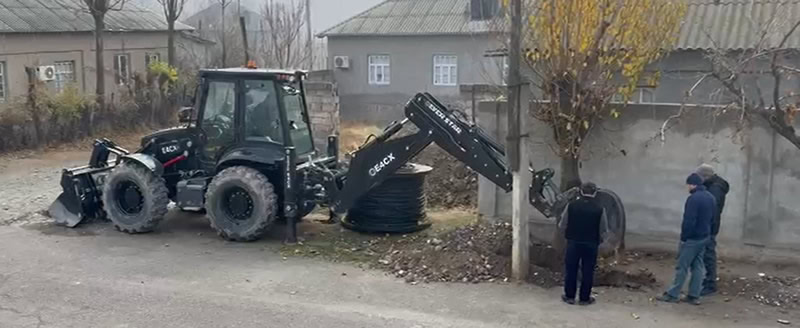
On EVERSTAR’s E3CXL and E4CX backhoe loaders, the operator digs with the rear arm, then swings the same seat to load spoil and heavy materials into a truck or clear it from the working zone with the front bucket. No pause, no separate machine — the entire machine’s trench run keeps moving.
Where a truck parks alongside the cut, the loader dumps straight into the bed. The same rear-dig, front-load pairing carries over to demolition projects, landscaping projects, road maintenance, and irrigation lines, plus work that has to transport materials in confined spaces where switching machines isn’t practical.
Trench Depth Coverage: Key Differences, Where the Two Approaches Overlap and Where They Do Not
Depth is where the significant differences turn hard — both machines reach the cut, only one goes past it.
Mini Excavator Digging Depth vs. Backhoe Loader Telescopic Reach
Mini excavators under 6 tons dig 2500 to 4000 mm deep, depending on class and arm setup. EVERSTAR’s backhoe loaders reach further: the E3CXL telescopes to 5200 mm, the E4CX to 5300 mm. In the 2500 to 4000 mm range either machine gets to the cut.
Past 4000 mm, only the backhoe loader’s telescopic digging arm holds up — most compact excavators in the same class can’t reach that far. That settles depth on utility runs.
Digging Force in Compacted Ground: When the Mini Excavator Cannot Maintain Trench Rate
E4CX digging force: 46 kN. Typical compact excavators under 6 tons: 25 to 35 kN. In compacted clay, gravel-bound fill, or partially cemented ground, lower digging power means fewer productive cycles per hour and drags out digging tasks on landscaping projects and utility runs.
The E4CX keeps trench rate up where a same-class machine slips — the right machine for heavy duty digging. A skid steer’s bolt-on backhoe attachment digs that deep but not that hard.
When the Mini Excavator and Separate Loader Combination Is Still Justified
A backhoe loader isn’t right everywhere. Size heavy equipment right and you don’t pay for dig capacity you never use. Two conditions flip the excavation work back to a compact excavator with a separate loader.
High-Volume Single-Pass Trenching Where Both Machines Run at Full Utilization
On large scale projects that keep a full-size excavator and a wheel loader running continuously, the two-machine setup beats one backhoe loader on large scale excavation.
That only holds when volume genuinely keeps both busy. On small scale projects, two machines add idle time and higher operating costs — one versatile machine keeps maintenance costs and fuel draw down on most landscaping tasks and various tasks a trench crew handles.
Track Stability on Steep Slopes and Very Soft Ground
Track compact excavators put down lower ground pressure than a backhoe loader’s tires, holding on soft surfaces and steep slopes where a wheeled machine’s size would slip. Wheeled excavators and backhoe loaders trade some slope stability for road speed, moving at up to 25 mph versus about 3 mph on tracks. On confined basement excavation, rough terrain, and uneven terrain, a track compact excavator with a separate loader beats a wheeled machine on multiple tasks in tight spaces. Flat utility trenching still goes to backhoe loaders. For large scale mining operations and heavy earthmoving, pull in large excavators — not a wheeled backhoe loader. Crews trailering between sites should confirm U.S. DOT vehicle classification because excavators typically require trailers for transportation between job sites due to low travel speed.
FAQs – Backhoe Loader
How does a backhoe loader eliminate the spoil handoff problem that a mini excavator creates on a trench site?
A backhoe loader digs the trench with its rear arm and loads spoil with its front loader bucket, both from the operator’s seat. Working alone, a compact excavator has no front bucket, so spoil waits beside the cut until a wheelbarrow, hand, or separate loader clears it — pausing the dig. Visit EVERSTAR Machinery to compare E3CXL and E4CX bucket capacity.
What trench depths can the EVERSTAR E3CXL and E4CX reach that most mini excavators in the same class cannot?
The E3CXL reaches a 5200 mm telescopic digging depth and the E4CX reaches 5300 mm. Most compact excavators under 6 tons dig to 2500 to 4000 mm. On utility trenching between 4000 and 5300 mm, the backhoe loader’s telescopic arm reaches ground a same-class compact excavator cannot.
A Backhoe Loader Eliminates the Spoil Handoff on Standard Utility Trenching Where Dig Depth and Front Loading Are Both Required
EVERSTAR’s E3CXL (5200 mm, 36 kN, 1 m3 front bucket) and E4CX (5300 mm, 46 kN, 1.2 m3 front bucket) fold rear trenching and front spoil loading into one machine, one shift.
The two-machine setup only pulls ahead when both stay fully used or when tracks matter on steep, saturated ground.
Match heavy equipment to project depth and volume, not sticker price — standard landscaping projects and utility trenching land on one machine over two, a cleaner backhoe vs. compact excavator answer with lower operating costs.
Contact EVERSTAR for Backhoe Loader Specifications for Trenching and Combined Dig-and-Load Projects
Contractors weighing backhoe loaders against a compact excavator and loader can contact EVERSTAR for E3CXL and E4CX heavy machinery specifications — digging depth, digging force, front bucket capacity, and road mobility.

