
A stable hydraulic system ensures construction accuracy and quality, enables efficient and continuous machine operation, improves safety and reliability, and extends the service life of the equipment.
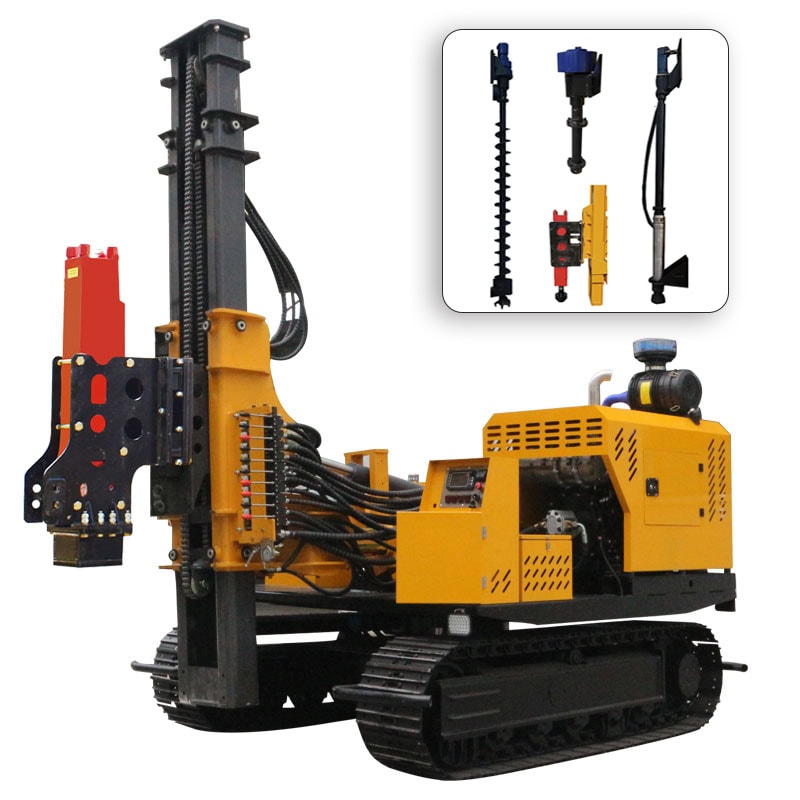
Key Takeaways
- Mastering the hydraulic structure and technology of solar pile drivers is essential for troubleshooting the low-speed creeping issue and ensuring construction efficiency and piling accuracy in photovoltaic power plant projects.
- In engineering operations, keeping hydraulic oil clean and selecting oil with appropriate viscosity according to environmental conditions are key to preventing abnormal pressure in equipment.
- Proper adjustment of components is key maintenance measure to eliminate friction and ensure precision. Meanwhile, the EVERSTAR team provides professional support, helping users comprehensively improve construction efficiency.
Troubleshooting Low-Speed Creep in Photovoltaic Solar Power Stations
When managing a large-scale solar project, ensuring the reliable operation of your construction machines is critical to maintaining your project schedule. In any utility-scale photovoltaic solar power station, the solar pile driver serves as the backbone of the foundation installation phase.
However, a common system failure known as low-speed creep, or “crawling”, can significantly hinder field efficiency. This issue directly disrupts the machine hydraulic pressure and compromises the precision required to drive heavy piles into various complex soil textures on the ground.
No matter the size of your solar field, understanding the drilling machine structure and its underlying hydraulic technology is the first step to ensure your on-site crew can achieve operational excellence every single time.
Core Causes of Crawling Failures in Solar Pile Driving Equipment
Low-speed creep in a pile driver during intensive pile driving tasks is typically caused by mechanical imbalances or fluid anomalies within the cylinders and hydraulic hammers.
First, if the system load stiffness is too low, it creates an unstable movement loop.
Second, when the flow rate of the throttle valve or speed regulating valve fluctuates, the equipment cannot deliver an appropriate impact power or consistent driving power.
Mechanical friction inside the hydraulic cylinders often due to parts being poorly processed, showing low rigidity, or suffering from axial misalignment with the guide mechanism drastically impacts operational stability. This requires your maintenance team to inspect, re-align, or replace components to meet the highest standards of engineering work.
| Phenonmenon: Crawling | ||
| Reason | Measure | |
| System load stiffiness is too low | Improvement loop | |
| The flow rate of the throttle valve or speed regulating valve is unstale | Choose a flow control valve with good flow stability | |
| Hydraulic Cylinders | Hydraulic cylindres parts are poorly processed and assembled, resulting in high friction | Replace the parts that do not meet the accuracy requirements and reassemble |
| Low rigidity of hydraulic cylinder | Improved stiffiness | |
| Axial misalignment with the guide mechanism | Reinstall | |
| Mixing air | The throttle is too low and the oil intake is not smooth. | Refill oil |
| Oil fitler clogged | Cleaning the oil filter | |
| The seal is not tight, and air is mixed in | Replace seal | |
| Dirty oil | Dirt gets stuck in the hydraulic motor and increases friction resistance | Clean the engine, replace the oil or strengthen the oil filter |
| Dirt blocks the flow and causes flow changes | Clean the hydraulic valve, replace the oil or strengthen the oil filter | |
| Inappropriate oil viscosity | Replace with hydraulic oil of specified viscosity | |
| External friction | The wedge iron or pressure plate of the carriage is adjusted too tight | Recalibration |
| The guide rail and other duiding mechanisms have low precision and poor contact | Scrape the guide rails as required to ensure good contact | |
| Poor lubrication conditions | Improve lubrication conditions | |
Fluid Contamination and Environmental Adaptability in the Field

Another super important thing to consider with solar engineering is keeping an eye on fluid health and how well a system can adapt to its surroundings. When air gets into the system, either because the throttle is set too low and oil isn’t flowing smoothly or an oil filter is clogged and letting in leaks or maybe a seal is loose somewhere, operator can get all sorts of unpredictable pressure spikes and these annoying crawl issues.
On top of that, dirty oil that’s full of debris can either get stuck blocking the internal flow or maybe get wedged in the hydraulic motor and really increase the friction – which is just a nightmare. But the type of hydraulic oil you use and the viscosity just has to be right for the job at hand, taking into account the specific demands of the project you’re working on. Whether your compact diesel units are out on some remote highway guardrail or just standard pile foundations, keeping that oil nice and clean is a must if you want to see your fleet thrive over the long haul.
Maintenance Measures and Precision Solutions
To eliminate external friction, components like the wedge iron or the pressure plate of the carriage must not be adjusted too tight. Low precision and poor contact on guide rails require immediate recalibration or scraping to guarantee seamless interaction. Our committed and dedicated workforce takes great pride in offering reliable support with unmatched dedication to maximize your uptime.
As a trusted partner in the renewable energy sector, EVERSTAR specialize in robust construction equipment designed to make it easy to set up and start any demanding task. For more insights into optimizing air hammers, impact power, or custom drilling setups, feel free to contact our expert service team through our website today. Let our years of experience help you raise productivity and secure a highly convenient operation workflow.
FAQs——Maintenance of the hydraulic system
Why does a solar pile driver experience a “crawling” or low-speed creep phenomenon during operation?
Low-speed creep in a solar pile driver is often the result of multiple factors at play it’s a bit of a perfect storm involving the way the machine uses its hydraulic pressure and mechanical bits. As many troubleshooting reports show, the main culprits are a mix of:
- System Load Stiffness: If your system load is just too soft or if your speed regulator valve is being wonky, that can cause problems.
- Hydraulic Cylinders Issues: Sometimes the internal parts of the hydraulic cylinders just aren’t up to snuff – maybe the materials aren’t right, or they’re not properly aligned with the guide.
- Fluid & Air Contamination: When air gets into the oil (maybe because a seal wasn’t tight or a filter got clogged) or when dirty oil just gets stuck in the motor, that can make the oil flow all wonky and cause friction.
- External Friction: If your wedge iron or pressure plate are set too tight and your guide rails are a bit rough, that can stop your pile driver dead in its tracks.
How do you choose the right hydraulic oil to prevent low-speed creep in a solar field?
To get the best performance out of your solar field and keep things running smoothly, you need to pick a hydraulic oil that’s got the right viscosity for your local conditions. If you get the viscosity wrong, the oil isn’t going to do its job and will cause friction. Always go with the viscosity recommended for your specific pile driver model and the soil conditions you’re dealing with.
And stick to your maintenance schedule to keep your oil clean and your machine parts in good working order,and your diesel machines will be delivering the right amount of power every time without fail.
Contact EVERSTAR for Stable Performance Solar Pile Driver
Right usage method and maintenance of solar pile driver will prolong the lifespan of machine. Offer your requirements and demands of project, experts in EVERSTAR will provide the cost-effective plan for your project.

