
Key Takeaways
- In core barrel drilling, a ring is cut through hard strata. How fast that goes depends mostly on the teeth on the core bit.
- It’s a tool for large rotary drilling rigs, driven by the Kelly bar. EVERSTAR’s small pile drivers can’t run a core barrel.
- For hard rock and compacted soil, go with pointed bullet-type teeth; flat bucket teeth are for softer soil.
- Nothing guides tooth choice better than the core samples from site investigation.
- Drilling performance holds up when the holders match the teeth and someone inspects them every shift.
How Core Barrel Drilling Works on Foundation Rigs
A core barrel takes over when a drilling bucket or auger stops advancing in a hard formation.
Core Barrel Function: Cutting Through Rock and Hard Strata
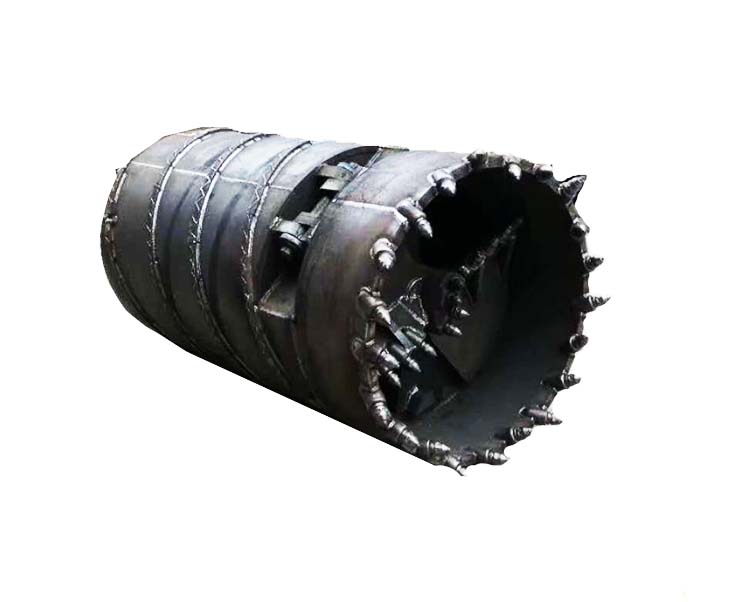
A foundation core barrel is a heavy steel cylinder with the core bit at its lower end, a cutting ring fitted with tooth holders. Under crowd force, the teeth cut a narrow ring into the formation and leave a column of rock inside.
At the planned drilling depth, the drilling crew breaks the core loose and lifts it out. Cutting a ring takes less energy than grinding the full hole, so the method is suited to rock sockets, boulders, and reinforced concrete.
Tooth condition drives drilling efficiency. Worn tips slow drilling and shift wear onto the holders, the core bit, and other components.
In mining exploration, exploration drilling turns a slim double tube barrel on a drill string, adding one drill rod at a time as the hole deepens. A non-rotating inner tube holds the core while a diamond core bit cuts around it.
Inside, the inner tube keeps the core safe. When it’s full, a wireline system pulls the inner tube and its samples up to the surface, and the drill rod string stays in the hole. All of these exploration techniques are about core recovery, meaning intact samples a lab can use for analysis.
Rig Requirements: Large Rotary Drilling Rigs and Kelly Bar Drive
A core barrel hangs from the Kelly bar of a large or heavy rotary drilling rig, a heavy telescopic drive of at least two sections that transfers torque to the drilling tool. On a foundation drilling rig, the Kelly bar replaces the drill string.
A Kelly bar is not a drill rod. An exploration drill rod is far slimmer, and a drill rod is not built for core barrel torque.
.Core barrels are not used on EVERSTAR’s small pile drivers, which are separate equipment for 3 to 6 meter piles
Which tool gets used comes down to the drilling rig the project team picks. That piece of equipment fixes the core barrel diameter, the torque, and the crowd force. Get the rig model and its Kelly bar connection confirmed first if you want to optimize drilling performance.
Picking Teeth to Suit Ground Conditions
Most drilling projects start tooth selection in the same place: the site investigation samples, read next to EVERSTAR’s tooth specifications. What the samples show varies. You might find fractured rock, a few boulders, or soft bands, and each one brings challenges of its own. Get the match right and there are two benefits. Efficiency goes up, and the teeth last longer.
These samples come from the double tube method used in exploration drilling, where the inner tube gives each core sample protection from drilling fluid. Each core sample is logged by depth, so crews can review the samples before the drilling rig arrives.
Core recovery compares the core recovered with the length drilled, and low recovery points to weak ground. Engineers also run strength analysis on intact samples from each formation.
Bullet Teeth for Hard Rock and Compacted Soil
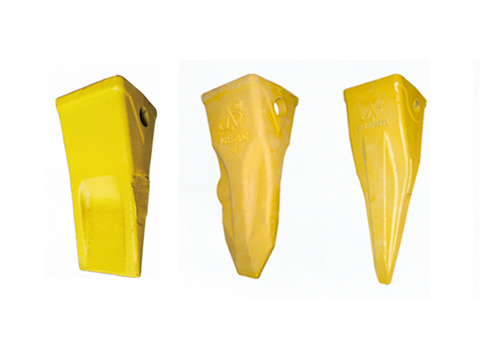
EVERSTAR bullet teeth have a pointed shape and wear-resistant materials. The point concentrates crowd force, so each tooth chips hard materials as the core barrel turns.
Specify them wherever a core sample shows hard rock, strong rock, cemented gravel, or compacted soil. This tooth type fits projects of any scale, since scale depends on the drilling equipment selected.
EVERSTAR models are rated from 20-30 MPa up to 60-80 MPa. Send the strength results from your samples so the consultants can confirm the matching model.
Bucket Teeth for Softer Soil Layers and Transition Zones
The flat profile on EVERSTAR bucket teeth scrapes through softer soils and cuts with good efficiency. You can get them with a base or without one, welded or bolted, so there are at least four variants to pick from.
Clay, silt, sand, and weathered materials near the top of the hole are where the flat profile is best suited. Mixed ground complicates things, because it affects both the tooth choice and when you swap. If the samples show soft soil sitting on rock, note the depth where it changes and keep both tooth types on site with the equipment.
EVERSTAR’s standard tooth systems make the swap process quick, keeping the drilling operation moving.
Matching Teeth to Your Rig and Managing Wear
Once drilling starts, mounting errors and tooth wear are the main challenges.
Rig Compatibility and Mounting: Tooth Holders and Installation Method
A tooth and its holder are matched components. The holder has to fit both the tooth shank and the core bit. With welded holders, the welding techniques have to be right for the barrel steel. Bolted holders have benefits on drilling sites where swaps happen often, because the change procedure takes less time.
The installation method has to suit the barrel and the rig, so wall thickness, torque, and crowd force in hard materials all count. Where the holder sits, its position, controls the precision of the cut and how well debris clears.
For specifications and custom needs, contact EVERSTAR’s consultants with the drilling rig model, core barrel diameter, and holder type.
Tooth Wear Checks and the Limits of This Guide
Every tooth on the core bit should get a look at the end of a shift and again whenever the core barrel is out of the hole. EVERSTAR recommends putting that in a written procedure, because night crews tend to skip checks that only live in someone’s head. Teeth are consumable components and get replaced on a regular basis.
For safety, rest the core barrel on firm ground and follow the lockout procedure for the equipment before any tooth change. Address worn teeth before holder damage takes the core bit out of service and adds the risk of losing a tooth in the hole.
Abrasive materials wear tips faster, and operator techniques affect durability in every drilling operation. Recording tooth life per formation helps optimize future core barrel orders.
Some contractors use barrels fitted with roller bits in very strong formations, but roller bits are a separate tool decision. EVERSTAR does not manufacture rotary drilling rigs, and output depends on the drilling equipment selected for the project.
FAQs — Core Barrel Teeth
Which EVERSTAR teeth are used in core barrel drilling?
EVERSTAR supplies two tooth types for core barrel drilling: bullet-type teeth and bucket teeth. The pointed profile cuts hard rock and compacted soil, and the flat profile handles softer soils and transition zones. Both run on large rotary drilling rigs, not on EVERSTAR’s small pile drivers. EVERSTAR Machinery manufactures both as consumable parts.
How do I know when to switch from bucket teeth to bullet teeth?
socket samples at each hole.It’s time once the core barrel reaches a formation that the flat profile struggles with. The crew will feel it during the operation. Penetration drops off, the torque gauge creeps up, and teeth come up chipped. Most of the time the core sample log has already shown where the ground changes, so plan the switch for that depth before drilling starts and confirm it with
Contact EVERSTAR Consultants for Bullet Teeth and Bucket Teeth
Drilling contractors and rig operators can send EVERSTAR’s consultants the drilling rig model, core barrel diameter, ground profile, and test results from their samples to receive tooth specifications for each zone of the project.

