
Discover high-performance solar pile drivers and equipment strategies designed for hard soil conditions. Maximize jobsite productivity and foundation stability.
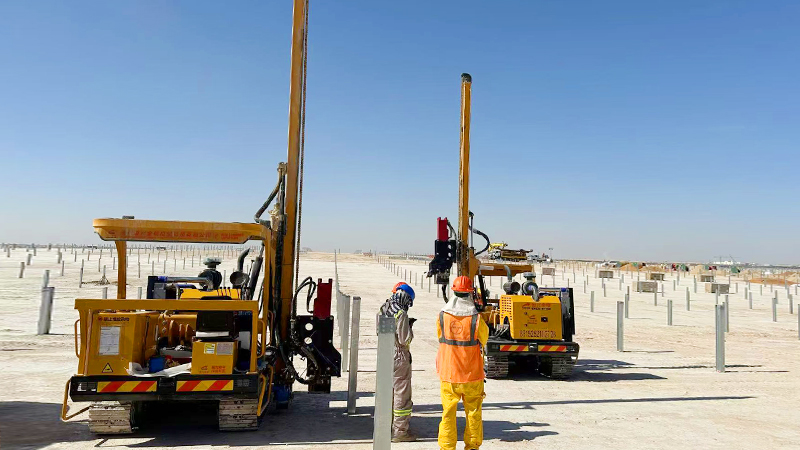
Key Takeaways
- When facing complex construction conditions, choosing a high-performance pile driver that delivers sufficient power is essential for ensuring the structural stability of solar mounting systems and maintaining overall construction quality.
- Compared with traditional concrete foundations, a high-quality solar pile driver can improve construction efficiency and speed while reducing costs and ongoing maintenance expenses.
- On-site construction guidance helps workers carry out pile driving operations correctly and avoid project delays caused by improper operation.
Maximize Productivity: Pile Driver Solar
In the rapidly evolving solar industry, utility-scale solar farm projects increasingly require heavy infrastructure to be built on tough, unforgiving terrain. Executing solar pile driving and securing ground mount solar systems in hard soil conditions present significant challenges for contractors. To ensure long-term structural integrity and foundation stability, choosing the right machine with sufficient power is a non-negotiable step.
Whether dealing with dense clay or rocky ground, high-performance pile drivers engineered for solar installations deliver the necessary force to drive piles to their required depth without damaging the materials or compromising alignment.
Choose Right Machine For Your Projects
Making an informed decision when selecting machinery directly impacts total productivity and overall project efficiency. To maximize productivity during solar pile installations, operators must match the machine specifications with specific ground mounted requirements and exact pile depth targets. Utilizing reliable equipment backed by unmatched product support and professional service ensures smooth installation cycles across all solar projects.
Ultimately, selecting high-caliber pile driver solar technology represents a smart long-term investment for any construction firm looking to install solar panel arrays with supreme stability, no matter how challenging the underlying ground may be.
The Guidance Of Impact Energy For Solar Farm Projects
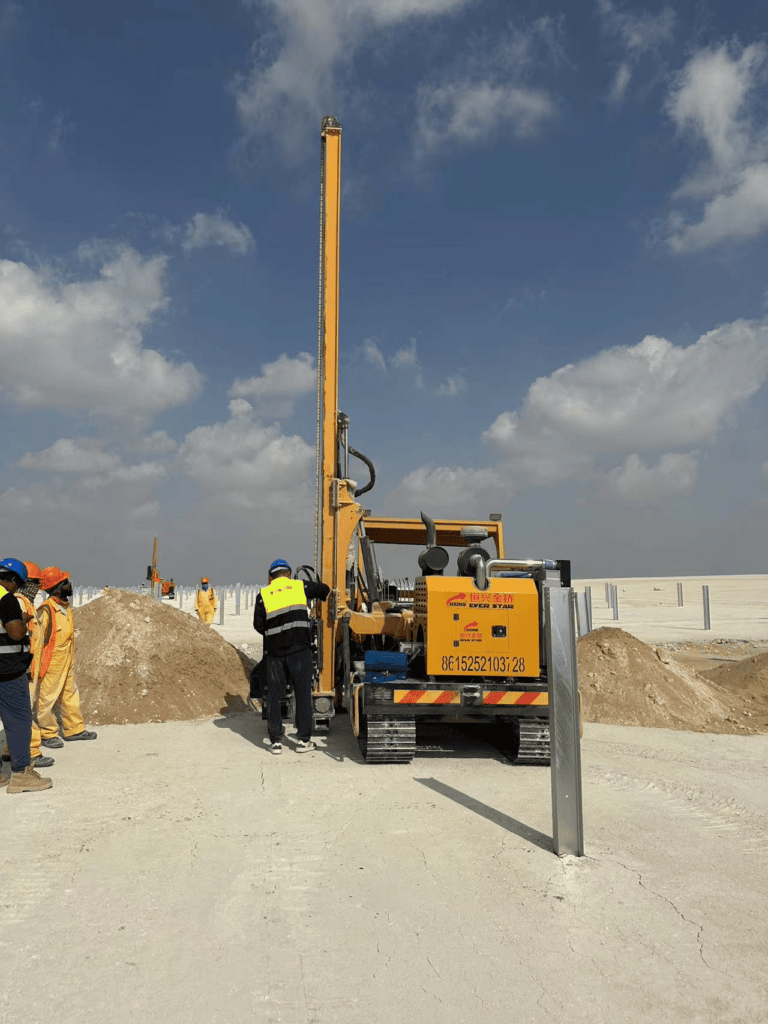
For large installations, relying on conventional concrete foundations is often less efficient and involves higher cost compared to driven steel posts. Premium solar pile driver machinery, equipped with an advanced hydraulic hammer and precision-engineered hydraulic components, allows operators to seamlessly operate across diverse site environments.
Leading manufacturers focus on creating robust high quality pile drivers that feature maximum impact energy, total operational control, and exceptional precision. Investing in a top-tier model not only optimizes jobsite productivity and driving speed, but also offers crucial operational benefits such as shorter lead times and reduced maintenance overhead.
- First, assess the site’s geological conditions, pile type, target depth, and construction requirements before selecting an appropriate operating method. Engineers describe methods such as hydraulic impact pile driving, auger drilling, and down-the-hole (DTH) percussion drilling. The specific method should be selected based on site conditions and equipment configuration.
- Before pile driving, move the equipment onto a leveled working area. Use the guide rail and fine-adjustment handle to align the machine with the pile position. Adjust the mast and feed beam vertically by controlling the front-to-back tilt and left-to-right swing. Technical personnel recommend using a physical or electronic level to verify vertical alignment.
- For percussion drilling, connect the drill bit, impactor, drill rod, spindle, and air compressor as required. After assembly, check the concentricity of the components to ensure that the drilling assembly does not wobble during operation. During drilling, raise and lower the impactor slightly as needed to prevent rock fragments or cement debris from blocking the impactor and drill bit.
- Adjust the feed gradually, starting at a low setting and increasing it as needed to match the actual ground conditions. Do not suddenly push the control lever to its maximum position, as this may damage the drill bit or impactor. If the drilling tools become stuck in the hole, raise them promptly and inspect the equipment.
- Important Note: When DTH percussion drilling passes through hard rock, stop this drilling operation. Never continue the same operation in soft soil. Do not move the drilling rig while drilling, as this may damage the drilling tools or cause borehole misalignment. Always follow the equipment operating instructions and the approved on-site construction plan.
Requirements for Hard Rock Ground Conditions
- Stop drilling once the machine has drilled through the hard rock layer. Continuing to drill in soft soil using the same method is strictly prohibited. This requirement should be interpreted in accordance with the site construction plan and equipment configuration.
- If the drilling tools become stuck in the borehole, raise them promptly and inspect the equipment. Forcibly operating the machine in violation of the operating procedures is prohibited.
- After drilling is completed, gradually lift the drill bit away from the ground while keeping it rotating.
- Before using the impactor, adjust the air-line lubricator according to the equipment manual. First, supply compressed air for several minutes to clear debris from the air lines, then check the end of the drill rod for residual lubricating oil. Inspect the oil level in the lubricator before operation and replenish it promptly if the oil level is insufficient.
- Assemble the impactor, drill rods, and other connecting components according to the manufacturer’s instructions. If any abnormal noise is detected, stop operation immediately, identify and rectify the problem, and resume work only after the equipment has been inspected and repaired.
FAQs
Why is choosing the right solar pile driver critical for hard soil conditions?
Executing solar pile driving in hard or rocky ground conditions requires robust equipment capable of delivering high impact energy. Using underpowered machinery often leads to project delays, equipment wear, and compromised structural integrity. Selecting a high-quality solar pile driver equipped with advanced hydraulic components ensures that contractors can efficiently drive piles to the required depth, maximizing jobsite productivity across challenging terrain.
How do driven steel posts compare to concrete foundations in large solar installations?
For utility-scale solar farm projects, driven steel posts offer a faster, more cost-effective, and environmentally adaptable solution compared to traditional concrete. Advanced solar installations benefit from shorter lead times and enhanced foundation stability.
Contact EVERSTAR for High Quality Pile Drivers
Ready to optimize your next solar farm project? Whether you need advice on selecting the right machine for tough ground conditions or want to learn more about our high-quality solar pile drivers, our team is here to help.
Contact us today to discuss your solar pile driving requirements, request a quote, or discover how our industry-leading equipment and unmatched product support can drive your project’s success.

