
Key Takeaways
- The E3CXL delivers a telescopic digging depth of 4000/5200 mm and a digging radius of 4800/6000 mm; the E4CX extends to 4000/5300 mm depth and 5700/6500 mm radius.
- The E4CX’s larger bucket (1.2 m³) and higher unloading height (2800 mm) suit higher-volume tasks compared with the E3CXL’s 1 m3 bucket.
- The E4CX’s 46 kN maximum digging force outperforms the E3CXL’s 36 kN, improving productivity in compact, rocky, or hard soil conditions.
- The E4CX offers higher ground clearance (450 mm) and a tighter turning radius (4200 mm) despite larger overall dimensions than the E3CXL.
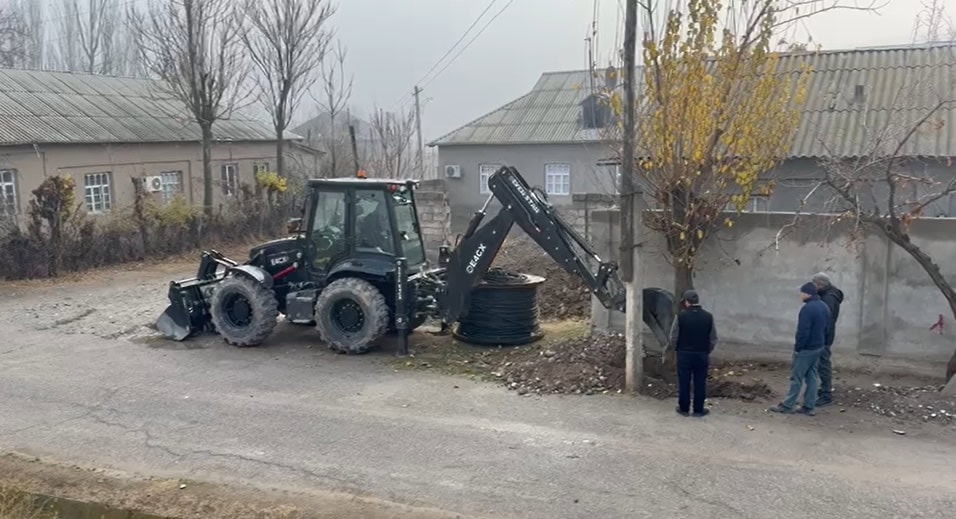
Backhoe loader specifications determine whether a versatile machine with a front loader bucket and rear digging arm can reach the required trench depth, load enough material per pass, and work within the space limits of the site.
Operating weight sits at 7300-8000 kg for the E3CXL and 9500 kg for the E4CX; attachments add weight, and equipment size should factor into any site or transport plan.
In practice, backhoe loader specifications mean checking maximum digging depth, bucket capacity, digging force, operating weight, and overall dimensions, because a mismatch in any one of those can cause delays, lower productivity, or access problems on confined jobs.
Contractors, utility managers, and procurement leads can match the right backhoe loader to project requirements, site conditions, and transport constraints.
Excavation Specifications: Digging Depth, Reach, and Swing Arc
Excavation performance comes down to three linked numbers: maximum digging depth, digging radius, and the swing arc the arm can move through without repositioning the backhoe loader.
EVERSTAR’s backhoe loader models E3CXL and E4CX share the same telescopic-arm design, but their numbers diverge enough to matter for trenching and drainage work.
Maximum Digging Depth and Telescopic Capability: E3CXL vs. E4CX
Both backhoe models rely on a telescopic dipper arm for deeper digging than a fixed-arm machine achieves from the same footprint.
The E3CXL’s maximum digging depth is 4000 mm standard and 5200 mm telescoped; the E4CX matches the 4000 mm standard depth and extends slightly further, to 5300 mm.
That gap compounds with digging radius: the E3CXL reaches 4800/6000 mm, while the E4CX runs 5700/6500 mm, suiting wider excavation footprints for digging trenching on utility and drainage projects.
A contractor needing to dig deeper on a tight footprint still gets efficient digging from the E3CXL’s shorter reach.
Lifting Height and Swing Arc: Loading Reach and Dump Clearance
Maximum lifting height and rotation determine how the backhoe dumps material once clear of the trench.
The E3CXL lifts to 5200/5950 mm, with 180° of rotation.
The E4CX lifts higher, to 5800/6300 mm, and rotates through 190°, adding flexibility for material placement without repositioning the machine.
A higher lifting height lets the loader dump into taller trucks or over higher barriers.
Loading Specifications: Front Bucket Capacity, Unloading Height, and Breakout Force
The front loader is the second working system on the backhoe, and its specifications determine loading volume for material handling tasks separate from trenching.
Bucket size, breakout force, and unloading height and distance define how much a pass moves and where it lands.
Bucket Capacity, Breakout Force, and Unloading Height
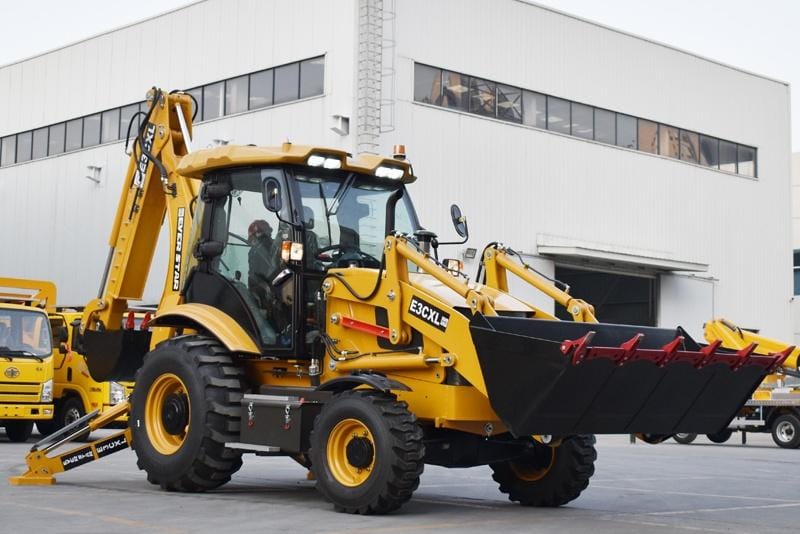
The E3CXL carries a 1 m3 bucket with 72 kN breakout force, a maximum unloading height of 2650 mm, and an unloading distance of 1062 mm.
With the E4CX stepping up to a 1.2 m3 bucket, it’s also useful to note that industry lift capacity on backhoe loaders often ranges from about 2300kg to 5900 kg when framing loading performance expectations.
The E4CX’s bucket runs larger at 1.2 m3, with the same breakout force, a higher 2800 mm unloading height, and a shorter 800 mm unloading distance.
The larger bucket and taller unloading height suit higher-volume loading into bigger trucks, while the E3CXL’s longer unloading distance helps when a truck can’t sit close to the loader.
Machine Dimensions and Performance: Matching the Model to Site Access and Terrain
Overall backhoe dimensions, wheelbase, ground clearance, and operating weight determine whether the equipment fits a site’s access roads, turning space, and terrain.
Overall Dimensions, Operating Weight, Wheelbase, and Ground Clearance
The E3CXL measures 6150 x 2350 x 3760 mm, with a 2200 mm wheelbase, 300 mm ground clearance, and a 6580 mm turning radius, making it a compact backhoe well suited to confined spaces.
Among compact machines, backhoe weight figures often fall around 1360kg to 4500kg, while overall published operating weight with standard equipment can range from about 1360kg to 13600kg, which shows why backhoe matters when planning transport and matching the machine to the jobsite.
The larger, heavier E4CX measures 6500 x 2500 x 3800 mm, with a 2250 mm wheelbase, 450 mm ground clearance, and a tighter 4200 mm turning radius, which matters where repositioning costs cycle time, while a lighter backhoe can also help maintain surface integrity on finished ground.
The E4CX’s higher clearance also suits rough terrain better than the lighter E3CXL, giving the heavier machine more traction and more stability where a smaller backhoe would struggle.
Choosing backhoe size across multiple sizes is a balance between maneuverability, machine size, and the added stability of a larger machine, with larger equipment better suited to challenging terrain and heavier materials, while the smaller unit remains better in tight spaces.
Engine, Speed, and Climbing Ability
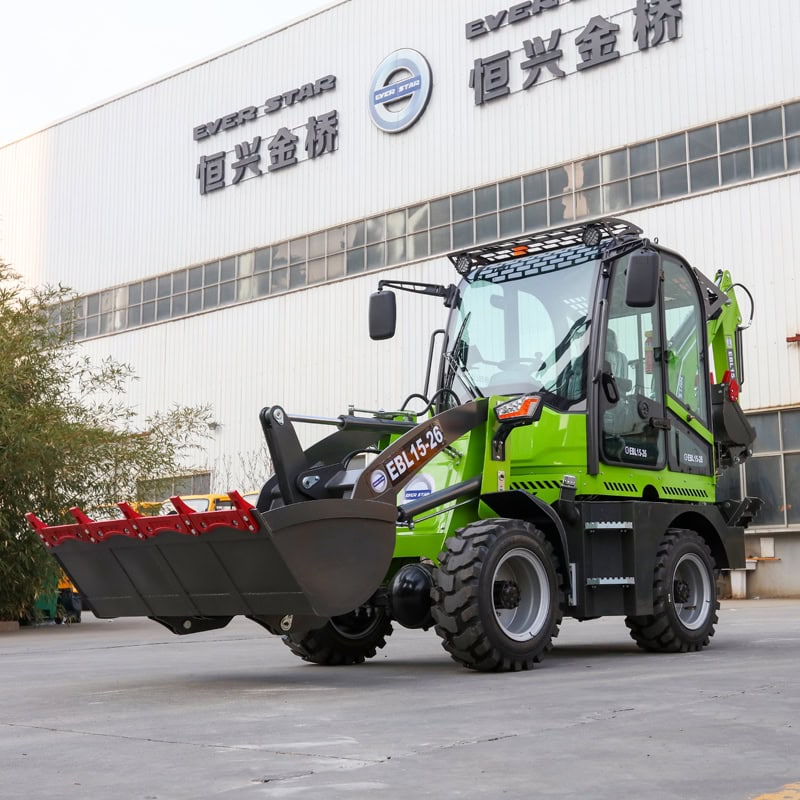
The E3CXL runs a Yuchai YCD4J22T-115 engine at 85 kW, framing the two machines through an engine power comparison, with a 40 km/h maximum speed and 35° climbing ability.
Hydraulic performance is commonly measured by flow in gallons per minute or by pressure, especially when evaluating auxiliary functions.
The E4CX uses a smaller Yuchai 4-108 engine at 75 kW, a lower 38 km/h speed, and the same 35° climbing ability.
Both backhoes pair a fixed-axis power shift gearbox (4F/4R) with a torque converter, and 35° of climbing ability covers most construction sites without added traction, a figure worth weighing against U.S. DOT guidance on maximum grades for site access roads; in the wider market, many models over 15 feet tall can reach at least 124 horsepower as their maximum horsepower.
FAQs — Backhoe Loader Specifications
What is the maximum digging depth of EVERSTAR’s E3CXL and E4CX backhoe loaders?
The E3CXL reaches a maximum telescopic digging depth of 5200 mm, extending from a 4000 mm standard depth. The E4CX telescopes slightly deeper, to 5300 mm, from the same 4000 mm standard depth. Both figures apply with the dipper arm extended; digging radius runs further on the E4CX, at 6500 mm compared with the E3CXL’s 6000 mm.
How does front bucket capacity differ between the E3CXL and E4CX models?
The E3CXL’s bucket size is 1 m3, while the E4CX’s runs larger at 1.2 m3. Both models share the same 72 kN breakout force, so the difference affects volume moved per pass rather than digging power. The E4CX’s higher 2800 mm unloading height also suits taller trucks better than the E3CXL’s 2650 mm.
Contact EVERSTAR for Backhoe Loader Specs and Model Selection Guidance
Construction contractors, utility managers, and procurement leads evaluating backhoe loader specs can contact EVERSTAR for full E3CXL and E4CX data, depth comparisons, and help choosing the right machine and right equipment for your next project.

