
Key Takeaways
- Both machine types share attachments. The decision turns on ground conditions and site layout.
- Compact track loaders distribute weight across rubber tracks, making them the right choice for soft, muddy, or disturbed terrain.
- Wheeled skid steers deliver faster speed and tighter turning on hard, stable, compacted surfaces.
- On abrasive hard surfaces, rubber tracks wear faster than tires, adding maintenance cost where the CTL advantage is not needed.
- Apply two filters: ground condition first, site layout second. Cost is the tiebreaker in the marginal range.
A contractor running a compact track loader vs skid steer comparison faces a decision that looks simple on paper and gets complicated on the jobsite.
Both machine types share attachments, bucket and pallet fork configurations, and a full range of tools via the universal quick-attach plate. This versatility is what makes both machines popular for small site work and landscaping jobs.
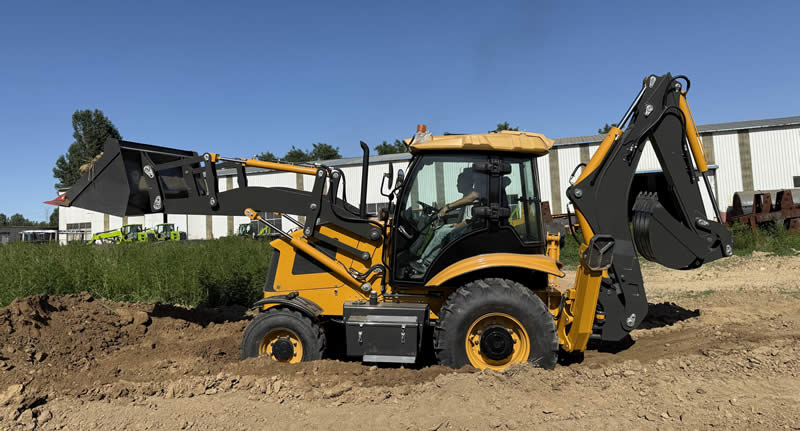
Backhoes handle digging, trenching, and lifting across similar sites, and a backhoe loader is a common choice where digging depth matters.
However, backhoes have a larger footprint than compact track loaders or skid steers, making backhoe loaders impractical in confined areas or on soft ground. A company choosing between the two machine types is generally weighing ground pressure and traction control, not digging depth.
Ground Pressure: The Performance Variable That Determines Soft-Terrain Viability
Ground pressure is the primary technical difference between compact track loaders and wheeled skid steers. It determines which machine is viable on a given surface and drives most soft-terrain equipment decisions.
A wheeled skid steer concentrates its weight on four tire contact patches. A compact track loader spreads that weight across rubber tracks, reducing pressure on the surface below. Backhoe loaders apply more ground pressure than both, due to larger weight and narrower undercarriage.
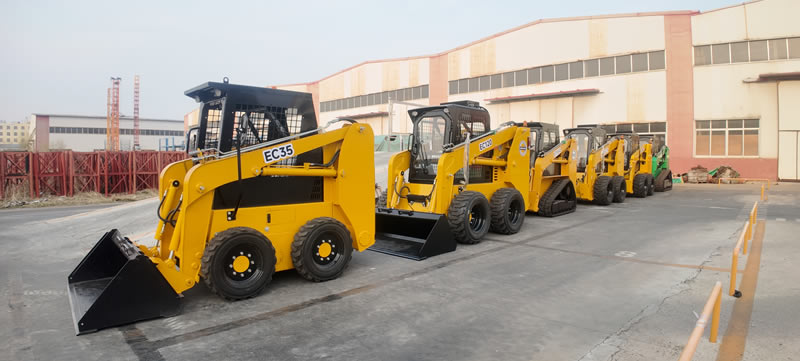
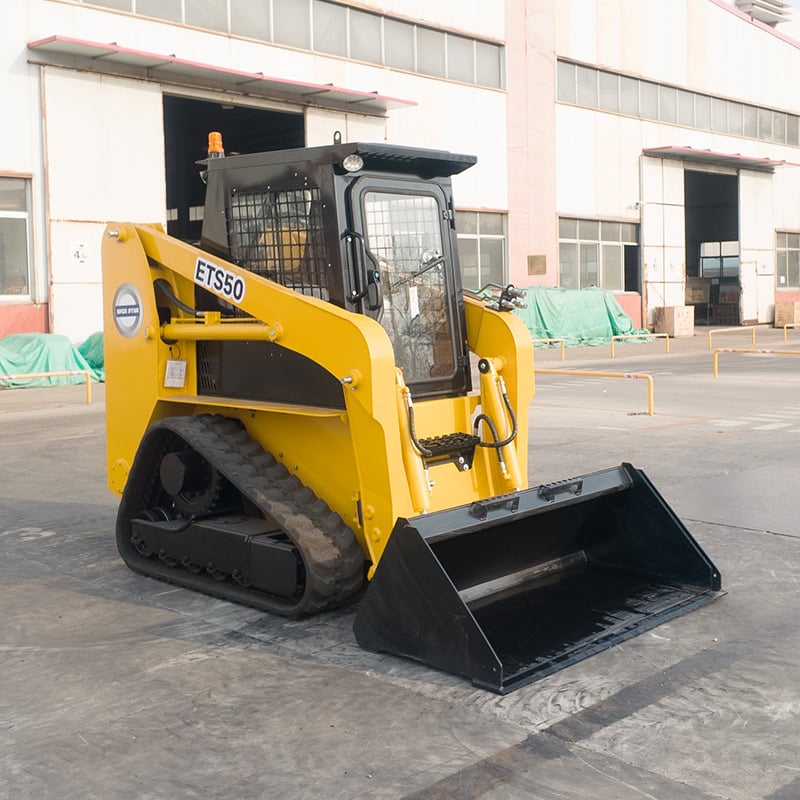
The ETS50 compact track loader carries 3,000 kg across a track undercarriage, while the comparable EC35 skid steer carries 2,600 kg on four wheels, making the track system the correct choice where the wheeled machine would sink.
How Track Systems Reduce Ground Pressure on Soft Sites
Compact track loaders remain mobile on soft, muddy, and saturated ground where wheeled machines lose traction.
Wet agricultural land, pre-graded solar farm sites after rain, and recently disturbed terrain are all common cases where tracks provide the decisive advantage.
Many backhoes are not practical options on these sites. Backhoe loaders require stable, firm ground to operate without sinking and also need room to set stabilizer legs.
EVERSTAR’s ETS series compact track loaders range from the 25HP ETS25 at 1,530 kg to the 138HP ETS125 at 5,100 kg, covering small construction tasks to large-scale loading on soft ground.
When Wheeled Ground Pressure Is Not a Constraint: Hard and Compacted Sites
On graded and compacted sites, hardstand yards, and dry solar farm installations, the wheeled skid steer’s ground pressure is not a disadvantage.
Tracks cause accelerated wear on concrete, asphalt, and compacted roads, adding maintenance cost where the ground pressure benefit is not needed. Deploying a compact track loader on these surfaces is a mistake in terms of track wear and efficiency.
On hard, stable ground, wheeled skid steers like EVERSTAR’s EC series are the practical choice. The EC65G at 3,400 kg with a 950 kg rated load and the EC75 at 3,460 kg with a 1,050 kg rated load are versatile machines built for material handling and site tasks across hard surfaces.
Traction, Stability, and Performance on Slopes and Uneven Ground
Traction on non-ideal ground is the second key differentiator. How each machine responds to uneven terrain, wet slopes, and loose surface materials determines which is safer and more productive on variable jobsites.
Track Traction on Uneven and Sloped Terrain: Consistent Contact Area as a Performance Asset
Compact track loaders maintain traction on uneven ground and wet slopes where wheeled tires lose grip or spin.
This is a common case on landscaping jobs, solar farm sites, and trenching operations in soft ground. Many backhoes handle digging and trenching well in firm conditions, but compact track loaders outperform backhoes as lighter, more maneuverable machines across variable terrain.
The ETS65 at 4,200 kg and 75HP delivers enough power and traction on grades and soft surfaces, with the track system maintaining control where lighter wheeled machines lose momentum.
Maneuverability, Site Access, and the Tight Jobsite Decision
Both machine types have a smaller footprint than most construction equipment, including most backhoe loaders.
Using backhoes in tight spaces is a common mistake, as the backhoe loader’s longer wheelbase and rear stabilizer legs make tight turns and indoor access impossible in many cases.
Confined Site Access: Turning Radius, Width, and Navigation in Tight Spaces
Wheeled skid steers typically have a tighter effective turning radius in confined spaces. The EC35 has a front turning radius of 1,310 mm without the bucket, matching the ETS50’s 1,310 mm, but the track system adds width, making the CTL slightly less agile in narrow corridors.
The EC25’s 960 mm turning radius makes it one of the most maneuverable small machines available, with a narrower width of 920 mm versus 1,080 mm for the ETS25.
Many backhoes simply cannot handle the confined-space attachment work that skid steers and compact track loaders manage routinely.
FAQs — Compact Backhoe Loader vs. Skid Steer
What is the ground pressure difference between a compact track loader and a skid steer?
Compact track loaders spread machine weight across rubber tracks, producing significantly lower ground pressure than a wheeled skid steer of similar weight. This keeps compact track loaders mobile on soft and saturated terrain where wheeled machines sink or lose traction. The practical difference is most visible on recently disturbed ground, wet agricultural land, and solar farm sites after rain. Visit EVERSTAR Machinery for ground pressure specifications across the ETS and EC series.
When does a compact track loader justify its higher cost over a wheeled skid steer?
A compact track loader justifies its higher cost when the site consistently involves soft ground, slopes, or wet conditions. For projects on hard, stable, compacted ground, the wheeled skid steer delivers similar loading tasks and better cycle times at lower purchase and maintenance cost. The tiebreaker is ground condition frequency: if soft ground is common across most projects, a company should decide in favor of the CTL for the long-term investment.
Ground Conditions and Site Layout Are the Two Filters That Resolve the Decision
he most common mistake is selecting a wheeled skid steer for a site where the ground turns soft, or deploying a compact track loader on hard surfaces where tracks wear quickly.
Many backhoes are versatile machines that handle digging and loading tasks, but backhoes cannot match the compact footprint and attachments versatility of either machine type on smaller sites.
According to the U.S. Bureau of Labor Statistics, equipment selection mismatches on construction sites contribute directly to operational inefficiency and safety risk.
Contact EVERSTAR for Equipment Guidance on Solar Farm, Construction, and Mixed-Terrain Projects
Project managers, site operators, and procurement teams can see the EVERSTAR site for solar pile drivers, aerial work platforms, and scissor lifts suited to their ground conditions, access constraints, and task requirements.
Contact EVERSTAR directly to discuss your site profile and get equipment recommendations matched to your ground conditions and project scope.

