
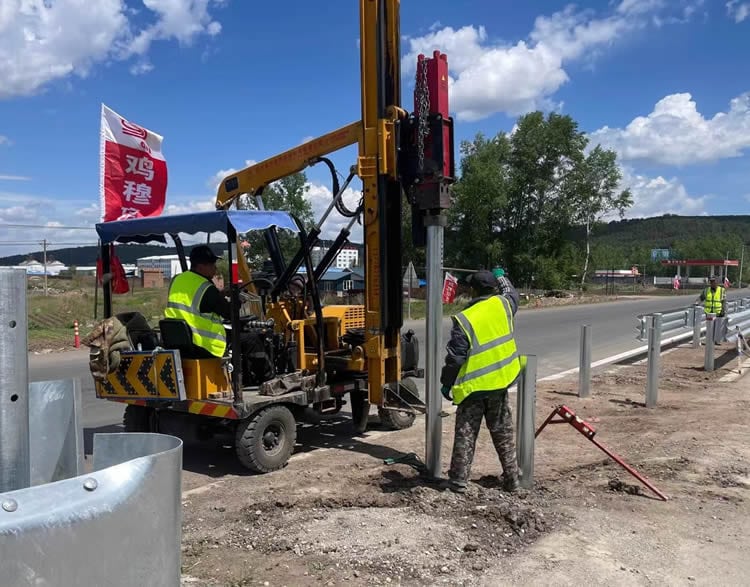
Key Takeaways
- A highway guardrail pile driver helps crews complete guardrail installation quickly while keeping traffic disruption as low as possible.
- EVERSTAR HX26D and HX36D are purpose-built for road and highway safety barrier work on flat terrain, combining hydraulic power with stable installation and machine mobility.
- Truck-mounted mobility minimizes the active road footprint and supports work in confined shoulder windows near live traffic.
- Integrated hydraulic pull-out force supports guardrail post removal and replacement without a separate recovery vehicle on site.
- Matching installation speed, soil conditions, and machine specifications to the project improves safety, productivity, and stability across the full installation process.
Installing guardrail posts on an active road is a timing problem as much as a construction task. Posts must be driven accurately and efficiently while traffic continues on or adjacent to the work zone.
The machine, the operator, and the installation process all have to work together under real road conditions.
That is why EVERSTAR’s guardrail post driver trucks — the HX26D and HX36D — are specially designed for road and highway safety barrier work on flat terrain.
As a company with deep experience in heavy duty pile driving equipment, EVERSTAR offers the hydraulic control, ground stability, and system flexibility that highway construction teams depend on.
Planning Roadside Work Without Full Lane Shutdowns
The most efficient guardrail installation projects are planned around the road environment. On live highways, crews need a machine that is mobile, easy to reposition, and suitable for confined shoulder work areas.
A truck-mounted post driver is the right solution because it combines machine mobility with the hydraulic power needed for stable installation — and that mobility is a prerequisite for minimizing the active road footprint of any guardrail operation.
For highway construction teams, the goal is to keep the work zone controlled. In order to avoid blocking a long stretch of road, the installation workflow should be divided into manageable sections.
That approach keeps things simple, improves safety, and supports better project development from start to finish, based on guidelines from the US Department of Transportation.
Lane-by-Lane Installation: Working in Controlled Sections
A full road stretch should not be treated as one continuous operation. Breaking guardrail installation into lane-by-lane or section-by-section phases reduces the size and duration of each traffic management window.
It also makes it easier for operators and project managers to maintain a precise installation rhythm across the full road project.
Smaller work sections reduce congestion, improve control, and support quicker completion times.
For customers managing road projects, that means less disruption, easier scheduling, and better overall efficiency on every guardrail installation.
Shoulder Access Strategy: Safe Machine Positioning Near Active Roads
Shoulder access is one of the most important planning items in any road barrier pile driver project.
The machine must be positioned to work safely without occupying more road space than necessary. Shoulder width, machine orientation relative to traffic flow, and safe standoff distances all affect how the truck should be placed.
EVERSTAR’s truck-mounted system helps here because it keeps the operation compact and mobile.
On flat ground, the HX model’s operational footprint is easy to manage, which supports safer work near active highway shoulders.
That is a practical advantage for operators who need both control and velocity in a confined work zone, and for project managers who want a system that is easy to handle on hand for rapid repositioning between sections.
Post Installation Options for Road and Roadside Applications
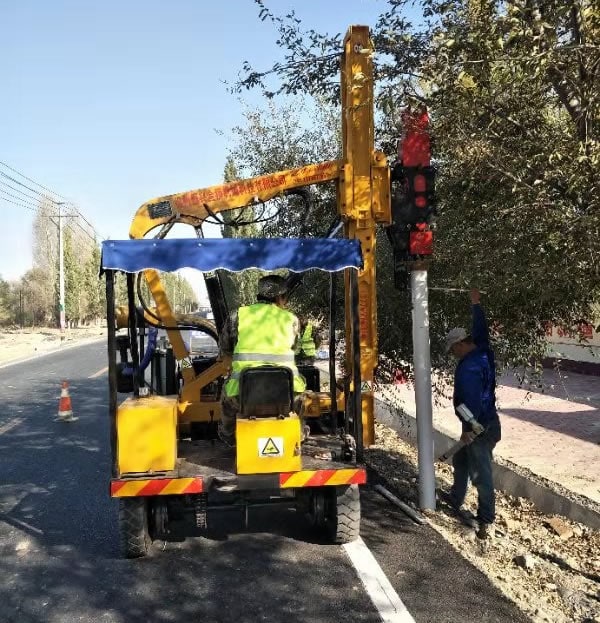
EVERSTAR’s guardrail post driver machines are suitable for guardrail posts, road safety barriers, and roadside fencing applications.
They are equipped with hydraulic driving systems and designed to deliver controlled force, reliable depth range, and quick movement between positions.
These machines operate on flat terrain only and are not designed for deep foundation work or large-scale civil construction.
That scope matters because highway contractors often need one machine to handle several roadside tasks. The same product family supports guardrail installation, road barrier pile driver work, and fence post driving where site conditions are similar.
Customers interested in reducing fleet complexity will discover that this range of options simplifies planning significantly.
For project teams looking at prices and total cost of ownership, fewer equipment changes also mean lower operating costs and better productivity across the full road project.
Ground Screw Applications in Roadside Work
A ground screw pile driver offers practical advantages in roadside work when ground conditions favor screwing over impact ramming.
Ground screws are also a useful option when posts may need to be removed and reinstalled during future maintenance cycles, such as temporary barriers or road authority projects that require repeat ground access.
This application reduces disturbance in the ground and supports cleaner reinstallation. In addition, it is especially relevant for projects that need a simple, stable, and adaptable installation process.
Contractors can fill out a contact form to discuss ground screw options and get guidance on the right attachment for their specific roadside application.
Guardrail vs. Roadside Fence: How the Same Machine Handles Both
A highway fence pile driver and a guardrail post driver serve different applications, but the same EVERSTAR machine family supports both.
Guardrail installation requires a stronger driving force, tighter vertical alignment, and greater attention to safety barrier performance.
Roadside fencing work focuses on containment, boundary control, or access protection, and typically involves different post sizes and spacing requirements.
The difference in practical terms comes down to pile depth, post spacing, and impact force.
Guardrail steel posts support highway safety barriers that must perform under vehicle impact. Fence posts serve a lighter structural role.
EVERSTAR’s post driver range is designed to handle both applications with the right specifications, without adding separate machines to the fleet.
FAQs — Highway Guardrail Pile Driver
What is the operational difference between a road barrier pile driver and a roadside fence pile driver?
A road barrier pile driver is designed for heavy guardrail installation, providing strong hydraulic force, precise alignment, and stability essential for highway safety. A highway fence pile driver suits lighter containment tasks. Although the same machine family can support both, differences in pile depth, post spacing, driving force, and structural needs depend on the specific application and project type.
Can ground screw pile drivers be used effectively on highway and roadside projects?
Ground screw pile drivers are effective for highway and roadside projects when soil conditions favor screwing over impact driving. They minimize ground disturbance and are ideal when posts may need removal and reinstallation later. Choosing the right method depends on soil type, required torque, post specifications, and project needs.
Contact EVERSTAR for Guardrail Post Driver Truck Specifications
Highway contractors, road authority procurement teams, and infrastructure project managers should contact EVERSTAR to learn more about guardrail post driver truck specifications and road project guidance.
EVERSTAR’s specialists offer model selection support based on project scope, attachment, and accessory recommendations for different ground conditions, and installation planning for active road environments.

