

Key Takeaways
- Driven Piles: Offer high load capacity and rapid installation, but the pile driving process generates significant vibration, posing risks to adjacent buildings.
- Bored Piles: A low-vibration solution ideal for sites near existing buildings. These drilled shafts allow for various diameters but involve a slower construction process.
- CFA (Continuous Flight Auger) Piles: Combine the speed of driven piles with the low disturbance of bored piles, excelling in unstable soil conditions.
- Helical Piles: Perfect for lighter loads or underpinning foundations. Installation of these screw piles is quick, though they are less suitable for dense soil.
The success of any construction project depends on its foundation. When shallow foundations are inadequate, engineers use deep foundations to transfer structural loads to competent soil layers.
This method comparison is a crucial decision. Everstar supplies rotary drilling rigs and accessories like Kelly bars for various deep foundation systems, ensuring every construction project has the necessary components to build a reliable structure.
These solutions are particularly important when foundations must protect existing buildings in dense urban zones.
Deep Foundation Method Overview
Understanding each foundation method is crucial. From high-impact driven piles to the precise drilling for bored piles, each technique interacts differently with the subsurface conditions.
The right selection balances load bearing requirements and soil conditions, ensuring that piles can be designed for higher capacities.
Driven Pile Systems
Driven piles are displacement piles, forced into the ground and compacting the surrounding soil. These displacement piles also improve lateral resistance by densifying the surrounding layers.
Constructed from a preformed material like concrete or steel, these piles are hammered into the earth using pile driving equipment.
This action increases the soil’s density and bearing capacity. This method is reliable, as each pile is tested during pile driving.
However, the noise from impact hammering makes driven piles a challenge near adjacent buildings, especially during pile driving operations in dense metropolitan areas. The vibrations can pose a risk to the foundations of existing buildings, reinforcing the need to follow safety practices outlined by OSHA.
Bored Pile Systems
Bored piles, or drilled shafts, are replacement piles. The construction involves drilling a hole, removing the soil, and filling the void with reinforced concrete. In unstable soil or below the ground water level, a temporary casing is often required to prevent the drill holes from collapsing, ensuring the crew can drill holes to full design depth without compromising stability..
This method offers high load capacity and minimizes disruption to the adjacent soil mass. The main advantage of bored piles is the reduction in noise, making them ideal near existing buildings and critical when projects aim to protect existing buildings during excavation or drilling.
They can be installed in various soil conditions, from clay to soft rock. The pile shaft can be physically inspected prior to concreting, ensuring quality assurance. These drilled shafts are also used for retaining walls.
CFA (Continuous Flight Auger) Piles
CFA piles, or auger cast piles, combine the benefits of driven piles and bored piles. The installation uses a continuous flight auger to drill to the required depth. As the auger is withdrawn, concrete is pumped through its hollow stem. This process avoids open excavations and creates a solid pile.
This technique is a fast, low-vibration method suited for weak soil conditions, and in some projects, displacement piles can be used alongside CFA systems to optimize load transfer.. The surrounding soil is always supported, minimizing risk to adjacent structures.
Everstar’s drilling rigs are engineered for CFA applications, providing the torque needed for a pile with excellent load bearing capacity, as well as for the effective installation of ground anchors .
Helical Piles
Helical piles, or screw piles, are a unique deep foundation installed with torque. These piles consist of steel shafts with helical plates that are screwed into the ground.
The installation continues until the pile reaches a competent soil layer and the required torque is achieved, which indicates the pile’s bearing capacity.
Helical piles are ideal for lighter load requirements or for underpinning existing buildings, especially when considering the proximity to the water table.
They are quick to install and generate minimal noise. However, their use is limited by ground conditions, as they are difficult to install in rocky soil.
Comparative Analysis by Application and Ground Conditions
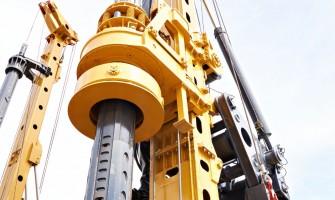
Choosing the right deep foundation method depends on multiple factors. A successful choice requires analyzing the construction site’s subsurface conditions and the structure’s load-bearing requirements.
Load Capacity and Settlement
Load bearing capacity is a primary differentiator. Driven piles compact the soil, resulting in high load capacity from both skin friction and end bearing. In some cases, pipe piles are selected to combine high structural resistance with reduced vibration.
Bored piles can be designed with various diameters for higher capacities, making them suitable for a substantial load. The capacity of a bored pile depends on the quality of the drilling.
CFA piles also provide high load capacity, while helical piles are for lighter loads. Both driven piles and bored piles can be designed as end bearing piles.
Cost, Speed, and Environmental Impact
Installation speed and cost vary. Driven piles are generally the fastest, as precast piles require no curing time. Bored piles have a slower construction procedure due to drilling and concrete curing time.
CFA piles offer a rapid installation with minimal spoil, reducing the environmental impact. Helical piles are also very fast, making them a good choice for temporary construction, as they can be quickly installed to the desired depth.
Equipment Selection and Everstar Support
Choosing the right equipment is just as crucial as selecting the foundation method. Other techniques and the machinery must be matched to the ground conditions and pile type.
Site and Soil Assessment
A thorough soil investigation is the first step. Factors like soil type and the presence of ground water dictate the most suitable foundation. For instance, driven piles are effective in granular soils, while bored piles with a temporary casing are necessary in unstable, water-bearing soil.
Everstar’s support helps clients interpret the ground surface requirements and consults on how to select the ideal machinery for their construction projects, including equipment for soil nails.
Maintenance and Quality Assurance for Performance Optimization
Regular maintenance is essential for foundation equipment. Periodic checks on drilling tools prevent downtime. For pile driving equipment, including those that might use timber, inspecting the hammer is critical to guarantee consistent pile driving performance and long-term reliability.
For bored pile rigs, maintaining the auger ensures consistent quality and produces a sound pile of predetermined shape.
Everstar offers aftermarket support to keep equipment at peak performance, safeguarding the structural integrity of every foundation. This support also covers equipment for soil nails and ground anchors.
FAQ: Deep Foundation Methods
Which deep foundation method is fastest to install?
For projects where speed is the highest priority, driven piles are typically the fastest deep foundation method. Because they are prefabricated, there is no delay for drilling or concrete curing time. This allows construction to proceed almost immediately, especially when using an air hammer for installation. CFA piles and helical piles also offer rapid installation, making them competitive alternatives to other techniques.
Are CFA piles suitable for all soil types?
While CFA piles are highly versatile, they are not a universal solution for all ground conditions. They perform well in soft or water-bearing soils where bored piles would be difficult. However, in soil with dense gravel, the auger may struggle to penetrate. In such subsurface conditions, other methods like drilled shafts with specialized drilling tools may be more appropriate.
What are common issues with helical piers?
The most common challenges with helical piles relate to installation in difficult ground. Obstructions like boulders can cause the pile to deflect, making it impossible to reach the target depth or torque. In very soft soil, achieving sufficient bearing capacity can also be a challenge. Corrosion can also be a concern for the steel shafts in aggressive soil.
Selecting the Optimum Deep Foundation Approach

Choosing the right deep foundation is a critical decision that impacts a structure’s safety and cost. The selection must balance load requirements with site-specific soil conditions and environmental constraints.
From the rapid installation of driven piles to the low-vibration precision of bored piles, each method has its place.
A successful foundation relies on sound engineering, proper method selection, and quality construction, especially in areas with potential seismic activity, while also considering the available storage space for equipment .
Everstar is committed to supporting every stage, providing the equipment and expertise to ensure your construction project is built on a solid foundation.
Schedule an Everstar Site Assessment
Ensure your project starts on solid ground. Contact Everstar’s foundation specialists today to schedule an expert construction site evaluation.
Receive tailored recommendations for your project needs and learn how our equipment can help you achieve a safe and cost-effective foundation solution.

