
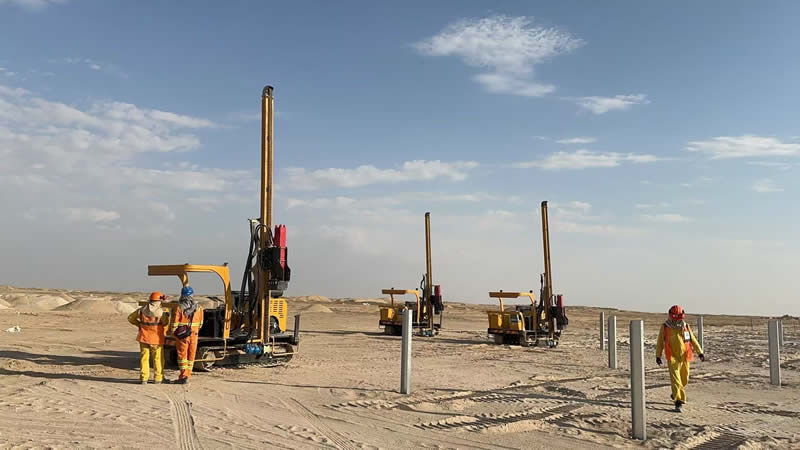
Key Takeaways
- A solar farm pile driver enables consistent installation rates, with robotic pile drivers capable of installing over 300 piles per day under optimal ground conditions.
- Matching pile depth (3–6m) to soil conditions is critical for structural integrity and long-term performance.
- Remote control solar pile driver systems improve accuracy by achieving accurate depth, minimize operator fatigue, and support continuous production.
- Multifunctional configurations reduce equipment mobilization across large solar farm layouts.
- Proper site preparation and operator training directly impact productivity, safety, and overall project progress.
Utility-scale solar installations continue to expand rapidly across every major global region, driven by rising energy requirements and aggressive decarbonization targets from many energy companies.
As the solar industry scales, execution speed on-site has become just as critical as system design. Utility-scale solar projects are designed to meet both economic and emissions goals, supporting long term sustainability for the entire solar system.
At the center of this shift is the solar farm pile driver, a piece of specialized equipment that defines the pace of solar farm construction.
Unlike traditional installation methods that rely on slower, segmented workflows, modern pile driving systems allow contractors to move from layout to structural installation with a stable piling rate and measurable production and quality data.
The integration of Trimble technology and Vermeer Corporation’s expertise is driving advancements in solar farm pile driving efficiency and sustainability.
This article focuses on how solar pile driving operations actually perform in the field, covering installation sequence, machine control, and workflow efficiency.
The emphasis is practical: how to maintain output, accuracy, and worker safety when installing thousands of piles across a large solar farm.
From Ground Survey to First Pile: The Solar Farm Installation Sequence
A high-performing solar farm construction project starts long before the first pile is driven. The installation process follows a structured sequence that directly determines whether teams can consistently achieve daily targets.
A typical project plan includes:
- Ground survey and layout using machine control.
- Positioning for each precise location.
- Verification of correct location and alignment.
- Initial calibration for auto plumb.
- Continuous pile driving across rows.
When properly executed, this workflow allows one operator to manage what used to be a three person job, significantly improving productivity and reducing delays.
The role of machine control, especially when leveraging machine control systems like trimble machine control technology, is critical.
It acts as a central hub, ensuring each pile is installed at the exact coordinates while capturing real time reporting and quality data that support overall project progress.
Matching Pile Depth to Soil Conditions in Solar Projects
Pile depth selection is not arbitrary. For a solar farm pile driver, the operating range is clearly defined between 3 and 6 meters, depending on soil conditions:
- Soft soil: deeper piles (5–6m) for load distribution.
- Sandy soil: moderate depth with attention to stability.
- Hard soil: shorter piles with higher driving resistance.
It is important to distinguish this clearly: these machines are designed for photovoltaic foundations only. Deep foundation systems, reaching tens or over 100m, require entirely different equipment and fall outside this scope .
Maintaining correct depth ensures structural integrity while avoiding unnecessary load on the machine and equipment.
Selecting the Right Model for Efficient Pile Driving (HXR5, HXR6, HXR7)
Choosing the correct model is essential to match project scope and expected pile volume.
EVERSTAR’s versatile lineup includes:
- HXR5: compact operations, smaller and medium-scale solar projects.
- HXR6: balanced output and flexibility.
- HXR7: maximum output for large-scale sites.
Typical machine specifications include:
- Driving height: up to 6000 mm.
- Piling efficiency: 2500–3200 mm/min.
- Daily capacity: up to 300 piles.
Selecting the right equipment ensures consistent efficiency without overloading the system or compromising accuracy.
Multifunctional Operations on a Single Machine
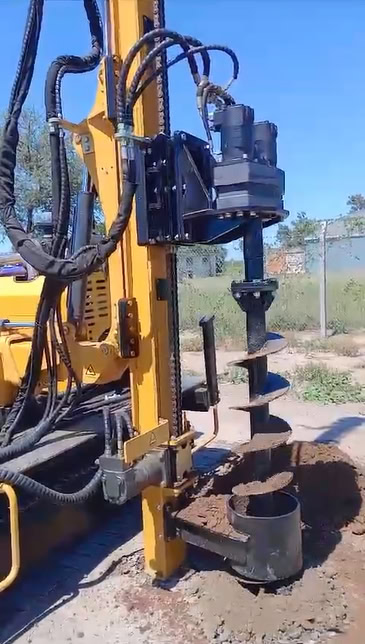
Modern solar installations demand flexibility across different ground conditions. A single pile driver is no longer limited to one function.
EVERSTAR systems support:
- Pile ramming.
- Screw pile installation.
- Auger drilling.
- Down the hole impact drilling.
This reduces reliance on additional equipment, minimizing transport and simplifying logistics across large solar farm projects.
The benefit is operational continuity. Instead of stopping work to bring in new tools, teams can adapt directly on-site and maintain a stable production rhythm.
Specialized Equipment and Accessories That Adapt to Varying Site Demands
Different soil conditions across a solar farm require different tools. EVERSTAR offers optional accessories that integrate directly into the same machine.
Key options include:
- Hydraulic pile hammer.
- Auger
- DTH hammer
These are components specific to small and mid-scale pile drivers, not interchangeable with large rotary rigs. Their purpose is to support solar pile driver services across varied terrain without exceeding the machine’s intended scope.
Remote Control Operations: Precision Across Large-Scale Sites
Large solar layouts require constant repositioning. This is where the remote control solar pile driver becomes critical.
Using remote controlled systems:
- Operators maintain distance while controlling the machine.
- Minimal operator inputs are needed for alignment.
- Auto plumb ensures vertical accuracy.
- Fewer repositioning errors improve overall accuracy.
Compared with traditional installation methods, this setup can vastly improve worker safety and reduce physical strain.
A remote control pile driver also minimizes delays between rows, allowing continuous operation across the site.
Signal Reliability and Uninterrupted Daily Output
For remote control pile drivers, signal stability is directly linked to output.
Key considerations:
- Consistent communication range across the site.
- Battery endurance for full working shifts.
- Redundancy systems to avoid interruptions.
When stable, a remote control solar pile driver maintains daily output targets without downtime.
This consistency supports predictable timelines and helps project managers track progress against installation goals, especially when reporting operational and sustainability metrics under frameworks such as GRI.
Training, Deployment, and After-Sales Support
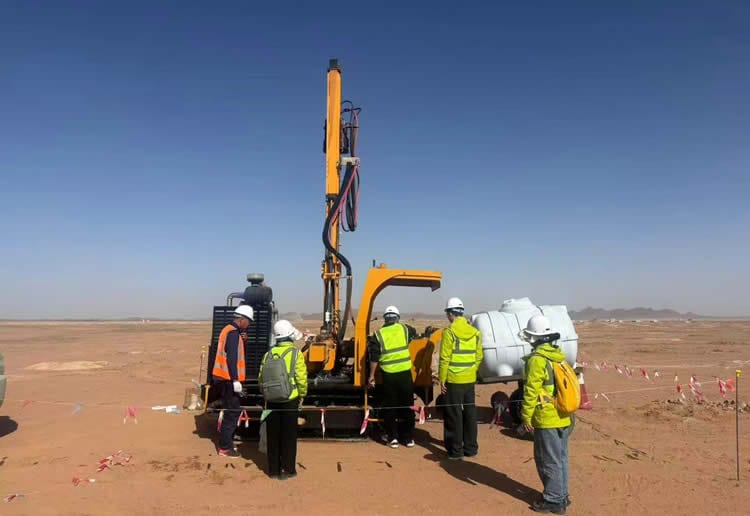
One of the most overlooked factors in solar installation is operator readiness.
EVERSTAR provides structured training for every machine delivered, ensuring teams can quickly transition into full operation.
This reduces ramp-up time and prevents performance drops during early deployment.
Operator Readiness for Driving Piles at Full Output
A trained operator can reach full production capacity significantly faster.
With proper guidance:
- One operator can manage the entire system.
- Machine operation becomes predictable.
- Teams can easily troubleshoot operations in real time.
This directly impacts productivity, reduces operator fatigue, and supports consistent daily output.
FAQs – Solar Farm Pile Driver
Can a solar farm pile driver work in rocky or hard soil conditions?
Yes, but performance depends on the correct accessory selection. In harder ground, DTH hammer systems or pre-drilling may be required. The machine remains effective within its design scope, but extremely hard rock conditions may reduce daily output compared with softer soil environments.
How many piles per day can an EVERSTAR solar pile driver install?
Under optimal conditions, a solar farm pile driver can install between 200 and 400 piles per day. Output depends on soil conditions, operator experience, and site preparation. Maintaining a stable workflow and minimizing downtime are key factors in achieving consistent daily production.
Solar Farm Foundations Done Right
Solar installations demand precision, speed, and repeatability. A solar farm pile driver delivers all three when used within its intended scope.
From controlled installation sequences to remote controlled operation and multifunctional adaptability, these machines define modern solar construction workflows.
The combination of consistent daily output, reliable machine control, and optimized accessories allows contractors to maintain efficiency without overextending equipment capabilities.
Talk to EVERSTAR’s Solar Pile Driver Specialists
EVERSTAR specialists can help define the best machine model for your site, required accessories for soil conditions and expected output based on layout and scale.
To improve productivity and maintain consistent installation quality across the entire solar farm, contact us.

