
Key Takeaways
- A single person vertical mast lift carries a rated platform load of 160-230 kg, covering one operator, harness and PPE, and light tools.
- The mast lift restricts the platform to vertical motion, with zero horizontal outreach and access limited to the area above the machine’s ground position.
- Compact machine width of 700-800mm lets the vertical mast lift pass through standard single doorways (800-900mm) that a scissor lift cannot enter.
- OSHA 1926.502 fall protection and a complete, documented pre-use inspection under OSHA 1926.453 are core safety requirements for every solo mast lift deployment.
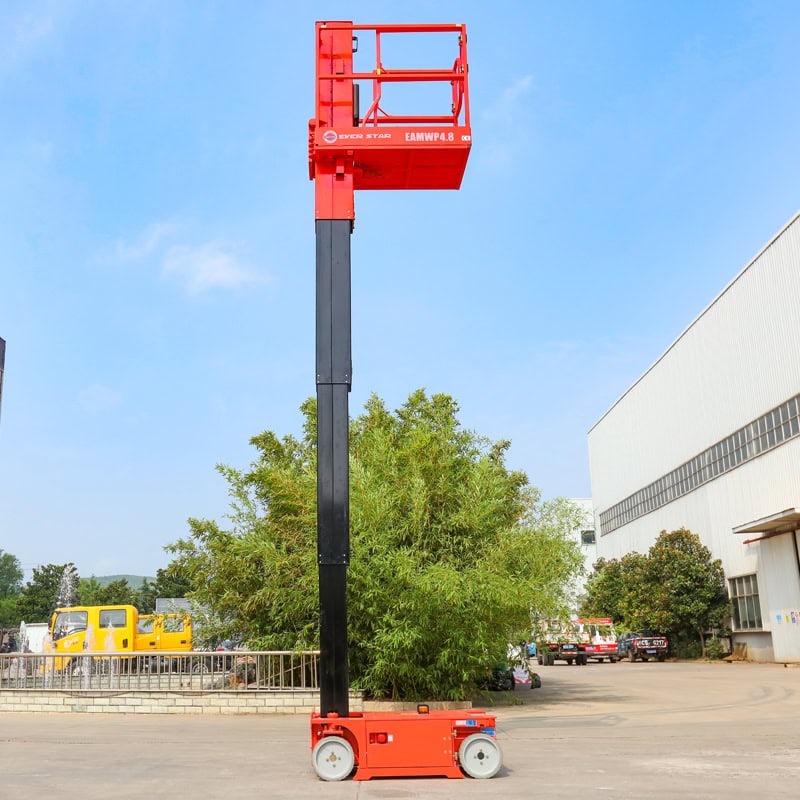
Single person vertical mast lifts are narrow, lightweight platforms built for one operator’s weight, tools, and reach. Also called a single-man lift, single man lift, or man lift, this machine gives maintenance teams a compact, lightweight, safely deployed alternative to ladders for recurring elevated repair and maintenance work in tight spaces.
This article covers platform rated load, working height, horizontal outreach, and aisle clearance, the four factors that determine whether a mast lift fits a solo maintenance job.
EVERSTAR’s aerial work platform range covers this solo indoor use case alongside its scissor lift and boom lift models, matching machine width, load capacity, and working height to the task.
Weight Capacity: Platform Load Limits and OSHA Fall Protection
Every solo vertical mast lift deployment starts with the same two constraints: how much weight the platform can carry, and what fall protection the worker must have anchored before ascending. Both limits apply regardless of the job.
Platform Rated Load for Single-Person Mast Lifts: 160-230 kg
A single-man lift carries a typical platform rated load of 160-230 kg. That figure covers one operator (80-100 kg), a harness and PPE accessories (5-10 kg), and light tools, leaving up to 50 kg for a tool bag or small parts.
Any load combination exceeding the rated capacity must be staged separately rather than carried on the platform in a single trip. Exceeding the rated load is not a matter of the equipment working slightly harder; it changes the vertical mast lift’s center of gravity and creates a tip-over risk that the platform’s outriggers and stability features do not fully offset.
OSHA 1926.502 Fall Protection: Mandatory for All Solo Mast Lift Operations
OSHA 1926.502 requires a personal fall arrest system anchored to a platform-rated anchor point for every vertical mast lift operator, solo or otherwise.
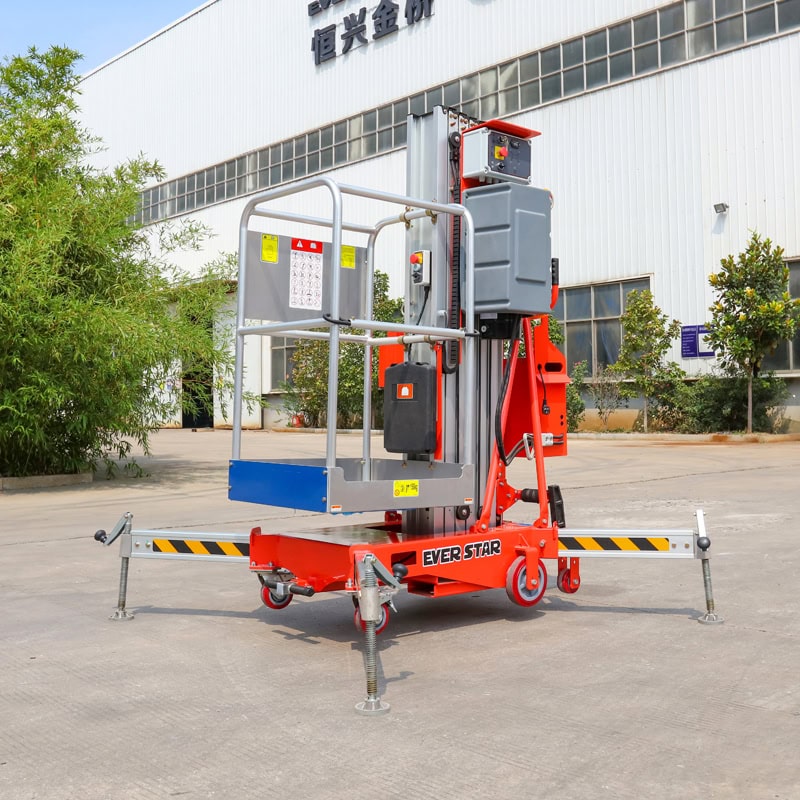
Required: a full-body harness, a shock-absorbing lanyard, and a rated anchor point on the platform itself, matching the safety features built into EVERSTAR’s aerial work platform range. Solo deployment changes what happens after a fall: with no second worker on site, any fall event depends on remote assistance reaching the operator, making correct anchor and harness configuration the primary safety control.
Working Height and Reach: Matching the Mast Lift to the Job
Working height and horizontal reach decide whether a vertical mast lift fits the job, or whether the work needs a taller or wider platform instead.
Working Height Range: 5-10m for Single-Person Tasks
Single person lifts operate in the 5-10m working height range, covering most indoor maintenance jobs: warehouse racking, electrical work, overhead pipe and duct installation, and ceiling inspection at elevated locations.
Jobs above 10m fall outside a mast lift’s design ceiling and need a taller vertical lift with greater load capacity, such as EVERSTAR’s scissor lift models, covering 6-18m and up to 680 kg. Matching a job’s actual height to the mast lift’s 10m ceiling before scheduling avoids finding the shortfall with the worker already on the platform.
Zero Horizontal Outreach: Access Only Above the Machine’s Ground Position
A vertical mast lift raises its platform directly above the machine’s ground position, restricted to vertical motion with zero horizontal outreach built into the design.
The operator can reach only the area directly above where the machine is parked, nothing to the side or around an obstruction. Work that requires horizontal reach around racking, ductwork, or structural columns exceeds a mast lift’s access envelope and needs an articulating boom lift.
Zero outreach, not working height, is the selection constraint that most often separates a vertical mast lift job from a boom lift job, and the main reason a single operator should confirm task position before booking.
Aisle Clearance, Indoor Compliance, and Pre-Use Inspection
Beyond load and reach, a vertical mast lift must access the task location, deploy its outriggers, and pass a documented pre-shift check before the operator elevates the platform.
Aisle Width and Indoor Access: The Mast Lift’s Primary Operational Advantage
A compact machine width of 700-800mm is what lets a mast lift enter narrow aisles, narrow spaces, and doorways a scissor lift cannot access.
Standard single doorways, typically 800-900mm wide, allow mast lift passage where a wider platform needs a double doorway or an alternate access route.
Among the aerial work platform types EVERSTAR manufactures, the mast lift’s compact size and narrow footprint justify choosing it over a scissor lift for tight indoor building access.
Push-around models add mobility and convenience in retail floors and storage spaces where a self-propelled base is hard to maneuver, though most indoor jobs push a self-propelled electric model for better productivity on a maintenance route.
Verify the mast lift’s width against the narrowest point on the access route, including door frames and racking overhang, before moving onto the floor.
Pre-Use Inspection Checklist for Solo Mast Lift Deployment
OSHA 1926.453 requires a documented pre-use inspection before each shift, and solo deployment makes that documentation the operator’s sole responsibility.
Required checks: battery power for the planned maintenance duration, platform deck and gate integrity, outriggers or stabilizer legs locked before elevating, emergency descent function, fall arrest anchor condition, and lift controls and emergency controls tested at ground level before ascending.
These checks let the operator complete the checklist and perform tasks safely at height. With no supervisor witnessing a solo deployment, a timestamped record demonstrates compliance if the maintenance visit is reviewed.
FAQs — Single Person Vertical Mast Lift
What is the typical weight capacity of a single-person vertical mast lift?
A single man lift is typically rated for 160-230 kg, covering one operator, harness and PPE, and light tools. That figure leaves limited margin for extra materials, so any load beyond the rated capacity should be staged separately rather than carried on the platform at once. Exceeding the rated load creates a tip-over risk regardless of working height.
What is the maximum working height range for single-person mast lifts?
Single person vertical mast lifts operate up to roughly 10m, with a typical range of 5-10m depending on the model. Jobs above that ceiling require a taller platform, such as a scissor lift or boom lift with appropriate load capacity, since a mast lift’s stability design does not extend beyond its rated access height.
Contact EVERSTAR for Aerial Work Platform Specifications Suited to Solo Indoor Operations
Facility maintenance operators, warehouse managers, and procurement leads can contact EVERSTAR to find the right aerial work platform for solo indoor use.
Confirm your aisle width, working height, and load needs with EVERSTAR’s direct manufacturing expertise.

