
Learn how to properly grease a tracked solar pile driver to extend machine life and prevent costly downtime. Discover key lubrication points, recommended schedule, and step-by-step maintenance tips.

Key Takeaways
- A brief overview of the pile driver’s daily operating conditions and workload intensity can help establish a clear understanding of operating demands and lay the foundation for effective routine maintenance.
- A detailed analysis of the grease lubrication points on a pile driver can help maintenance personnel better understand where and how to perform routine greasing and maintenance.
- Through daily routine inspections and preventive maintenance, pile driver operators can effectively ensure safe operation, reduce equipment downtime caused by failures, extend service life, and maintain efficient, low-consumption performance.
Overview of Pile Driving Applications Across Construction
While specialized tracked pile drivers are developed primarily for fast-paced installation in solar projects, fundamental pile driving methods are widely applied across diverse civil engineering sectors:
- Solar & Energy Infrastructure: Fast, repetitive driving of steel C-channel, H-beam, or tubular piles directly into the earth for solar panel racking.
- Commercial Buildings & Heavy Structures: Deep foundation support utilizing cast-in-place concrete or precast driven piles to carry immense structural loads into deeper, stable ground.
- Bridges & Transportation: Installing heavy structural support in soft soils or riverbeds for highway bridges and overpasses.
- Retaining Structures & Deep Foundations: Driving timber piles, sheet piles, or heavy steel profiles to build retaining walls and deep foundation cofferdams.
Depending on site requirements, operators may utilize air hammers powered by compressed air, heavy diesel drop hammers, or versatile hydraulic hammers. Providing full access for daily maintenance, routine inspection, and timely lubrication ensures your machinery continues to meet high operational demand on every job site.
How to Grease Pile Drivers Properly?
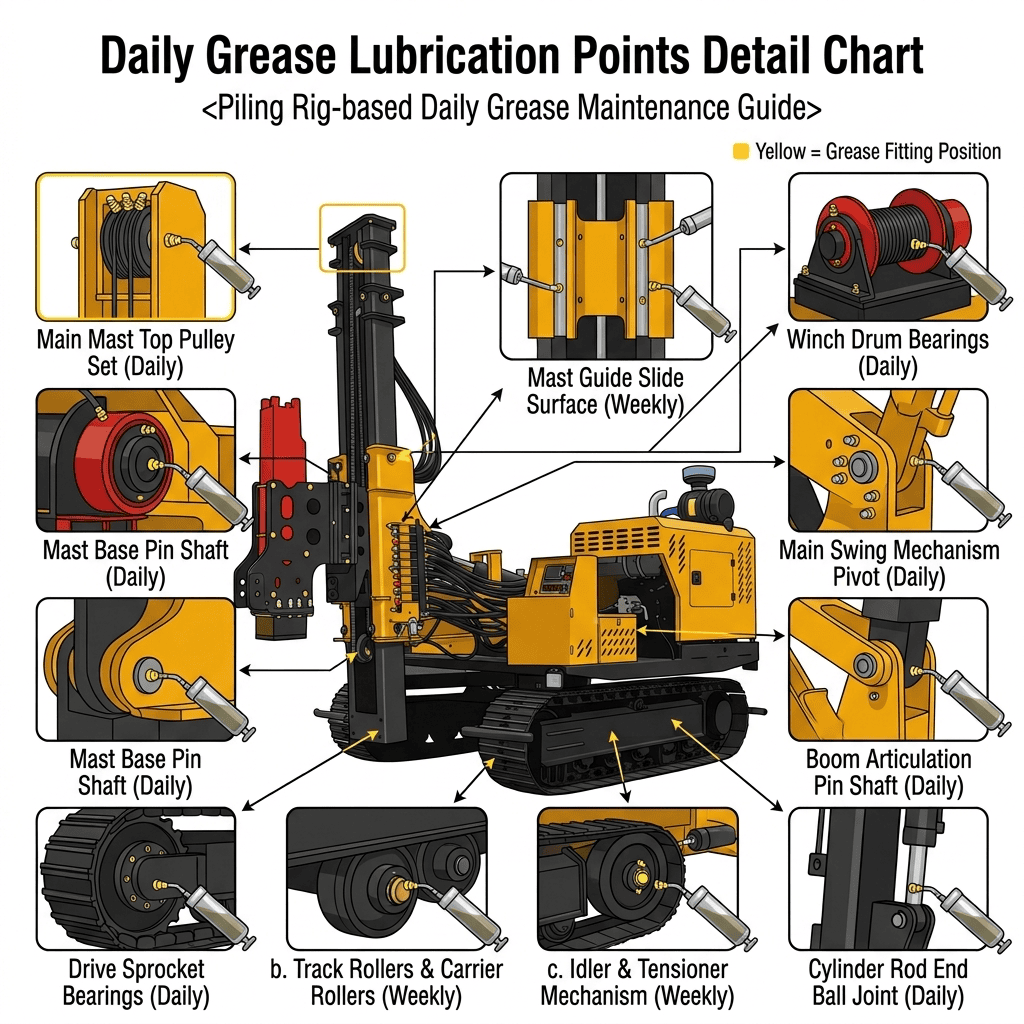
To maintain maximum precision, structural stability, and operational safety on any renewable energy construction site, regular maintenance of your equipment is non-negotiable. Modern solar farms rely heavily on tracked pile driving machinery to establish a solid foundation across varying soil conditions. Understanding the cycle of lubricating essential components prevents unscheduled downtime and ensures your machines operate at peak efficiency.
1. The Hydraulic Impact Hammer and Mast Guide Rails
The heart of the pile driving machine is its hammer system. Whether your unit uses a hydraulic impact hammer, hydraulic hammers, or conventional vibratory pile drivers, the leader mast guide rails endure high friction and severe impact during every pile driving cycle. Greasing the slide blocks, guide tracks, and hydraulics connection pivot points ensures smooth vertical movement when driving piles into the ground. Proper lubrication helps the assembly hold alignment, allowing for precise driving without risking structural compromise or excessive friction wear.
2. Undercarriage Track Rollers and Idler Wheels
Navigating rough terrain on a construction site puts immense stress on the track system. Track rollers, front idlers, and tensioner grease fittings require routine inspection and daily greasing. Keeping these components lubricated reduces track friction, prevents premature wear, and ensures steady movement across challenging ground conditions like loose soil, soft clay, or rocky surfaces.
3. Mast Swivel, Tilting Cylinders, and Turntable Bearings
Achieving accurate pile orientation depending on specific project needs requires full flexibility of the mast. The swivel joints, side-tilt cylinder pin bushings, and main rotation slewing ring/turntable bear the heavy weight of the mast assembly. Applying high-pressure grease to these pivot pins guarantees smooth angular adjustments, enabling your team to set up each pile position with high accuracy.
4. Main Winch Drum and Cable Pulley Sheaves
The winch mechanism lifts and lowers heavy attachments and piles into place. Pulley sheaves at the crown of the mast and the winch drum bearings must be greased frequently. Regular lubrication prevents cable binding, eliminates squeaking, and ensures smooth tensioning during positioning and hoisting.
5. Boom and Extension Arm Pivot Pins
For machines equipped with articulated booms, the connection pins linking the boom, arm, and mast framework absorb significant dynamic forces. Ensuring these grease points are fully packed creates a defensive barrier against dust, moisture, and debris, preserving joint integrity under heavy load demands.
6. Hydraulic Cylinder Clevis Pins and Mounting Joints
Every main hydraulic cylinder—including lift, tilt, and extension cylinders—relies on heavy-duty clevis pins. These high-load pivot points require clean grease to distribute push/pull forces evenly and prevent premature bushing ovalization.
7. Power Unit Engine Couplings and Drive Shaft Universal Joints
Whether powered by a diesel engine or a hybrid power pack, the mechanical output couplings and drive universal joints require periodic grease application. Maintaining proper lubrication on drive shafts ensures smooth power transfer to the main hydraulic pumps without unnecessary vibration or strain.
Why Maintenance Is Essential on Construction Site?
Ensures Operational Safety and Prevents Hazards Pile driving involves high-pressure hydraulics, heavy lifting, and intense vibration. Daily inspections of hydraulic hoses, loose fasteners, and wire rope wear help prevent severe accidents like pipe bursts, dropping hammers, or machine tip-overs.
Minimizes Breakdown Rates and Costly Downtime Construction schedules are strictly timed. Daily habits—focusing on lubrication, tightening, and cleaning—eliminate over 80% of early component wear and minor mechanical flaws before they escalate into project-delaying failures.
Extends Equipment Lifespan and Protects ROI Core components such as hydraulic pumps, motors, powerheads, and engines are costly to repair or replace. Routine fluid and filter changes, along with proper joint lubrication, slow down mechanical wear and preserve higher resale value.
Maintains Peak Efficiency and Power Output Properly serviced machinery delivers consistent pressure and impact force. Cleaning air filters ensures smooth engine airflow, preventing power loss or sluggish performance to keep per-post installation times fast.
Reduces Fuel Consumption and Overall Repair Costs Preventive care is significantly cheaper than major overhauls. Catching minor leaks, loose bolts, or clogged filters early prevents domino-effect damage (such as pump cavitation or engine failure) and reduces excess fuel burn caused by mechanical resistance.
FAQs
How often should I grease a tracked solar pile driver?
High-wear parts like mast guide rails, hammer pivot pins, and track rollers need daily greasing (every 8–10 hours). Secondary joints and winch bearings should be lubricated weekly or during routine inspections to prevent friction and equipment failure.
What happens if I skip greasing key lubrication points?
Skipping grease leads to excessive friction, joint pin wear, and mast misalignments from hammer vibrations. Over time, this causes premature component breakdown, expensive repairs, and unexpected project downtime.
Contact EVERSTAR for Machines Used for Extended Periods
As a customer, it takes time to gain a deep understanding of and fully trust a pile driver manufacturer. EVERSTAR welcomes customers to visit our factory at any time. While it takes approximately 40 days to manufacture a pile driver, EVERSTAR hopes that our self-manufactured machines can serve you for more than 4,000 days.
Just contact EVERSTAR for the solar machines, experts will offer the suitable purchase agreement according to your requirements.

