
Scissor Lift Sizes by Trade: Matching Platform Height and Capacity
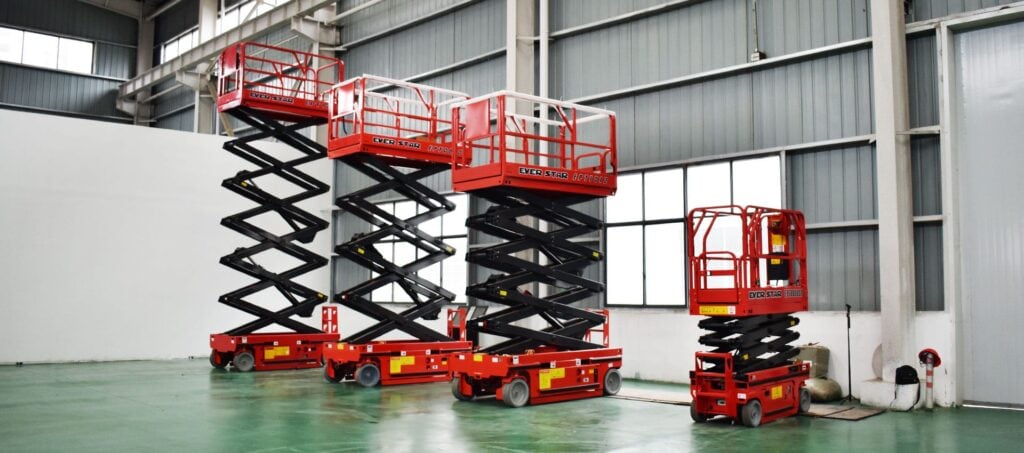
Key Takeaways
- Properly selected scissor lift improve access and productivity across construction sites.
- Electric powered scissor lifts between 20–26ft are ideal for indoor use and confined spaces.
- Fit-out crews benefit from 26–32ft platform heights with higher capacity for more weight.
- Warehouse teams rely on 32–40ft rough terrain lifts and electric rough terrain models.
- Four wheel drive systems improve traction, stability, and safety on uneven terrain.
Choosing the right scissor lift is the difference between operational efficiency and costly delays on active construction sites. When evaluating common scissor lift sizes, contractors realize these machines are not “one size fits all.”
Each trade requires a specific balance between lift height, platform size, lift capacity, and maneuverability based on its unique work environment.
Whether operating indoors with electric powered scissor lifts that feature zero emissions and do not emit fumes, or navigating outdoor environments with rough terrain lifts equipped with four wheel drive, selecting the best equipment depends on your specific height requirements and total weight.
In this guide, we break down scissor lift sizes by trade and explain how these various types of configurations match real-world construction demands.
A Comprehensive Guide to Common Scissor Lift Sizes and Vertical Reach
Understanding common scissor lift sizes is the first step in fleet optimization. Manufacturers categorize machines by platform height, with common sizes including 19ft, 26ft, 32ft, and 40ft.
However, contractors must distinguish between platform height and working height, with the latter approximately 6 feet higher to account for the operator’s reach.
For example, a 26-ft scissor lift provides a 32-ft working height. These common scissor lift sizes are designed to meet specific architectural standards. A 19-ft lift is narrow enough to pass through standard doorways, making it a staple for indoor maintenance.
Conversely, 40ft larger models are engineered for high-ceiling industrial applications where vertical reach is paramount. When choosing between the different scissor lifts types, consider the retracted height to ensure the unit navigates entry points, along with other factors such as floor load limits and power source availability.
Evaluating these dimensions alongside height requirements ensures the equipment can actually navigate the intended construction sites.
Electricians: Overhead Wiring and Maintenance
Electricians navigate tight spaces to reach complex overhead infrastructure. For most projects, platform heights between 20–26 ft (6–8 m) provide sufficient lift height for ceiling access.
This scissor lift type enables the safe installation of conduit and lighting while avoiding unnecessary repositioning at maximum lift height.
Why Electric Powered Scissor Lifts Are Ideal for Indoor Use
Electric lifts are preferred for indoor use because they offer zero emissions and do not emit fumes. This makes them ideal for wiring and maintenance tasks in hospitals and offices.
Furthermore, electric models are energy efficient and quieter. The inclusion of non-marking tires is crucial because they protect finished floors as the machine moves through standard doorways and narrow hallways.
Narrow aisle navigation (1.2m width)
For corridors, electric models with a 1.2m chassis width enables narrow-aisle navigation in tight spaces without sacrificing height. The hydraulic fluid systems in electric lifts are designed for precise positioning.
Fit-Out Crews: Drywall and Mechanical Install
Fit-out teams require workspace and strength. Typically, these crews use platform heights between 26–32 ft to accommodate multiple workers and bulky materials.
Because drywall and steel framing add significant weight, models with higher capacity are mandatory to prevent hydraulic fluid overheating and system strain.
Track Series for Uneven Interiors
Active construction sites rarely feature level floors. Track-based rough-terrain lifts offer greater ground clearance and improved traction on uneven terrain.
With a 14m working height and a 450kg load capacity, these scissor lifts support multiple installers. Compared with boom lifts, scissor lifts offer a larger work area.
Material hoist integration
Integrating extended staging panels transforms the platform into a mobile workbench. The four wheel drive system ensures that even when carrying more weight, the lift moves with precision across unfinished floors.
Warehouse Teams: Stock Picking and Racking
In logistics facilities, the focus is on vertical reach and movement. Warehouse facilities often require platform heights of 32–40ft for high-bay shelving.
It is vital to understand the difference between lift height and working height when planning for tall racking systems.
Off-Road Series and Electric Rough Terrain Models
For operations transitioning between outdoor docks and indoor areas, rough terrain lifts with four wheel drive are indispensable and offer higher control in the job site.
They provide the traction for navigating steep slab transitions on uneven surfaces. The emergence of electric rough terrain models has revolutionized warehouse management by combining a rugged chassis with quiet operation.
These electric models facilitate easy pallet transfers in high-volume environments where downtime is not an option.
Heavy-Duty Extension and load capacity
The extended sections on larger scissor lift models support a safe load of up to 365 kg and offer higher ground clearance. This is crucial for reaching deep shelving without compromising the center of gravity.
Stability is reinforced by automatic leveling sensors, ensuring the scissor lift operates safely even at its fullest extension with more weight distributed on the deck. Smooth hydraulic fluid regulation prevents abrupt movements during pallet handling.
Technical Comparison: Why Same Height Does Not Mean Same Performance

One of the most common mistakes is assuming that if two different types of lifts reach the same height, they are interchangeable.
Same height does not mean the same performance. A compact electric model and a heavy-duty rough terrain model might both reach the same ceiling, but their platform size and load capacity differ.
- The Narrow Electric Models: Best for one person operating and carry light tools in confined spaces.
- The Rough Terrain Scissor Lift: Best for up to three workers and 500kg of material on uneven terrain, especially the four wheel drive scissor lifts.
Safety Systems and Vertical Stability
Modern scissor lifts are marvels of hydraulic engineering. Most electric powered scissor lifts now include tilt sensors, load sensing, and emergency lowering.
Understanding these safety factors and features is non-negotiable for construction sites where the acces is limited. A scissor lift that is over-leveraged at its maximum lift height is a liability, which is why matching the machine size to the trade is critical for safety.
On the other hand, proper maintenance of hydraulic fluid not only ensures the “scissoring” action is smooth and jerk-free but contributes to energy efficient during the operations.
FAQs – Scissor Lift Sizes
What is the best scissor size for warehouse racking?
The best scissor lift size for warehouse racking typically features platform heights between 32 and 40 feet. These provide safe access to the highest tiers. Given the need for stability, electric rough terrain models are recommended.
How to choose the right height from all the scissor lifts?
Key factors include the platform height needed to safely reach work areas, the working height (platform height plus operator reach), and the nature of the work environment (indoor vs. outdoor, confined spaces, uneven terrain). Choosing the right height among several scissor lift options ensures safety, efficiency, and productivity tailored to your trade’s needs.
Conclusion: Trade-Tailored Elevation
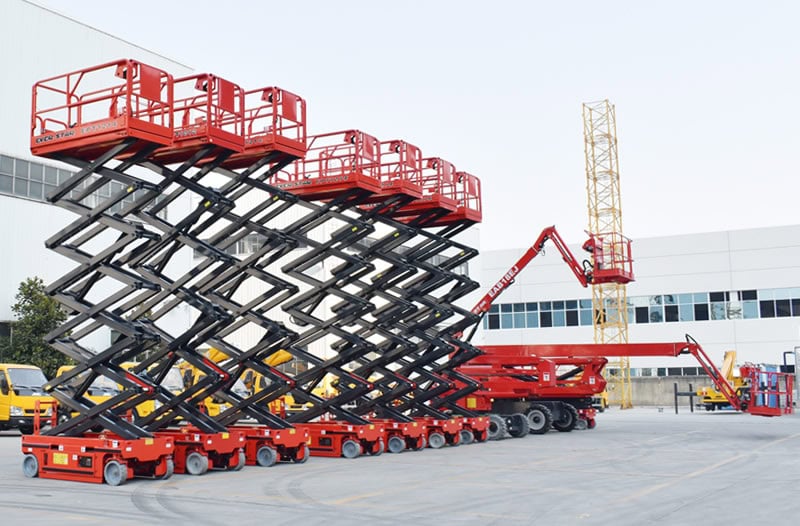
Selecting scissor lift sizes by trade maximizes safety and productivity across construction sites. Electricians require the agility of electric-powered scissor lifts in tight spaces, while fit-out crews need the higher capacity of rough-terrain lifts for outdoor environments.
Meanwhile, warehouse jobs depend on larger models with significant reach. By matching the lift height, platform size, and load capacity to the task, you ensure a safer project.
Match EVERSTAR Scissor to Your Trade
Ready to select the best scissor lift? Our specialists are standing by to analyze your job’s height requirements, work environment, and load capacity.
Whether you need a solution for tight spaces or uneven terrain, we can recommend the ideal scissor lift for your project from our catalogue. Contact EVERSTAR today for expert guidance on scissor lift rentals and purchase.

