
Different attachments are equipped on pile drivers depending on the soil conditions. To understand how they achieve maximum load bearing capacity, this article helps to look at ground screws vs helical piles. It will also promote consumers to find the appropriate pile driver to work on the job site.
Key Takeaways
- Among the modern construction projects, the role of piling machines is becoming increasingly important.
- To address different geological conditions, the emergence of various piling machine attachments and types of piles has made it possible to meet specific project requirements.
- Comparision between ground screws and helical piles occurs when facing the foundation choosing for the specific construction project.
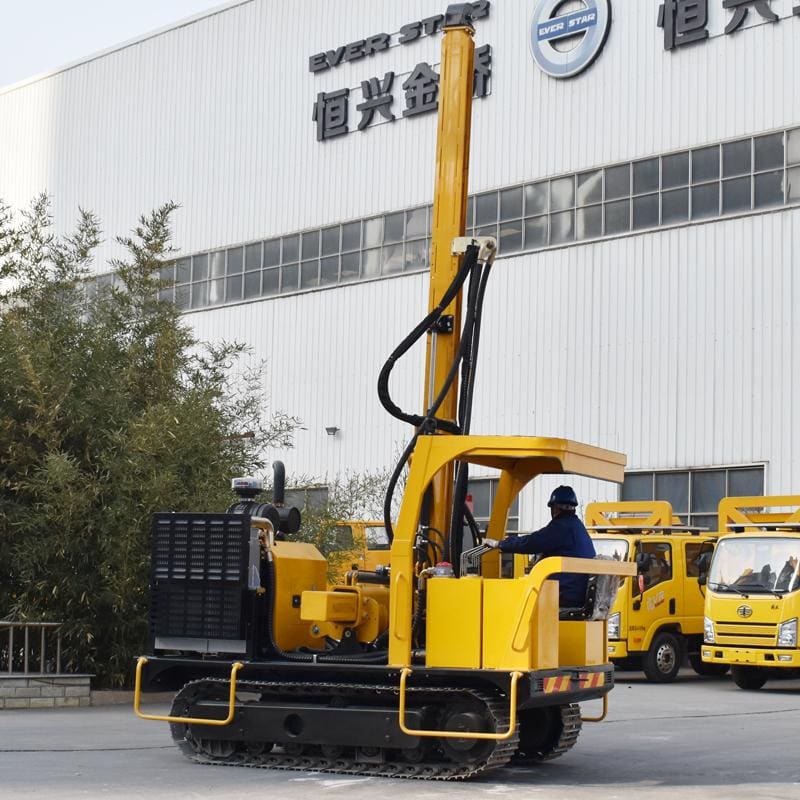
A screw pile driver equips a hydraulic power system to drive a high-torque rotary head, which screws helical piles directly into the ground in the same way a screw is driven into wood. Its primary function is to provide fast, stable, and high-capacity foundation support for a wide range of construction and engineering projects, particularly for solar mounting systems, power transmission towers, building foundations, fencing, and temporary structures.
Compared with traditional impact pile drivers, screw pile drivers offer significant advantages, including faster installation, vibration-free operation, low noise levels, and no soil excavation requirements.
These benefits can substantially reduce project timelines while minimizing environmental impact and protecting the surrounding ecosystem.
The Essential Role of the Screw Pile Driver in Modern Construction
For solar project, esatbilishing a solid foundation is essential for long-term stability and performance. In modern construction construction, a screw pile driver serves as the assistant machinery and equipment to install deep foundation systems with precision. This specialized machine driving a heavy duty steel pile into the ground can not finish without the help of calculated torque.
Different from traditional concrete foundations that require a large amount of digging work and site disruption, the screw pile driver can undertake the whole installation process.
Such high-efficiency method help consumers build structures ranging from a simple shed of backyard or a residential house to complex municipal projects quickly, saving both time and money. The process involves no curing time, wooden beams or steel frames can be attached to the foundation immediately after the screw reaches its targer position and depth.
Ground Screws
These ground screws are typically made of high performance carbon steel tubes and feature and feature a hot-dip galvanized surface treatment. This process provides exceptional corrosion resistance, allowing them to have a 30-50 years service life in soil.
Structure & Design
Its shaped like a giant screw, the pile usually features a gradually tapering tubular body covered with shallow, continuous threads. The whole pile actively participates in removing soil and compacting the surrounding ground.
Bearing Capacity
It mainly works through firction and soil compaction. When the pile is roated into the ground, the continuous threads press and densify the surrounding soil. The shaft-to-soil side firction provides most of the bearing capacity. This type of pile offers medium to small load-bearing capability, making it well suited for preventing settlemennt and resisting pull-out in lightweight structures.
It mainly works through friction and soil compaction. When the pile is rotated into the ground, the continuous threads press and densify the surrounding soil. The shaft-to-soil side friction provides most of the bearing capacity. This type of pile offers medium to small load-bearing capability, making it well-suited for preventing settlement and resisting pull-out in lightweight structures.
Soil Suitability
It is suited for dense, hard, sandy or even gravelly soils with small stones. Its concical tip and continuous, tughtly spaced threads allow it to penetrate harder strata like a drill bit, and it can even displace small stones along the way.
Installation & Equipment
The installation process is relatively flexible. It can be carried out using simple tools for short-term project or medium sized crawler mounted solar pile drivers.
Helical Piles
Helical piers, featuring large engineered plates that excel in transferring heavy loads deep into cohesive or soft soils. They are primarily used in heavy engineering applications that require very high load-bearing capacity, including poor soil conditions, or require foundation underprinning and reinforcement of existing structures.
Structure & Design
Its shaped like a central shaft with blades, this pile is made of high stength steel tube, either round or square, with one or more large diameter helics welded at the bottom, each separated by a clear gap. The bottom helics penetrate the soil to provide anchoring, while the main shaft remains smooth.
Bearing Capacity
It primarily relies on end bearing capacity. The large helical plate at the bottom acts like an anchor, firmly embedded in a deep, load bearing soil lyer. The structural load is transferred through the pile shaft directly to the helical plate located deep underground.
Soil Suitability
It is suited for soft soils, clay, sandy soils or backfill, essentially weaker ground conditions. It needs to penetrate the surface soil layer and anchor the helical plate at the bottom into a deep, firm bearing stratum, such as strongly weathered rock or hard clay. However, in terrains with large stones, the large helical plate can easily get jammed.
Installation & Equipment
To ensure the required load bearing capacity, so the torque applied to the large helical plate must be precisely controlled, and the specialized heavy duty hyadraulic piling rigs is essential for the whole process.
By measuring the final installation torque, the actual load bearing capacity of the pile can be directly estimated and verified to ensure that it meets the design requirements.
Ideal Soil Conditions for Maximum Efficiency

The versatility characteristic of ground screws and helical piles makes them high suitable for a wide array of challenging soil conditions.
Although above two types of piles are similar in sone term, their engineering is customized to the specific soil type.
Heavy-duty ground screw anchors thrive in dense, gritty environments like packed gravel, sand, or soil mixed with fractured rock.
As the screw is driven into the earth, the combination of displacement and friction creates an incredibly tight bond with the surrounding environment. This ensures that the structure is perfectly supported and capable to against harsh dynamic forces.
Meeting Strict Project Requirements and Standards
One building project often comes with specific project requirements and local building standards regarding load bearing and tension capacities. Vary foundations significantly dpend on ground level and steep slopes. A main light of these steel systems is their eco-friendly design; they cause minimal vibration to the surrounding area, making them the primary choice near existing structures.
Sourcing factory manufactures these products to resist corrosion, ensuring a long lifespan regardless of underground moisture. One of the advantages of this system is its reversible nature, these advanced tools are combined to meet specific construction needs.
FAQs——More Details about piles choice
Should I choose ground screws or helical piles for a utility-scale solar project?
For most utility-scale solar PV projects, especially in desert, mountainous, or rocky terrains, ground screws are the industry standard and cost-effective choice. Their continuous, drill like threads allow them to penetrate compact or stony soils efficiently using light to medium piling rigs.
However, if the specific solar site is located in areas with extremely soft soil, wetlands, or high water tables, helical piles are preferred. Helical piles can extend deeper to lock their large helices into stable load-bearing soil strata.
How do ground screws and helical piles differ in how they bear loads?
The primary difference lies in their load-transfer mechanism:
- Ground Screws rely on skin friction and soil compaction. As the tapered screw is driven into the ground, it compresses the surrounding soil, generating load capacity along the entire length of the continuous thread. This is ideal for light-to-medium structures.
- Helical Piles function via end bearing. They transfer structural loads directly down the smooth shaft to one or more large helical plates welded at the bottom. These plates act as deep anchors in heavy-bearing soil layers, making them capable of supporting heavy-duty commercial and residential foundations.
Contact EVERSTAR For An Appropriate Pile Driver in Your Project
As to the different soil condition, the piling piles are also different to shape the soild foundation for the construction projects. If you provide your specific requirements, EVERSTAR’s professionals will offer a detailed piling plan tailored to your project.

