
Key Takeaways
- Logged hours mean little without service records and a check of pedal, seat, and control wear on the machine.
- A smooth-shifting gearbox with no axle leaks means a sound backhoe, not a future rebuild.
- Cylinder drift at full extension is the clearest sign of hydraulic wear on a backhoe.
- Loose pins and cracks at the bucket mounting plate add cost after purchasing.
- Frame weld cracks, cab rust, and worn tires are reasons to renegotiate the price.
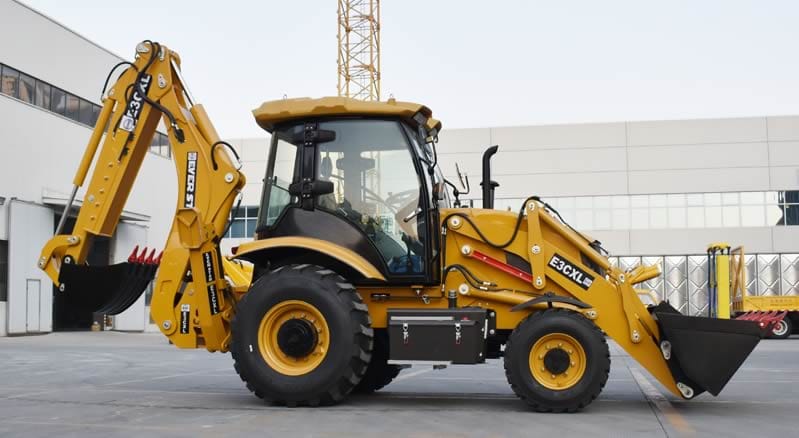
A used backhoe can save a contractor money against a new machine, but a wrong unit turns into a repair bill. Unlike a used excavator, a backhoe loader carries stress in two directions: the loader arms take grading abuse, and the digging arm absorbs trenching strain.
That pattern concentrates wear in the hydraulic system, the pins, and the drivetrain, areas most operators rarely check before signing.
This article walks through a full inspection sequence for anyone evaluating a pre-owned backhoe rather than a used excavator: small contractors, fleet managers adding heavy equipment, and buyers checking a dealer’s inventory. Each section covers what to look for when buying a used backhoe loader.
Engine and Drivetrain: First Inspection Priority
The engine and drivetrain set the baseline for whether a used backhoe is worth the price. Problems here cost the most to fix, so a thorough inspection is crucial before making a purchase.
Engine Hours, Service Records, and Physical Condition
Logged hours are only a starting point. Cross-check the meter against physical condition on the pedals, joystick controls, and seat bolster: a machine showing 2,000 hours with a worn seat and glassy pedals likely had its meter reset.
Ask for service records covering oil intervals and hydraulics work, matched against the manufacturer’s intervals. No maintenance history isn’t a dealbreaker, but the wear underneath becomes unverifiable, and the price should reflect it.
Check engine oil for metal particles, inspect coolant, and watch the exhaust under load: heavy smoke points to worn rings. Contaminated fluids across the engine, hydraulics, and transmission mean a backhoe overdue for service; clean fluids support a stronger resale value.
Gearbox, 4WD, and Axle Condition
Test the machine’s transmission through every gear under load. EVERSTAR’s E3CXL and E4CX backhoe loaders use a power shift gearbox with four forward and four reverse ratios (4F/4R), a layout common across brands, regardless of manufacturer or dealer, so the shift should be smooth, without clunking.
Engage 4WD and confirm it locks in cleanly. Inspect the axle seals for leaks, since a weeping seal means wear that will worsen with use. Note whether the machine is equipped with a locking differential, and confirm the rest of the driveline feels solid too.
Hydraulic System and Digging Arm: Second Inspection Priority
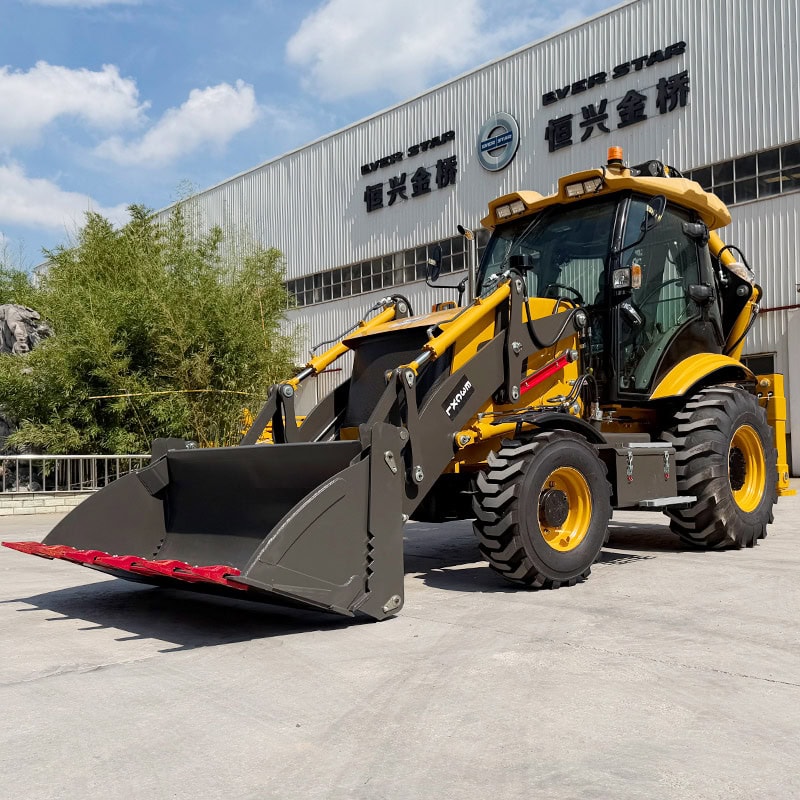
Hydraulic faults and arm play are checks most buyers skip because they aren’t visible standing still, yet a thorough inspection here catches the costliest surprises on a backhoe.
Hydraulic Hoses, Cylinders, and Control Response
Walk the backhoe and inspect every hose for cracking, bulging, or a worn coupling: a hose that fails on-site can shut down work, and a cracked one is cheap to replace. Look for leaks at every fitting, since even a slow leak signals hydraulics needing attention.
Test each cylinder at full extension and hold it: any drift, the arm creeping down without operator input, points to worn seals, and the swing cylinder deserves the same test. Check the boom, dipper, and bucket cylinders on the rear arm, then the lift and tilt cylinders on the front loader. Both age differently depending on how the previous operator ran the equipment.
Run the controls through a full range of motion, left hand or right hand. Response should be smooth, with no lag between lever and cylinder. Controls that feel delayed or spongy mean the hydraulics need attention before the backhoe is reliable for daily trenching.
Digging Arm Pins, Bushings, and Telescopic Extension
Check every pivot pin for side play. The fit should be tight, not sloppy. Rock the boom and stick at the joints, because looseness indicates worn bushings, and worn pins accelerate fatigue in the steel.
Inspect the bucket mounting plate for cracks, one of the highest-stress points on the arm. On telescopic models like the EVERSTAR E3CXL and E4CX, extend and retract the stick: it should move smoothly, with no binding, noise, or cylinder leaks. Ask a mechanic’s advice if this feels outside your experience; a second opinion is worth the fee.
Front Loader, Structural Condition, and Documentation
The front loader system and the frame determine whether a backhoe loader is a reliable purchase or a machine that needs structural work within a year, much like aging construction equipment.
Front Loader System: Bucket, Lift Arms, and Quick-Attach
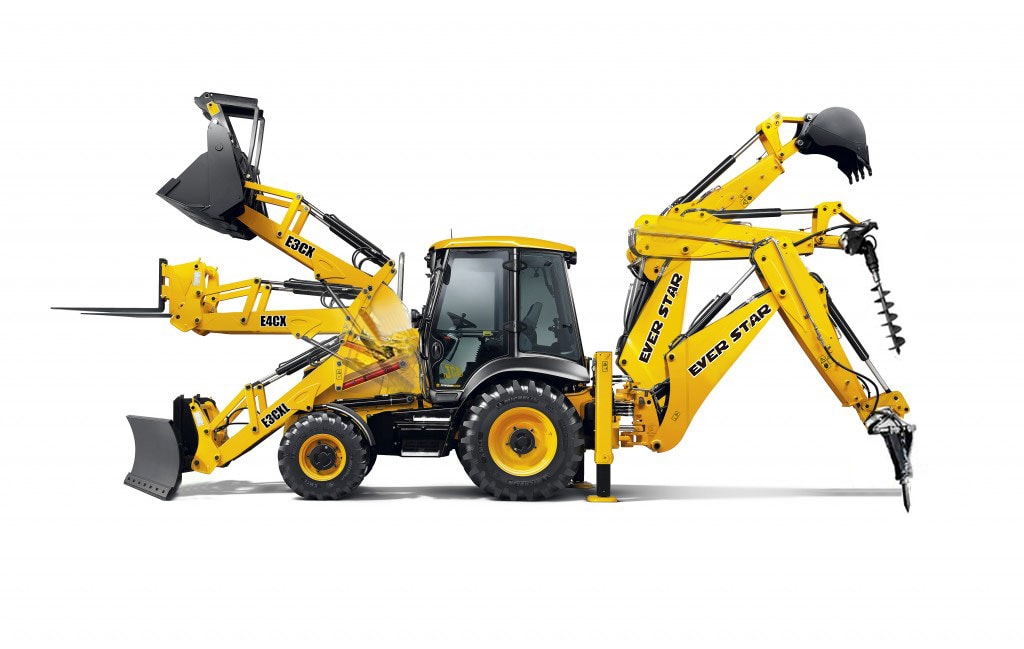
Inspect the loader bucket’s cutting edge and side plates for damage: a worn edge cuts efficiency and adds cost to replace. Check the bucket size against the job types the backhoe will handle, since an undersized bucket on heavy equipment slows every cycle.
Test the lift arm cylinders for drift at maximum height, holding a loaded bucket off the ground. Check the quick-attach system for full locking and unlocking, confirm whether the loader is equipped with the factory coupler or an aftermarket retrofit, and ask what other attachments the seller may include.
At the front, check tread depth on all four tires: mismatched tires, uneven wear, or replacement tires that don’t match the original size are shortcuts sellers take, and worn tires affect traction.
Glance at the front glass for cracks and the sheet metal for dents on the backhoe.
Frame Welds, Cab Condition, and Ownership Documentation
Inspect the main frame and boom welds for cracks near the swing frame and stabilizer mounts. A crack fixed with a quick weld and repaint is a common trick on a backhoe near its service life’s end, no different from heavy equipment sold without full disclosure.
Check the cab floor and sill plates for rust, often signaling water intrusion in the electrical components. Confirm the instrument glass is intact and the seat and controls show use consistent with the hours on the meter.
Request the operator manual, maintenance records, and proof of ownership before finalizing. Missing paperwork risks a disputed title or unresolved insurance claims, worth noting near infrastructure regulated by the U.S. Department of Transportation. A qualified mechanic inspection before purchasing is rarely money wasted.
FAQs — Buying a Used Backhoe Loader
What are the most important checks when inspecting a used backhoe loader before purchase?
Prioritize the engine and service records first, since drivetrain problems cost the most to fix. Then check the hydraulics for cylinder drift and hose leaks, inspect the pins for side play, and confirm the frame welds and attachments show no faults. Each reveals a different repair-cost category.
How do operating hours affect the reliability of a pre-owned backhoe loader?
Hours alone don’t determine reliability; maintenance matters more. A high-hour backhoe with complete maintenance records can outlast a low-hour unit that sat idle. Weigh logged hours against service history and physical wear, and don’t assume a lower number means a better machine.
Contact EVERSTAR to Compare New Backhoe Loader Options Against Your Pre-Owned Shortlist
Consult EVERSTARto review machines for sale, specifications, and difference between E3CXL and E4CX backhoe loader, and see how a new unit compares once repairs and future maintenance are factored.

