
Photovoltaic Piling Rig Setup and Calibration: From First Test Pile to Full-Speed Production
Key Takeaways
- Systematic photovoltaic and solar pile drivers commissioning eliminates costly repairs, minimizes rework, and ensures structural integrity from the first installed piles.
- A structured three-pile test sequence validates pile driver performance, soil conditions behavior, and positioning precision before production.
- Achieving 200–300 piles per day depends on trained operators, optimized drilling and pile driving process controls, and real-time monitoring systems.
- Disciplined commissioning reduces labor costs, improves project timelines, and helps commercial solar contractors stay competitive in the solar power market.
In modern solar farm construction, the transition from equipment arrival to full production is one of the most critical phases of the entire installation lifecycle. When a photovoltaic pile driver is commissioned without a structured process, contractors face unstable foundations, misaligned rows, and labor-intensive rework that increases costs and delays delivery.
This guide provides a field-tested commissioning framework for commercial solar contractors, designed to support consistent solar pile driving operations from the very first test pile through sustained production.
By following this pile driving process, contractors can install piles efficiently while maintaining industry standards, precision, and long-term stability for solar panels systems.
As solar power demand grows and projects expand in scale, the construction industry must adopt innovative solutions that combine automation, data, and disciplined procedures to efficient operations.
Pre-Arrival Site and Equipment Preparation
Completing all groundwork before the rig reaches the solar farm site is essential for reducing downtime and protecting productivity across operations.
To achieve this, the following objectives outline the key actions required to support seamless execution across various applications:
Layout verification and GPS base station setup
Accurate pile positioning begins with verified ground control. Before the photovoltaic piling rig arrives, survey teams must mark control points using permanent monuments and establish GPS base stations capable of delivering real-time corrections.
These systems typically achieve precision within 10–20mm, which is critical for solar panels alignment and tracker system geometry.
Design coordinates should be uploaded into the rig’s systems and cross-checked with civil drawings. Field crews must validate at least four perimeter reference points across the solar farm, confirming coordinate compatibility, shape and orientation angle.
This step prevents row-offset errors that could misplace hundreds of piles, affecting installation and long-term stability.
Test pile zone preparation and material staging
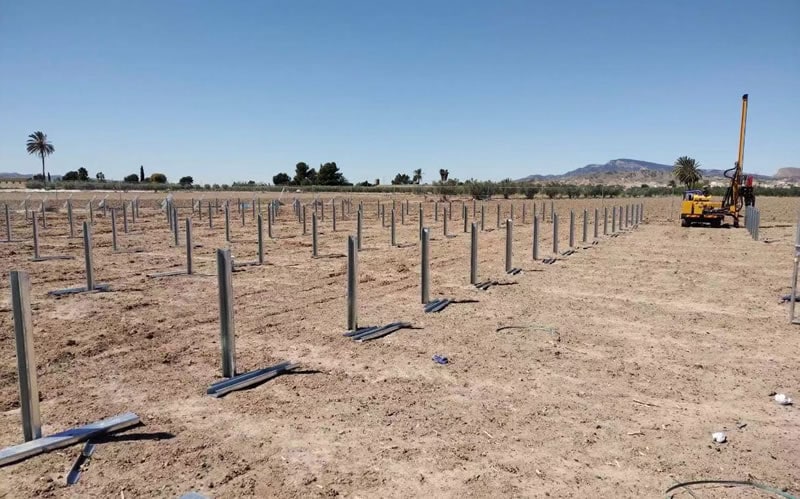
A dedicated test zone with expected ground conditions allows operators to validate drilling and hammer performance before full deployment. This area should accommodate 10–15 piles, with sufficient spacing to maneuver the rig and inspect each installed pile.
Clear vegetation, grade the ground, and verify loading capacity for outrigger stability. Stage steel piles, screw piles, and any profiles required by the project. Fuel, hydraulic fluid, spare hammer parts, calibration tools, and maintenance equipment should be organized nearby to minimize carry distance and reduce idle time.
This staging approach supports efficiency, protects suitable assets, and ensures commissioning can begin immediately upon arrival.
Machine Mobilization and Initial Power-Up

Once the piling rig reaches the site, mechanical systems must be stabilized before engaging GPS automation.
Transport inspection, leveling, and hydraulic warm-up
Inspect all visible systems for transport damage, including welds, hoses, electrical connections, and GPS mounts. Deploy outriggers following manufacturer loading limits (typically 5–8 kg/cm²) based on ground conditions to distribute weight safely.
Level the rig within 1–2 degrees. Improper leveling affects drilling angle, vibration behavior, and verticality during pile driving. Run hydraulic warm-up cycles for 15–30 minutes at idle, allowing fluid temperatures and pressure systems to stabilize.
Monitor gauges for abnormal vibration, pressure loss, or overheating. Consistent maintenance ensures machines remain capable of supporting high production rates across various applications.
Hammer stroke calibration and anvil alignment
Set hammer stroke length according to pile profile and project requirements. C-channel steel piles typically require 400–600mm strokes, while heavier I-beams may need 500–800mm. Verify hammer-anvil clearance for full energy transfer.
Perform dry cycles and observe rebound behavior. These tests confirm consistent energy delivery, reduce wear, and prevent expensive repairs later in production. Most photovoltaic rigs systems operate at 30–50 blows per minute, balancing the benefits between energy and efficiency.
Test Photovoltaic Pile Driver Sequence: Building Confidence
Progressive testing ensures that the pile driver, drilling rig, and positioning systems operate together as a single production unit.
First pile: Alignment, plumbness, and GPS validation
Position the rig using GPS automation and guide the pile gripper into alignment. Verify vertical angle using digital levels or laser systems before drilling begins.
Start at a reduced hammer frequency, allowing the pile to penetrate naturally. Capture GPS coordinates at 500mm depth intervals and record final depth, blow count, verticality deviation, and positional drift.
This first pile establishes benchmarks for structural integrity and compliance with industry standards.
Second–third piles: Rate optimization and soil profiling
Adjust energy and blow frequency based on penetration rates. Target 2500–3000mm per minute in cohesive soil and lower ranges in granular ground. Plot soil resistance curves by depth to identify strata transitions.
For challenging soil conditions, crews have a significant role in identifying when to switch between impact pile driving systems and screw pile drivers or screw piles, depending on stability and depth requirements.
Production readiness test: Full shift simulation
Execute a complete shift cycle to validate sustained performance. Install piles according to representative production patterns, with a range of 15–25 piles.
Log comprehensive uptime metrics including productive hours, mechanical delays, and GPS interruptions. Track fuel consumption rates and assess crew familiarity with emergency procedures and safety features.
This simulation ensures sustainable readiness that helps solar pile driving projects meet demand while controlling labor costs.
Full Production Ramp: Scale with Control
Transitioning from initial testing to full-scale field deployment is a critical phase that demands careful management to maintain the highest quality standards. This stage focuses on scaling up operations efficiently while ensuring consistent precision, structural integrity, and adherence to project timelines.
By implementing robust control measures and continuous monitoring during the ramp-up, commercial solar contractors can confidently increase pile driving volumes without compromising safety or performance. Follow some of the best practices and strategies to achieve a smooth and controlled progression from pilot tests to sustained, high-volume production in solar farm construction.
Continuous pile driving process and monitoring setup
Implement real-time monitoring dashboards that aggregate critical performance indicators. Configure systems to track pile count per hour against baseline targets (typically 25–35 piles per hour).
Monitor verticality deviation trends, GPS signal strength, and hydraulic temperatures with automated warnings. Establish intervention thresholds, for example: three consecutive piles exceeding verticality tolerance triggers immediate machine recalibration.
This monitoring infrastructure widely helps contractors identify innovative solutions to challenges and stay competitive through demonstrated superior performance.
FAQs – Solar Piling Equipment
What is the difference between a pile driver and a piling rig?
A pile driver is the hammer mechanism that delivers energy to drive piles into the ground. A piling rig is the complete machine system, including chassis, GPS positioning, pile handling equipment, drilling components, power systems, and safety features.
What equipment is used for piling?
Solar farm construction typically employs rigs equipped with hydraulic pile drivers capable of withstanding high loads and advanced drilling systems to ensure efficient pile installation. These rigs integrate GPS guidance for precise positioning, pile grippers for secure handling, depth sensors for accurate driving control, onboard generators for power supply, and leveling outriggers to maintain stability on uneven terrain.
This combination of equipment supports reliable, high-quality pile driving essential for the structural integrity of solar panels and overall project success.
How to recalibrate piling rig after transport between solar sites?
Recalibration includes inspecting hydraulics, reestablishing GPS reference stations, verifying hammer stroke and anvil alignment, leveling the rig, and installing 2–3 validation piles. Depth encoders, safety systems, and positioning systems must be reset to match the new project datum before full operations resume.
Conclusion: Commissioning as Competitive Advantage
Disciplined photovoltaic piling rig commissioning transforms equipment deployment from a risk into a strategic advantage. By standardizing the pile driving process, contractors reduce learning curves, protect stability, improve efficiency, and establish production baselines for future projects.
As demand for solar power continues to rise, developers prioritize contractors who deliver consistent quality, precision, and safety. Commissioning mastery ensures contractors can meet future challenges, support solar farm growth, and remain leaders in the construction industry.
Schedule Your EVERSTAR Piling Rig Commissioning Checklist Review
EVERSTAR Machinery engineers are your ideal choice to provide customized commissioning reviews tailored to your specific project needs, soil profiles, and schedules. Support includes GPS layout verification, test pile planning, operator training, and optimization across impact pile driver systems, screw pile drivers, and hybrid drilling solutions.
Contact EVERSTAR Machinery today and transform your operations into a competitive strength in the solar power industry.

