

Key Takeaways
- Selecting bits for rotary drilling depends on the geological formations, ranging from soft soil to hard rock.
- Different drill bits—including rotary drilling core bits, buckets, augers, and specialized rock tools—are designed for specific drilling applications and hole requirements.
- Tooth configuration, including cutting structures, strongly influences penetration rate and bit life.
- Tungsten carbide insert systems provide superior wear resistance in hard formations and abrasive formations.
- Everstar provides replaceable bucket teeth and bullet teeth that simplify maintenance and improve drilling uptime.
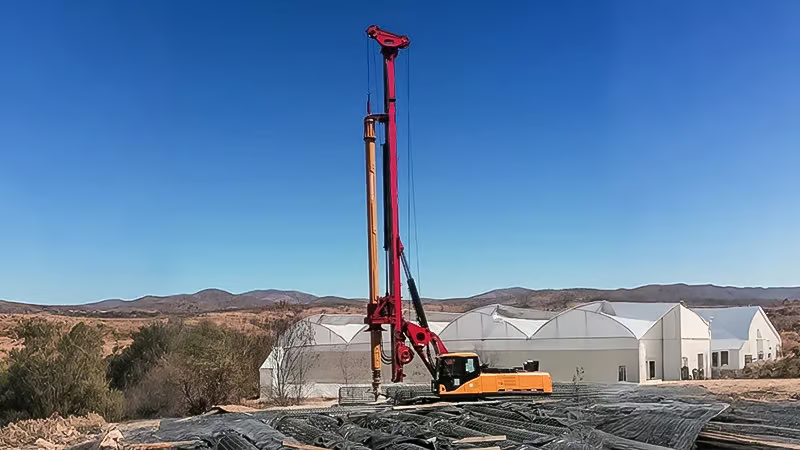
Rotary drilling components are essential consumables in foundation and rock drilling, serving as the direct interface between drilling equipment and the ground. Selecting the right rotary drilling components directly affects drilling efficiency, penetration rate, bit life, and the overall quality of the final hole.
In piling and rock projects, choosing the right components is a technical decision that influences productivity, cost control, and operational safety. Everstar Machinery supports drilling contractors by supplying high-performance components for rotary drilling operations.
The product portfolio includes critical consumables and accessories such as Kelly bars, bucket teeth, bullet teeth, and other bit components designed to withstand demanding drilling conditions and improve drilling efficiency across various formations.
Types of Rotary Drilling Core Bits
Understanding the main types of bits used in rotary drilling is the foundation of a reliable selection process. Each bit type is designed to work with specific drilling components, ensuring controlled material removal, stable torque transfer, and efficient drilling across various formations.
Core Barrels, Rock Augers, and Buckets
Core Barrels
Core barrels are used in hard-rock conditions where precision, strength, and torque transmission are critical. These rotary drilling core bits cut a circular path, enabling a solid core to be extracted for geological verification.
Their performance depends on reliable torque delivery, which is provided by the Kelly bars ensuring maximum torque transfer for drilling in hard formations such as granite and quartzite. Core barrels are commonly equipped with tungsten carbide insert cutters and bullet teeth to deliver superior wear resistance.
In such hard formations, tungsten carbide inserts excel thanks to their high hardness and density, and withstand intense impact and friction during drilling. This durability preserves tool integrity and performance, minimizing downtime and reducing the need for frequent replacements.
Rock Augers
Rock augers are suitable for drilling in medium formations, including limestone, hard shale, and compacted soil. These drill bits efficiently break material while lifting cuttings to the surface.
To improve durability and cutting performance, rock augers are often fitted with Everstar Bullet Teeth, which withstand heavy wear and enable consistent drilling in formations with lower compressive strength than solid hard rock.
Drilling Buckets
Drilling buckets are versatile tools used in soft, medium, and mixed-ground conditions. Open-bearing buckets rely on strong cutting edges and robust tool design to remove cuttings efficiently and maintain stable excavation.
When combined with adaptable drilling tools, operators can achieve precise, efficient drilling across a wide range of soil and rock types. Proper tool selection directly affects drilling speed, bit diameter accuracy, operational stability, and overall tool life.
Tricone and Special Rock Bits
Rotary Drilling Rig Casings enhance drilling operations by protecting boreholes, maintaining structural stability, and enabling safe drilling in challenging ground conditions. Together, Tricone Bits, tooth systems, Kelly Bars, and casing solutions provide a complete and reliable support system across a wide range of soil and rock types.
Tricone Bits
Tricone bits use three rotating cones to crush and fracture material, making them suitable for blasthole drilling, mining, and oil or water well projects. Depending on cone design and teeth type, they can drill through shale, limestone, and hard rock, including granite.
Everstar manufactures and supplies Tricone Bits for rotary drilling applications, delivering reliable performance in hard ground. In combination with the Kelly Bars, these components ensure efficient torque transmission from the rotary drilling rig to the cutting tool.
Matching Bits to Geology and Project Goals

Selecting drill bits requires a structured approach that balances geological conditions with operational priorities.
Soft Soil, Mixed Ground, and Hard Rock Strategies
Softer formations such as clay, silt, and soft shale require drill bits with widely spaced cutting structures. This configuration improves cuttings removal and supports a high ROP in soft material. Buckets and augers designed for soft ground perform best in these conditions.
Medium formations, including limestone, compacted sand, and hard shale, demand a balanced cutting approach. Drill bits with closely spaced teeth or reinforced tungsten carbide insert systems offer consistent drilling performance while limiting excessive wear.
Hard rock formations such as granite and quartzite require robust tools designed for crushing rather than scraping. Rotary drilling core bits and specialized hard-rock rotary bits provide the strength needed to drill through complex formations while maintaining hole quality.
To help overcome the demanding challenges posed by complex geological conditions, tungsten carbide insert systems deliver exceptional wear resistance in both abrasive and hard formations as a vital component of rotary drilling rigs for pile foundation construction.
Balancing Penetration Rate, Tool Life, and Cost
Choosing the optimal bit involves managing trade-offs:
- Aggressive designs with chisel inserts and widely spaced teeth support high ROP but may reduce bit life in abrasive formations.
- Bits with closely spaced teeth and reinforced insert systems offer longer service lifespan, especially in hard formations, but may drill more slowly in soft material.
- In abrasive formations, prioritizing superior wear resistance protects both the bit and the drilling equipment, reducing long-term operational costs.
Tooth Systems, Maintenance, and Replacement
Effective tooth management is essential for consistent drilling performance and cost control.
Bucket Teeth, Bullet Teeth, and Replaceable Inserts
Everstar Machinery provides replaceable bucket teeth and bullet teeth designed for rotary drilling applications. Bullet teeth, with their pointed geometry, are ideal for penetrating tough materials and hard rock. Bucket teeth, with flatter profiles, perform well in softer and medium formations where excavation efficiency is critical.
These replaceable systems allow contractors to maintain optimal drilling performance by quickly replacing worn teeth from available stock, minimizing downtime and protecting the bit body.
Inspection, Rotation, and Wear Management
Routine inspection is essential. Teeth, inserts, and the bit body should be checked before and after each drilling shift. Uneven wear across rows of teeth can affect bit diameter and compromise hole quality, especially in variable geological conditions commonly observed in rotary drilling operations documented by the USGS Research Drilling Program.
In tools with an open bearing system, monitoring bearing condition and rotation patterns helps prevent premature failure and supports consistent cutting performance. Maintaining a well-organized stock of replacement teeth ensures uninterrupted drilling operations and reduces downtime during long drilling cycles.
FAQs – Hard Stone Rotary Bits
How do I choose the right rotary bit for hard rock piling?
For hard rock piling, select drill bits designed for crushing and high structural strength. Rotary drilling core bits or specialized hard rock rotary bits with tungsten carbide insert teeth are recommended. Matching the bit diameter to the final hole size and prioritizing wear resistance ensure stable drilling performance in rock formations.
What is the difference between a core barrel and a rock bucket?
A core barrel cuts a circular path through hard formations and extracts a solid core sample for analysis. A rock bucket excavates all material and lifts cuttings to the surface. Core barrels are preferred for hard stone and sampling, while buckets are commonly used in soft to medium formations.
How often should drilling bit teeth be inspected or replaced?
Teeth should be inspected before and after every shift, especially when drilling in abrasive formations or hard stone. Worn teeth reduce drilling efficiency, lower ROP, and can damage the bit body. Keeping replacement teeth in stock allows for quick changes and prevents costly downtime.
Conclusion: Maximizing Drilling Performance with the Right Rotary Bits
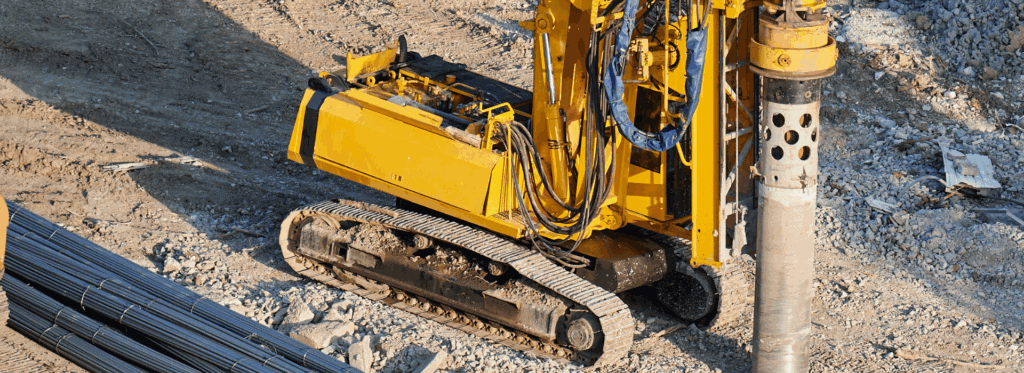
Selecting the right rotary drilling components is essential for efficient drilling, extended bit life, and high-quality foundation holes. By matching bit type, tooth configuration, and material strength to site-specific formations, contractors can improve productivity and reduce operational wear.
Tungsten carbide inserts play a crucial role in achieving these goals. By forming a protective barrier on the tool’s working surface, they prevent direct contact with abrasive particles, extending tool life and maintaining drilling speed and hole quality. This outstanding wear resistance improves efficiency and lowers costs by reducing maintenance and replacement frequency.
Everstar Machinery offers high-performance bucket teeth and bullet teeth, along with a complete guide of drilling components engineered for superior wear resistance across diverse drilling environments.
Investing in the right consumables and practicing proper wear management ensure consistent performance throughout the project lifecycle.
Contact Everstar for Rotary Bit and Tooth Selection Support
Choosing the wrong bit can delay projects and increase costs. On our official web page, Everstar’s technical specialists are ready to assist with examples of selecting the optimal drill bits, tooth systems, and replacement strategies for your drilling requirements.
Contact Everstar Machinery today for expert support on rotary drilling components, accessories, and consumable solutions for deep foundations.

