
Key Takeaways
- Engine hours and service records are the first indicators of equipment viability. Incomplete documentation shifts risk entirely to the buyer.
- Hydraulic system integrity determines whether used piling equipment can sustain the precision required on utility scale solar installations.
- Pile driving head wear patterns reveal whether the machine was operated within its design envelope.
- Attachment compatibility must be verified before purchase. A mismatch discovered after the sale frequently costs more than the savings on the machine price.
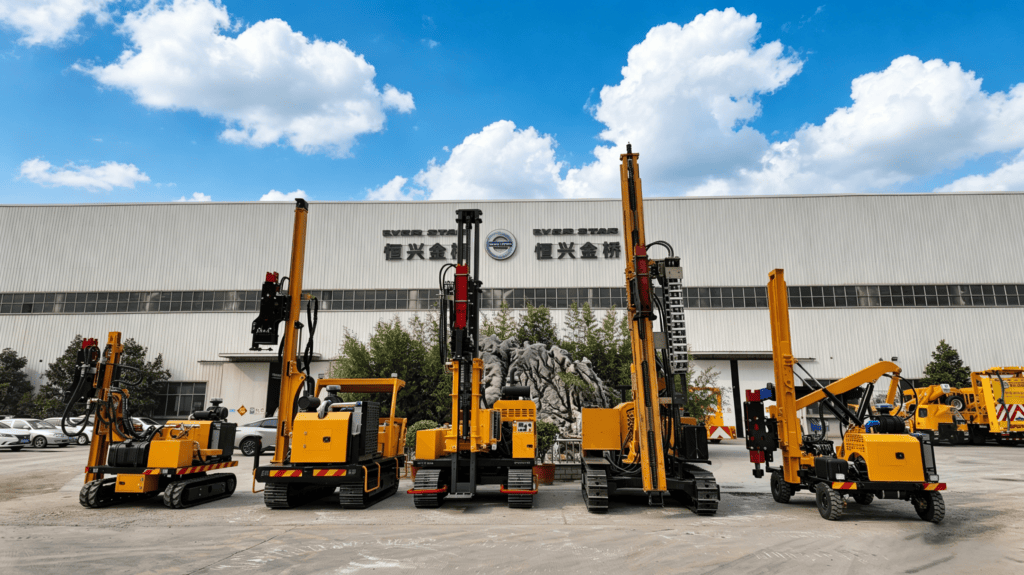
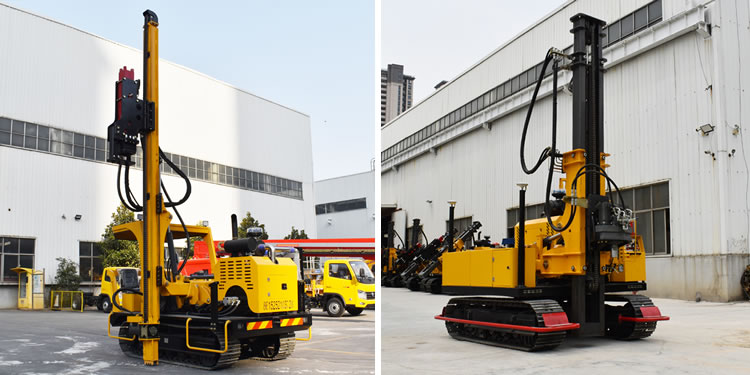
A solar pile driver is a heavy construction machine used to drive foundation posts (piles) into the ground to support solar panel racks.
EPC contractors expanding capacity in the solar industry increasingly consider pre-owned pile driving equipment as a way to grow their fleet across installation projects.
A piling machine can be a sound investment when the inspection is thorough, or a costly liability when it is not.
This guide covers condition assessment, documentation verification, and attachment compatibility checks for installation contractors evaluating pre-owned equipment for utility-scale solar projects where solar panels must be mounted on a stable foundation and electrical installations must meet regulatory compliance standards.
Engine and Hydraulic System: The Two Inspection Areas That Determine Equipment Viability
Solar pile drivers can install hundreds of piles per day, enhancing construction speed.
Engine condition and hydraulic system integrity carry the most operational risk in any pile driver purchase. Equipment running 200-300 piles per day across installation projects accumulates significant stress quickly relative to its calendar age.
On utility-scale solar projects, unplanned equipment downtime affects solar panel installation timelines and overall solar project delivery.
Across all projects, the installation of thousands of piles demands equipment that performs without interruption at every site.
Engine Condition Assessment: Hours, Records, and Physical Indicators
Logged operating hours are the starting point, but hours alone do not tell the full story. A unit with 2,000 hours and a complete service history represents a lower risk than one with 800 hours and no documentation.
Check oil quality, inspect exhaust behavior under load, and confirm the engine runs cleanly when the pile-driving head is engaged.
When full service records are absent, inspect the unit for field-level evidence: clean fluid compartments, undamaged hose runs, and no visible corrosion.
Pile Driving Head and Attachment Compatibility: Matching Equipment to Site Work
The pile driving head and attachment system determine whether the machine can execute the buyer’s tasks across solar installations.
The condition of these components directly determines installation quality across all piles-intensive projects on site.
Attachment incompatibility discovered after purchase frequently costs more than the saving made on the machine price.
Pile Driving Head Condition: Guide Rails, Drive Keys, and Impact Surfaces
Inspect wear on guide rails, drive key engagement surfaces, and impact face condition on hydraulic hammer variants.
Impact ramming on DTH-required ground leaves distinctive wear signatures on mechanical surfaces that reveal operations beyond the design envelope.
Uneven guide rail wear suggests misalignment during pile driving. Damaged drive key surfaces indicate torque transmission beyond rated capacity on piles driven outside specification.
Attachment Verification: Confirming Compatibility Before Committing to Purchase
Confirm which accessories are included, verify hydraulic flow and pressure ratings match required attachments, and test fitment before completing the transaction.
EVERSTAR’s pile driver accessory range provides a useful benchmark: auger drill to 4,000mm, DTH drill hammer to 3,500mm, hydraulic pile hammer to 6,000mm pile height, and pile puller for recovery operations.
A full suite of compatible attachments verified before purchase means equipment that is immediately productive across installation projects, utilizing the correct configurations from day one to maximize efficiency on site.
Documentation, Ownership History, and the New vs. Used Cost Comparison
Documentation is where pre-owned piling equipment purchases most commonly fail. Missing records eliminate the ability to verify regulatory compliance history and attachment specification conformance.
Documentation Red Flags: What Missing Records Indicate About Equipment History
- No operator manual signals untrained operation.
- Missing service records make the war history unverifiable.
- No original spec sheet removes the reference point for evaluating the current condition against the as-new specification.
Incomplete records are a legitimate basis for negotiating lower pricing. For companies operating with pride and a commitment to fostering growth in the solar industry, documentation gaps in fleet equipment are a liability managed actively.
Without records, projects face installation process delays that affect pile schedules and overall site efficiency.
New Equipment Comparison: Warranty, Training, and Total Cost Over the First Project Year
A new EVERSTAR solar pile driver includes full warranty coverage, hands-on training for the company and their operators across the HXR5, HXR6, and HXR7 range, and a known service baseline from day one. These are services designed to protect the buyer’s investment across the first project year.
EVERSTAR leads the industry in services that cover equipment operation, installation best practices, and leading-edge training for all crew levels.
The company’s apprenticeship program support and mentorship opportunities ensure operators are leading their peers in output from day one.
Investing in a pre-owned machine requires calculating total first-year cost honestly: engine service, hydraulic systems checks, seal replacement if needed, attachment sourcing for all piles configurations, and operator training time.
EVERSTAR builds equipment for durability on every ground type and terrain, utilizing innovation to extend efficient service life across demanding projects.
Companies that invest in the right equipment and the right services partner contribute to a sustainable future for the solar industry and build excellence in their construction business over time.
FAQ — Pre-Owned Piling Equipment
What are the most important checks when buying pre-owned pile driving equipment?
Engine condition, hydraulic system integrity, pile driving head wear, and attachment compatibility are the four inspection priorities. Documentation review covering service records, operator manual, and original spec sheet must accompany the physical inspection.
How do operating hours affect the value and reliability of pre-owned pile driving equipment?
Operating hours indicate usage volume, but service history determines reliability. A high-hour unit with complete maintenance records is often a lower risk than a low-hour unit with no documentation. Hours accumulate faster on construction sites executing work at 200-300 piles per day. Assess hours alongside maintenance evidence, physical wear indicators, and hydraulic performance.
A Thorough Inspection Protects the Investment
A pre-owned equipment purchase is cost-effective when engine condition, hydraulic integrity, pile head wear, attachment compatibility, and documentation are all verified before committing.
Across projects of all scales, this inspection discipline is the foundation of excellence in installation. Efficient systems, properly verified, are what allow solar projects to meet the highest standards of regulatory compliance and safety across every site.
According to the IADC (The International Association of Drilling Contractors), industry best practices for pile driving equipment emphasize pre-purchase condition verification as the foundation of responsible fleet management.
The same precision engineering and structural integrity standards that apply to new equipment apply equally to used machines deployed across solar installations.
Contact EVERSTAR to Compare New Equipment Options Against Your Pre-Owned Shortlist
Explore our website to discover detailed specifications for the HXR5, HXR6, and HXR7 models, access pricing information. Contact EVERSTAR to discuss your solar project requirements, the number of piles your site demands, and get model-specific recommendations that support the power of sustainable energy solutions, efficient systems, and excellence in every installation.

