
Is your solar pile driver running slower than usual? Discover the top causes—from hydraulic pressure loss to ground conditions—and how to fix them fast.
Key Takeaways
- A well-maintained pile driver ensures efficient high-speed piling performance and helps complete construction projects on time, which is one of the key reasons why customers choose high-quality piling equipment.
- A comprehensive analysis of the causes of insufficient impact force helps customers quickly identify potential issues, minimize equipment downtime, and reduce additional expenses caused by machine failures.
- Understanding the solutions for different pile driver faults can minimize downtime caused by improper operation, allowing operators to troubleshoot issues quickly and complete piling tasks on schedule.
Why Is It Important to Maintain Optimal Impact Energy?
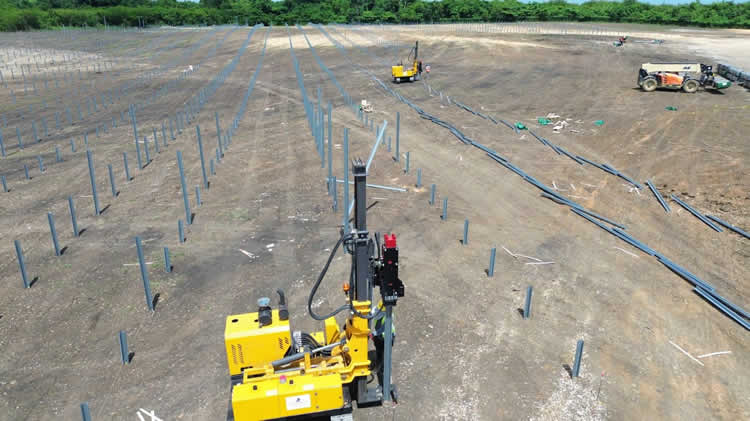
In modern solar farm construction, maintaining consistent foundation installation speed and depth is critical to keeping solar farm projects on schedule and within budget. Whether you are operating a solar pile driver or a specialized photovoltaic pile driver, experiencing a drop in impact energy directly harms jobsite productivity and delays overall solar projects. A hydraulic hammer relies on a finely tuned hydraulic system, advanced control system features, and stable power delivery to drive foundation components like piles or ground screws efficiently into the ground. When your machinery begins losing driving power, identifying the root cause quickly minimizes costly downtime and extends the long service life of your equipment.
Common Causes of Impact Force Loss
Several structural and operational factors can cause a hydraulic pile driver to lose driving power during the installation process.
- Hydraulic System and Pressure Degradation: Over time, internal wear within the hydraulic system—such as worn piston seals, pressure fluid leaks, or malfunctioning control valves—weakens the energy transfer to the hydraulic hammer. Without maximum pressure and smooth fluid flow, the driving unit fails to generate full impact energy, resulting in slower solar pile installations regardless of the engine output.
- Challenging Soil Conditions and Uneven Terrain: Operating across different soil conditions and uneven terrain places immense strain on driving equipment. Hardened soil layers, embedded rocks, or dense clay require tailored impact settings. When a machine encounters tough soil conditions without proper parameter adjustments via its control system, the unit can lose driving force, struggle to reach the required depth, and cause unnecessary wear on the foundation solar pile.
- Mechanical Wear and Component Fatigue: Heavy continuous use during major solar pile driving operations eventually leads to mechanical fatigue. Lower-quality replacement parts or uncalibrated pile drivers reduce structural stability and operational speed. Utilizing high quality materials and choosing reputable manufacturers ensure that key wear components withstand extreme forces, keeping foundation installation seamless and reliable.
| System Component | Cause | Solution |
|---|---|---|
| Hydraulic Pump | Component damage | Replace the damaged components |
| Hydraulic Pump | Component wear, excessive clearance, and severe leakage | Repair or replace the pump components |
| Hydraulic Pump | Hydraulic oil level is too low, causing the hydraulic pump to run dry or experience cavitation | Add hydraulic oil |
| Hydraulic Pump | Poor sealing in the oil suction line, resulting in a vacuum | Tighten the fittings, inspect the piping, and improve sealing |
| Hydraulic Pump | Poor sealing in the pressure oil line, resulting in oil leakage | Check for the cause of the leakage and repair it |
| Relief Valve | Spring deformation or breakage | Replace the spring |
| Relief Valve | Valve spool stuck in the open position, preventing pressure from being established | Repair the relief valve to restore smooth operation |
| Relief Valve | Poor contact between the spool/steel ball and valve seat | Replace the spool or steel ball and ensure proper contact with the valve seat |
| Relief Valve | Orifice blockage | Clean the orifice |
| Relief Valve | Remote-control port connected to the return-oil tank | Disconnect the connection between the remote-control port and the return-oil tank |
| Hydraulic Cylinder | High-pressure chamber connected through | Repair the seal and replace the sealing components |
| System | Partial load unloading | Identify the cause of load unloading and take corresponding measures |
| System | Severe system leakage | Replace the seals to prevent leakage |
| Pressure Gauge | Pressure gauge damaged or malfunctioning, resulting in a false “no pressure” indication | Replace the pressure gauge |
| Hydraulic Oil | Oil viscosity is too low, aggravating system leakage | Replace the hydraulic oil |
| Temperature | Excessive temperature causes the oil viscosity to decrease | Identify the cause of overheating and take measures to dissipate heat |
How to Restore Driving Power and Efficiency?
To overcome loss of force and boost overall productivity, contractors should adopt a proactive maintenance and operating strategy:
- Routine Maintenance and Inspection: Regularly inspect hydraulic hoses, valves, fluid cleanliness, and hammer seals. Maintaining optimum hydraulic pressure prevents sudden loss of power and safeguards your investment in reliable machinery.
- Smart System Control and Monitoring: Leverage advanced technology and intelligent control features to adapt driving frequency and strike force according to real-time ground feedback. This adaptability allows operators to handle hard ground or soft soils with equal ability and quality.
- Upgrading Equipment and Choosing the Right Partner: When older models fail to deliver required performance, upgrading to equipped units designed specifically for the solar industry yields significant benefits. Modern solar pile driving solutions offer cost effective operations, shorter lead times, and unmatched product support from sales and service teams.
What Is the Most Efficient Inspection Sequence?
1.First, confirm whether the issue is caused by operating settings: Check the feed handle stroke, crawler high/low-speed valve, and power head speed/operating mode.
2.Check the pressure gauge: The manual defines the pressure gauge as displaying the “working pressure.” If the pressure is abnormally low, prioritize troubleshooting the hydraulic system for “no pressure or very low pressure.”
3.Check the hydraulic oil level and inspect for issues such as poor sealing in the suction line or air intake/cavitation.
4.Check the hydraulic pump for wear, damaged components, severe internal leakage, or misalignment between the pump shaft and engine main shaft.
5.Inspect the relief valve: Check the spring, valve spool, cone valve/steel ball, orifice, and remote-control port for abnormalities.
6.Check the hydraulic cylinder for internal bypass, damaged seals, or leakage.
7.Check the hydraulic oil viscosity, temperature, and contamination level. Also inspect the return oil filter and suction filter for blockage or contamination.
8.If the machine is crawling or operating at an unstable speed, check for air entering the system, flow-control valve stability, hydraulic cylinder friction, guide mechanism alignment, and guide rail contact and lubrication.
9.If the hydraulic pump vibrates or makes abnormal noises, focus on checking insufficient oil, air intake/cavitation, excessive oil viscosity, low temperature, clogged oil filters, excessive pump speed, and pump shaft misalignment.
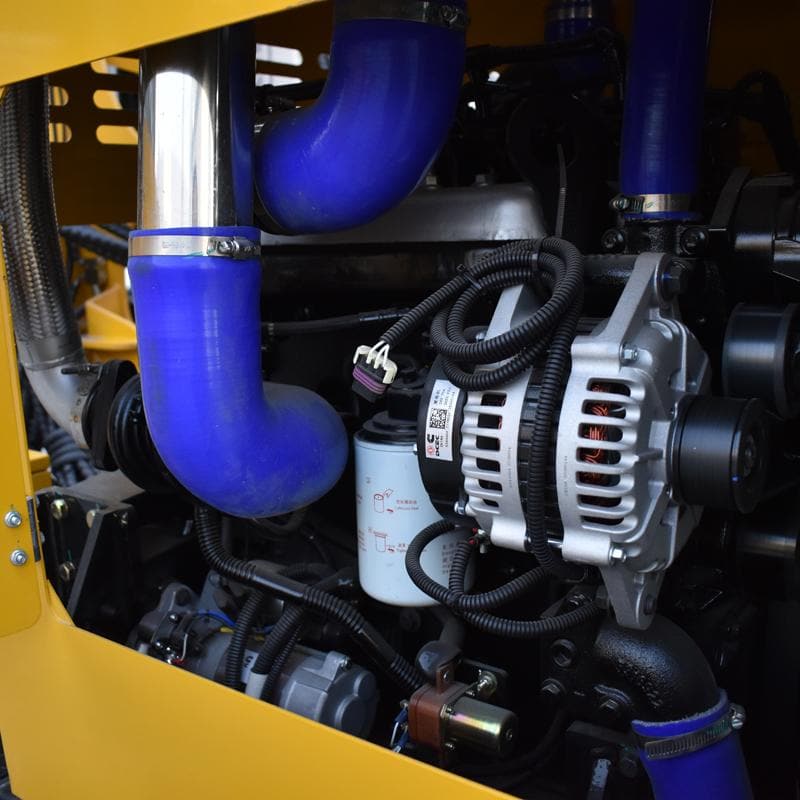
10.Finally, check the engine operating condition, including engine speed, air filter, fuel filter, and fuel cleanliness.
How to Follow Up on Subsequent Repairs?
- Hydraulic oil level: Check every 10 operating hours. Park the equipment on level ground. If the oil level is below the red line on the level gauge, add hydraulic oil until it reaches the red line. Do not exceed the maximum level.
- Return oil filter element: Replace it after the first 100 operating hours, and then clean or replace it every 500 operating hours or monthly.
- Suction filter element: Replace it after the first 100 operating hours, and then clean or replace it every 2,000 operating hours or every 6 months.
- Hydraulic oil tank: Clean the tank and replace the hydraulic oil every 2,000 operating hours or annually.
- If the return oil filter element or suction filter element is damaged or heavily contaminated and cannot be cleaned, replace it immediately.
- Hydraulic hoses: Replace them immediately if there is inner-layer damage, surface embrittlement or cracking, deformation, delamination or bulging, leakage, damaged or deformed fittings, fitting corrosion, improper installation, or if the hoses have exceeded their storage or service life.
- Hydraulic cylinder: Check for leakage daily or at least every 10 operating hours, before moving to a new work location, or before long-term shutdown. Damaged hydraulic cylinder seals must be repaired or replaced immediately.
- Hydraulic cylinder pin holes: Lubricate every 250 operating hours or monthly. Piston rods should be cleaned with hydraulic oil 1–2 times per week or after several reciprocating cycles.
- Before performing hydraulic system maintenance, always release the hydraulic pressure first. Before adding or replacing hydraulic oil, shut down the machine and release the pressure inside the hydraulic oil tank. All hydraulic oil added or replaced must be filtered.
Photovoltaic Pile Driver For Solar Farm Construction
Selecting robust, high-performance foundation equipment built with advanced technology is a crucial step for the future of renewable energy infrastructure. Compared to traditional installation methods, high-efficiency solar pile driving machinery ensures every installed pile achieves optimum load capacity across a wide range of site conditions. Making an informed decision on maintenance, equipment selection, and proper driving techniques guarantees a reliable solution, keeping your solar foundations stable, secure, and completed on time—no matter the jobsite challenges.
FAQs
What Causes Abnormal Hydraulic Oil Heating, and How Should It Be Addressed?
Causes: Excessive working pressure, volumetric losses caused by severe leakage, excessive friction between moving components, excessively high hydraulic oil viscosity, and heat transfer from external heat sources.
Corresponding measures: Reduce the working load/pressure; improve sealing; improve component machining and assembly accuracy to reduce friction between moving parts; use lower-viscosity hydraulic oil; and isolate the hydraulic system from external heat sources.
Can the Control Handle Be Adjusted During Operation?
Power head lifting/feeding: The “Power Head Lifting/Feeding” control handle is used to raise and lower the power head, controlling lifting and feeding. The handle stroke allows stepless speed adjustment.
During piling or drilling: Gradually increase the feeding handle stroke from a small position to achieve an appropriate feeding speed. Do not push the handle directly to its maximum position, as this may damage the drill bit or impact hammer.
Contact EVERSTAR for Solar Pile Drivers In Your Solar Farm Projects
Don’t let a slow solar pile driver stall your project timeline. If basic troubleshooting doesn’t resolve the issue, our expert technicians are here to help. Contact EVERSTAR today for specialized maintenance, high-performance pile driver, or genuine replacement parts.

