
Key Takeaways
- OSHA 1926.453 requires documented training from a qualified person before boom lift operators can work unsupervised.
- Boom lift certification is stricter than scissor lift training: the rotating arm and swing radius trigger requirements scissor lifts don’t carry.
- Refresher training is triggered by unsafe operating habits, a failed site inspection, or a switch to a different lift model.
- Pre-start inspections covering controls, structure, and safety devices must be completed before every work shift.
Boom lifts, sometimes called cherry pickers, let workers reach heights ladders can’t cover safely. Falls and tip-overs cause most accidents, which is why OSHA ties certification, pre-start inspections, and fall protection together.
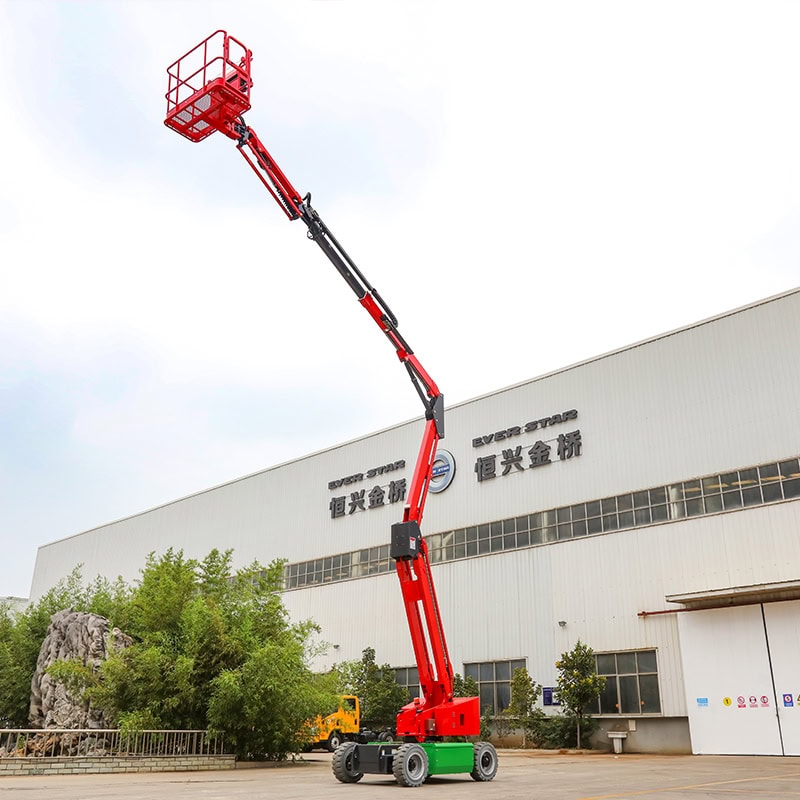
OSHA’s aerial work platform standards apply to every boom lift job, regardless of height or crew size. This guide covers what OSHA expects before crews operate a lift unsupervised, and what a pre-start inspection must include, across EVERSTAR’s range: diesel articulating models (16–47m), electric articulating models (12–28m), and diesel telescopic models (20–63m).
OSHA Certification Requirements for Boom Lift Operators
The Occupational Safety and Health Administration classifies boom lifts among mobile elevating work platforms, under 29 CFR 1926 Subpart R and ANSI/SAIA A92.22, the American National Standards Institute standard, to protect workers operating aerial lifts. OSHA regulations set specific requirements for this equipment beyond typical training.
Boom lifts and scissor lifts both fall under OSHA’s aerial lifts category, but the obligations differ: a boom lift’s rotating arm carries hazards scissor lifts don’t.
OSHA requires boom lift operators to be trained and evaluated as competent before they operate unsupervised, while scissor lift training is set by a site’s own safety plan.
A competent person signs off on the training program, and bucket trucks fall under similar OSHA oversight.
Confusing the two credentials is a common cause of accidents and OSHA citations. Fleet managers should track which operators are trained on boom lifts, scissor lifts, or both, since one credential doesn’t substitute for scissor lift training required on the other. Trained operators keep their records up to date.
Operator Training and Competency: What OSHA Requires Before First Operation
Under OSHA 1926.453, a qualified person must train boom lift operators before they touch the controls. Training must cover platform controls, pre-use inspection, slope work, fall protection, and emergency descent, and it must be documented.
Without documented lift training, an operator can’t run a boom lift unsupervised on an OSHA-covered site. These training requirements apply whether crews operate aerial lifts daily or only occasionally.
Refresher Training and Re-Certification Triggers
OSHA mandates refresher training when an operator is observed operating boom lifts unsafely, a site inspection turns up an unsafe habit, or the person is assigned a different lift model.
Machine-specific training applies when switching between articulating and telescopic lift configurations, since reach and stability differ.
The same applies moving from scissor lift training to boom lifts: scissor lift training does not carry over.
Pre-Start Inspection Checklist: What to Check Before Every Lift

A pre-start inspection has to happen before each work shift, whether the equipment is a boom lift or another aerial lift. The checklist applies whether crews operate boom lifts, scissor lifts, or aerial lifts of any type, though EVERSTAR’s boom lift models add outrigger and arm inspection points that scissor lifts don’t need.
The safety tips below cover the required items for EVERSTAR’s diesel and electric models, beyond the general requirements for other job-site machinery.
Machine Condition Checks: Controls, Structure, and Safety Devices
Before use, confirm fuel or battery level, and confirm operators can operate the lift’s controls at ground and platform level; the emergency stop must activate from either position.
Check outrigger pads, watch for unusual noises, and inspect the arm and structure for cracks or damage to structural components. Confirm the tilt alarm and overload indicator are functional.
EVERSTAR’s aerial work platform safety features, including stabilizers and harness anchor points, are inspection items, and the same safety standards apply across most aerial equipment.
Document that the pre-start inspection is complete before the lift ascends; workers who operate without a complete inspection risk more than a citation.
Ground Condition and Site Hazard Assessment Before Deployment
OSHA standards under 1926.453 call for assessing potential hazards before deployment: surface type, slope, and overhead clearance from power lines. The same assessment applies to aerial and scissor lifts alike, protecting the crew and nearby workers.
EVERSTAR boom lifts need level ground and stable footing for outriggers, and overhead power lines need a documented clearance distance.
Cross-check the manufacturer’s guidelines for the specific model before positioning the equipment near obstructions.
Fall Protection and Safe Operating Practices at Height
A personal fall arrest system is mandatory for every operator, regardless of lift configuration or working height.
Fall arrest requirements apply to aerial lifts and scissor lifts alike, since both put crews above the working surface without a fixed structure to grab.
Safe operation at height depends on knowing the load limit and emergency descent procedure.
Personal Fall Arrest System: Harness, Lanyard, and Platform Anchor Requirements
OSHA 1926.502 requires a personal fall arrest system: a full-body harness, lanyard, and platform-rated anchor point, short enough that a fall can’t exceed the anchor’s rated clearance.
Leaning over the guardrail or climbing outside the lift to extend reach is prohibited, since guardrails also guard against falling objects striking workers below. Every EVERSTAR lift includes rated anchor points that meet the safety standards ANSI/SAIA A92.22 sets for safe operation at height.
Load Limits, Prohibited Operations, and Emergency Descent
Load capacity on EVERSTAR boom lift platforms runs 200 to 480 kg, a limit that applies across aerial lifts generally and can’t be exceeded at any arm position.
Prohibited operations include driving with the lift elevated, positioning the arm over unprotected edges, and running in excess wind speeds.
The arm returns to its stowed position before road travel, and every operator must know the emergency descent procedure. OSHA states that operating outside these limits causes tip-overs, and following the load chart helps prevent accidents.
FAQ — Boom Lift Safety Checklist Osha Standards
What OSHA training and certification does a boom lift operator need before unsupervised operation?
OSHA 1926.453 requires a qualified person to train boom lift operators before unsupervised use, covering controls, inspection, slope work, and emergency descent. This training requirement is specific to boom lifts among aerial lifts and must be documented, unlike scissor lifts. Refresher training follows unsafe habits, a failed inspection, or a model switch.
What pre-start checks are required before using a diesel or electric boom lift on a job site?
Before each shift, confirm fuel or battery level, confirm platform controls respond at both control positions on the lift, and verify the emergency stop. Inspect the arm and platform for damage, confirm outrigger pads and safety devices are functional, then assess site conditions and power line clearance before deploying outriggers.
Contact EVERSTAR for Boom Lift Safety Specifications and Model Selection Guidance
Site safety managers and crews can contact EVERSTAR for equipment specifications and safety tips to match crews to the right aerial and scissor lifts, whether that’s boom lifts, scissor lifts, or both.

