
Key Takeaways
- A skid steer is an essential, incredibly versatile compact loader for leveling, clearing debris, spreading topsoil, and moving materials around a site.
- Wheeled skid steers move fast on dry, compacted sites. Compact track loaders protect turf, hold traction on wet terrain, and stay stable across slopes.
- The right attachments turn one skid steer into a tool for leveling, planting, clearing, and snow removal across a full working season.
- EVERSTAR’s smallest models fit through a standard residential garden gate, an ideal setup for a tight access path.
A landscaping crew choosing between a wheeled skid steer and a compact track loader for a residential leveling and seeding job needs to match the equipment to the terrain, not the catalog.
Both loader types transform manual labour into mechanical efficiency across various industries. The real difference is how each distributes weight and holds traction, which is essential to picking the right one.
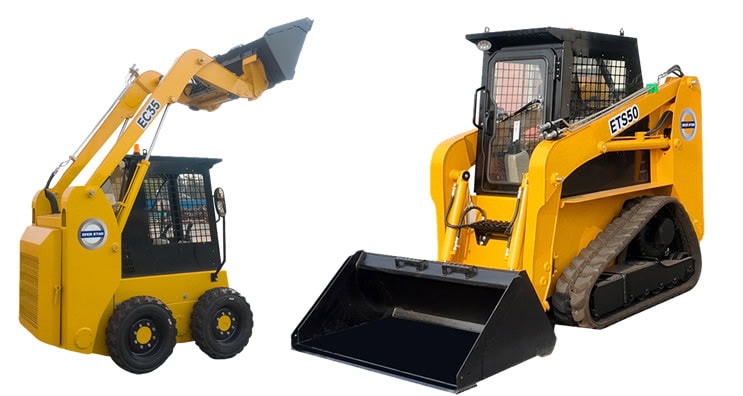
EVERSTAR Machinery buildsskid steer loaders across the EC (wheeled) and ETS (track) series, designed for garden, construction, and agriculture use. This guide helps contractors, site prep teams, and landscapers pick the right model.
Skid Steer Tasks in Landscaping: What the Equipment Must Handle
A skid steer earns its place on a residential garden, a commercial project, or an agriculture land-prep job by helping crews accomplish tasks efficiently with a minimal footprint. It’s built to keep working through a variety of conditions without needing a second machine.
Core tasks include leveling, topsoil spreading, soil cultivation, debris clearing, material transport, planting bed prep, and snow removal. Each task carries its own reach, attachment, and terrain requirements.
Grading, Leveling, and Topsoil Work: Attachment and Ground Compatibility
Bucket, grader blade, and combination shovel attachments make the skid steer the core leveling tool on residential and commercial landscaping jobs. A dozer blade spreads topsoil and levels terrain for seeding across land of any size. Sifting shovels and bucket attachments extend the range into precise soil work.
Moisture level decides which configuration handles grading most efficiently. For compacted, dry construction or agricultural land, wheeled skid steers in the EVERSTAR EC series are the practical, ideal choice for surface prep.
On soft residential lawns, a wheeled loader would compact the soil, so ETS compact track loaders spread pressure more broadly instead.
The EC/ETS rated load range of 380 to 1,500 kg covers both small garden grading and large commercial topsoil volumes.
Debris Clearance, Snow Removal, and Material Transport: Grapple and Fork Configuration
Clearing debris is one of the most common tasks landscapers hand to a skid steer. A grass grabber bucket clears cut vegetation and leaf debris across large areas. Grapple attachments handle root balls, brush, and construction spoil, making the loader a capable tool for site clearing.
Crews that add a skid steer to this work see a measurable jump in daily output over clearing by hand. Confirming rated operating capacity before selecting attachments is essential, because features like a universal quick-attach plate keep the swap simple.
The fertilizer fork and grass grabber bucket extend the skid steer’s agriculture and garden reach across regular maintenance tasks. Operators who inspect and maintain forks and buckets before each load cycle continue working safely.
Wheeled Skid Steer vs. Compact Track Loader: Which Suits Landscaping Sites
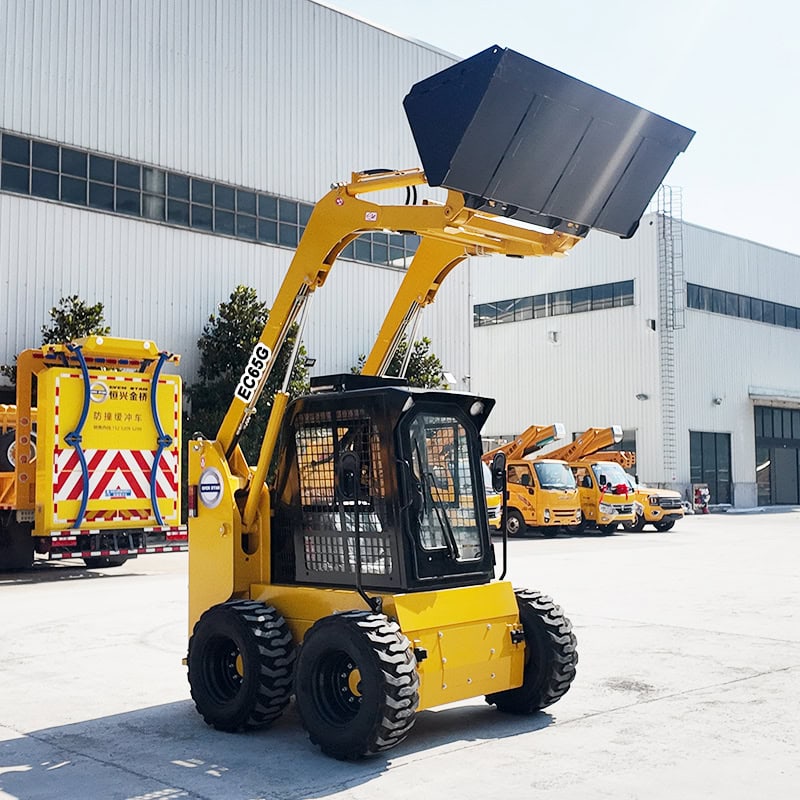
Terrain type drives the choice between a wheeled skid steer and a compact track loader. Each configuration trades off speed, power, and reach, and that trade-off shapes project efficiency.
Wheeled Skid Steer Advantages: Speed and Maneuverability on Hard Ground
Wheeled skid steers are designed for turning precision and fast cycle times on compacted, dry, or paved surfaces. The EVERSTAR EC series reaches 10 to 12 km/h, and the EC25’s 960mm turning radius makes it effective in tight spaces.
Wheeled models suit finished-surface jobs, gravel paths, commercial hardstanding, and any construction or landscaping site where speed beats turf protection. They’re easier to clean between jobs and lighter to ship.
Sidewalks, access paths, and gravel driveways are where wheeled skid steers work best. On a commercial driveway project, for example, a landscaping skid steer delivers level surfacing at speed and holds up over a long life.
Compact Track Loader Advantages: Soft Ground and Turf Protection
Compact track loaders protect soft turf by spreading weight across a broader surface than tires can. On soft residential lawns, post-rainfall planting sites, and sloped terrain, they keep ruts from forming.
The EVERSTAR ETS series covers rated loads from 400 kg (ETS25) to 1,500 kg (ETS125). The ETS25’s 1080mm width and 1,530 kg operating weight keep it compact enough for residential gardens while giving landscapers the surface-pressure benefit that protects their investment.
Machine Selection by Project Type: Residential, Commercial, and Mixed-Use Sites
Matching the equipment to a landscaping project means weighing terrain and moisture, the attachments a job calls for, and the dimensional limits of gate openings.
Residential Garden and Site Prep: Compact Size, Tight Spaces, and Access Constraints
Residential landscaping projects put compact size and turning radius first. Keeping the loader narrow enough for gate access matters more than raw power here.
Attachments such as forks, buckets, augers for digging holes, and brush tools cover most residential garden work. EVERSTAR’s EC25 (1,460 kg operating weight, 920mm width) and ETS25 (1,530 kg, 1080mm width) are sized for residential path and gate access.
The EC25’s 380 kg and ETS25’s 400 kg rated loads cover typical residential material volumes. One skid steer can carry bags of topsoil, dig holes for planting, level garden beds, and clear brush from planted areas in the same day.
Commercial and Mixed-Use Sites: Higher Load Demand and Ground Variation
Commercial landscaping sites need higher rated load capacity for bulk soil delivery, larger plant container loads, and bigger attachments. EVERSTAR’s EC100 (1,200 kg rated load) and EC120/ETS125 (1,500 kg rated load) cover the heavier volume work commercial contracts require.
Mixed terrain on a big commercial site often makes a compact track loader the more practical call. A construction-adjacent job might cross hardstanding, work recently seeded turf, dig irrigation trenches, and clear brush in the same day.
The ETS series keeps working across terrain shifts that would slow a wheeled machine, covering the load and terrain range a commercial season demands.
FAQs — Skid Steer for Landscaping
What are the best skid steer attachments for garden and site prep work?
The right attachment depends on the task, and matching attachments to site conditions is most of what makes a skid steer valuable. A dozer blade or bucket handles surface leveling. A grass grabber bucket or grapple clears vegetation and root material. An auger digs clean planting holes, and forks move bagged materials.
Can a compact skid steer fit through a standard residential garden gate?
The EC25 measures 920mm wide, and the ETS25 measures 1080mm wide. Standard residential garden gates run 900 to 1,000mm, which makes the EC25 the practical pick for most residential access. Measure the gate opening against a model’s bucket width before arriving on site, since narrow yard openings sometimes call for removing an attachment first.
Contact EVERSTAR to Find the Right Skid Steer for Your Landscaping Project
Consult EVERSTAR on our website to learn about EC and ETS series models and configurations suited to your site conditions, task types, and workload requirements.
Reach EVERSTAR directly to discuss your project plan and get model-specific recommendations.

