

Key Takeaways
- A custom Kelly bar order depends on target depth and geologic conditions.
- EVERSTAR builds interlocking Kelly bars and friction Kelly bars in 35CrMo, 30CrMo, ZT600, and Q550 steel, and every order ships with certificates confirming steel grade, heat treatment, and dimensional verification.
- The drilling depth is 130m for Kelly bar, with the longest bar built being 5 sections at 26m each (122m effective depth).
- Fewer and longer sections cost less and hold up better than more, shorter ones at the same depth.
When placing an order for a custom Kelly bar, that’s one question to consider: what does it need to know before cutting steel?
The answers to consider in your project: What’s the target depth, the set section count, and length? Also, the geological conditions decide whether the bar should be an interlocking Kelly bar or a friction Kelly bar.
Skip one, and the bar may not fit the rig, reach the depth, or hold the ground. Torque transmission from the rotary drive to the drilling tool is the Kelly bar’s single function.
Whether EVERSTAR is your first Kelly bar manufacturer or your fifth, the same three inputs apply ahead of Kelly bar production.
The Three Required Inputs Before Manufacturing Can Begin
Before a kelly bar manufacturer can quote or build anything, three pieces of information belong on the order.
Rig Brand and Model: Drive Head Interface Sets All Dimensional Specifications
Drive stub geometry, drive key count, and section outer dimensions come from the rig brand and model’s drive head interface, not the drilling job. Drive stub profiles range from a simple square head to more complex spline configurations, sized to the rig’s maximum torque rating.
Target depth and ground conditions come next: together they set section count and length, and decide whether the project calls for an interlocking Kelly bar or a friction Kelly bar.
Because of this, it is necessary to know the necessary dimensions for your project before making a purchase.
Target Depth and Geologic Conditions: Section Configuration and Bar Type
Target depth sets section count and length, and fewer sections mean better stability and lower cost.
Hard ground and drilling hard rock call for an interlocking Kelly bar, whose interlocking segments lock mechanically at every impact position for downforce that a friction bar’s own weight cannot match.
In ground with medium conditions (that is not hard rock, but also not so soft), where the bar’s weight alone provides enough downforce, it’s possible to suit a friction Kelly bar instead. This ensures supplementing the drilling rig’s crowd system concurrently rather than replacing it.
Torque still moves through the same drive keys either type uses, delivering efficient operation in both configurations.
Steel Grades and Quality Certification: What Ships with Every EVERSTAR Order
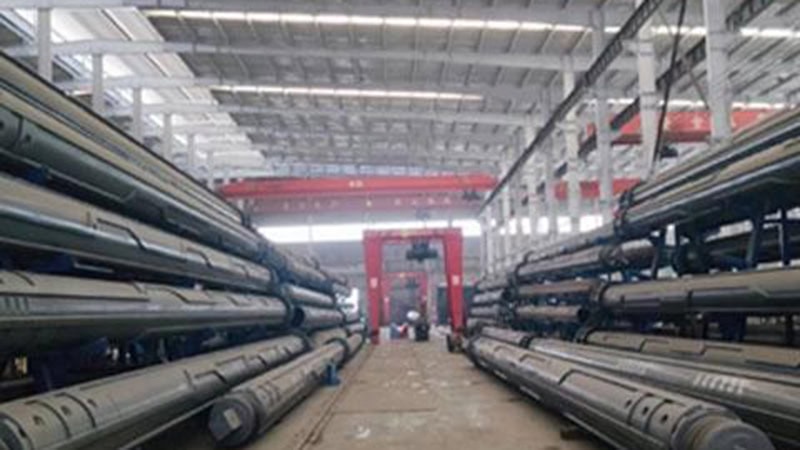
Once rig interface, depth, and ground condition are set, the steel grade and the paperwork verifying it are what a piling contractor receives.
Steel Grades: 35CrMo, 30CrMo, ZT600, and Q550 for Torque Capacity and Service Life
EVERSTAR builds Kelly bars in 35CrMo, 30CrMo, ZT600, and Q550, with selected materials and compositions that improve durability and wear resistance; these grades are ideal for the torque capacity that sustained drilling loads demand.
Also, the materials are designed to sustain the service life, meeting the demands of construction.
In the wider market, high-grade alloy seamless steel pipes are commonly used for manufacturing Kelly bars, while EVERSTAR notes that most of its own sections are not seamless.
A Kelly bar consists of at least two sections in a multi-layer telescoping structure, its outer surfaces machined for smooth operation through the kelly guide, with drive keys and section joints made by multi-step precise welding that supports welding properties better than general-purpose products.
Quenching and tempering raise service life under sustained torque and help achieve high yield strength, and shot blasting rounds out the surface strengthening treatment before shipment, advancing overall property and corrosion resistance in the field.
Quality Certificates: Steel Grade, Heat Treatment, and Dimensional Verification
EVERSTAR’s Kelly bars are manufactured to the ordered drilling rig interface and dimensional specification, and ship with quality certificates confirming steel grade and heat treatment. Therefore, when ordering a Kelly bar, you can provide the specifications of your project.
Trained production personnel on EVERSTAR’s production team use quality control systems and monitoring systems that cover all aspects of production. Including raw material inspection and mechanical property testing.
The team also do the checking drive stub geometry, section dimensions, key components, and key engagement, holding every order to the same strict quality standards and performance standards.
Laser cutting provides exceptional accuracy when shaping the bar, and CNC machining creates detailed forms with high precision.
Verify correct measurements with dimensional inspections to ensure the Kelly bar fits your site, with the necessary range for depth in your project. For example, a 4-section Kelly bar with a 130 mm OD fits a 40-meter depth.
Non-destructive testing helps identify issues without damaging the bar. A dimensional error found once the rig is running risks equipment failure and costs far more than one caught at the loading dock.
Section Configuration and Low Headroom Design
Depth and ground condition set the bar type. What follows from depth and ground condition is how many sections it needs and how long each one runs to low headroom design.
Section Count and Length: Maximums and the Rule for Fewer, Longer Sections
EVERSTAR’s maximum drilling depth is 130m, for 5 sections at 26m each (122m effective), and the most sections built into one bar, an 8-section low headroom design reaching 56m.
For any target depth, fewer sections of greater individual length outperform more, shorter sections reaching the same total: better stability under conditions of torque, lower cost, and fewer joints to add to maintenance costs over the bar’s life.
Specify the target depth, and EVERSTAR determines the section configuration from there for drilling projects of every scale, without slowing drilling operations at the plant.
Low Headroom Design: A Structural Response to Site Constraints
A low headroom Kelly bar uses shorter sections and more joints to reach the required depth inside restricted vertical clearance, such as under an overhead structure.
The 8-section low headroom bar built for 56m: its joint count runs double compared to a standard configuration reaching that depth, and each of those extra joints is a place where we can start first, faster than on a bar with fewer, longer sections.
FAQs — Kelly Bar Manufacturing
What steel grades does EVERSTAR use for custom Kelly bar manufacturing?
EVERSTAR manufactures Kelly bars in 35CrMo, 30CrMo, ZT600, and Q550 steel, selected for torque capacity, wear resistance, and service life. Quenching and tempering are used in the manufacturing process, and shot blasting prepares the surface before coating or shipment.
How is Kelly bar section count and length determined for a specific drilling depth?
Section count and length follow directly from target depth. Fewer, longer sections hold up better under torque than more, shorter ones at the same depth, for rotary drilling rigs of any brand. EVERSTAR’s maximum is 130m, with the longest bar at 5 sections of 26m each and the most sections built into one bar at 8, for a low headroom depth of 56m.
What Must Be Confirmed Before Custom Manufacturing
EVERSTAR manufactures custom interlocking Kelly bars and friction Kelly bars to a maximum depth of 130m, in 35CrMo, 30CrMo, ZT600, and Q550 steel, with quality certificates covering steel grade, heat treatment, and dimensional verification shipped on every order.
Confirming target depth and geologic conditions together to keep drilling operation moving once the bar reaches the site, consistent with the equipment standards IADC (International Association of Drilling Contractors) tracks across rotary drilling operations.
This torque transmission chain, from rotary drive to drilling tool, holds across rotary drilling rigs and hydraulic rotary drilling rigs, which is why confirming it up front keeps drilling operations on schedule.
Contact EVERSTAR for Custom Kelly Bar Guidance
To order a custom Kelly bar, contact EVERSTAR, the leading enterprise in Kelly bar manufacturing. We provide our Kelly bars and other components with high strength materials for efficient drilling, specialized for your project.

