
Key Takeaways
- EVERSTAR’s E3CXL and E4CX dig to 4000 mm standard and 5200 to 5300 mm telescopic.
- Telescopic extension adds 1200 to 1300 mm of digging depth over standard configuration.
- Auger attachments reach 1200 to 2500 mm for post holes, depending on soil type and auger diameter.
- Standard holes for fence posts and signs need only 600 to 1200 mm, well within auger attachment range.
- Hard, rocky, or compacted soil reduces achievable depth on the arm or the auger.
- A skid steer’s backhoe attachment rarely matches the E3CXL or E4CX’s telescopic depth, radius, or digging force.
A trench that needs to reach 5 meters, a fence line that calls for a dozen 900 mm post holes, a utility line that has to clear frost line requirements before backfill starts: these jobs share the same underlying question.
The answer changes with arm configuration, attachment choice, and the ground itself. EVERSTAR’s E3CXL and E4CX backhoe loaders reach different maximum digging depth figures depending on standard or telescopic configuration, and the auger covers a separate range for post holes rather than trenching.
Standard and Telescopic Digging Depth: E3CXL and E4CX
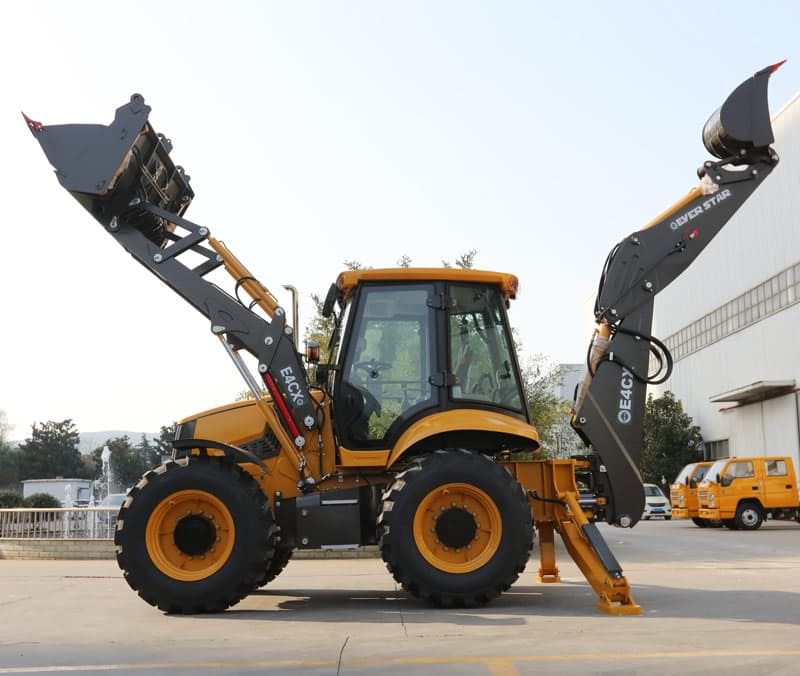
Digging depth on a backhoe loader depends on arm configuration first, then on the machine driving that arm. EVERSTAR’s E3CXL and E4CX share a similar frame but reach different maximum depths once the telescopic arm extends.
Reaching that depth takes more than arm length. Engine power drives the hydraulic system that extends the arm and builds digging force, and load capacity depends on that power.
Components, hoses, valves, and rams, need rated pressure through a full digging process, or depth and speed drop. Operator control keeps fuel efficiency high and protects equipment from wear.
A skid steer loader with a backhoe attachment can open a shallow post hole, but its arm rarely reaches telescopic depth. Mini excavators and compact backhoes reach similar depths on small sites, but a smaller frame limits auger torque next to a backhoe loader.
When the project calls for heavy duty, high torque drilling or deep trenching, a machine sized for the job matters more than one that fits the site.
Standard Arm vs. Telescopic Extension: Depth Figures by Model
Both models dig to 4000 mm with the standard arm retracted. Extending the telescopic arm adds depth differently on each: the E3CXL reaches 5200 mm, and the E4CX reaches 5300 mm, a gain of 1200 to 1300 mm.
Maximum digging radius follows a similar pattern: the E3CXL covers 4800 mm standard and 6000 mm telescopic, while the E4CX covers 5700 mm standard and 6500 mm telescopic.
Rotation differs too, 180 degrees on the E3CXL and 190 on the E4CX. Contractors comparing backhoe sizes, or a skid steer’s narrower reach, should weigh depth and radius before choosing a machine.
Digging Radius and Rotation: Horizontal Reach for Continuous Trench Work
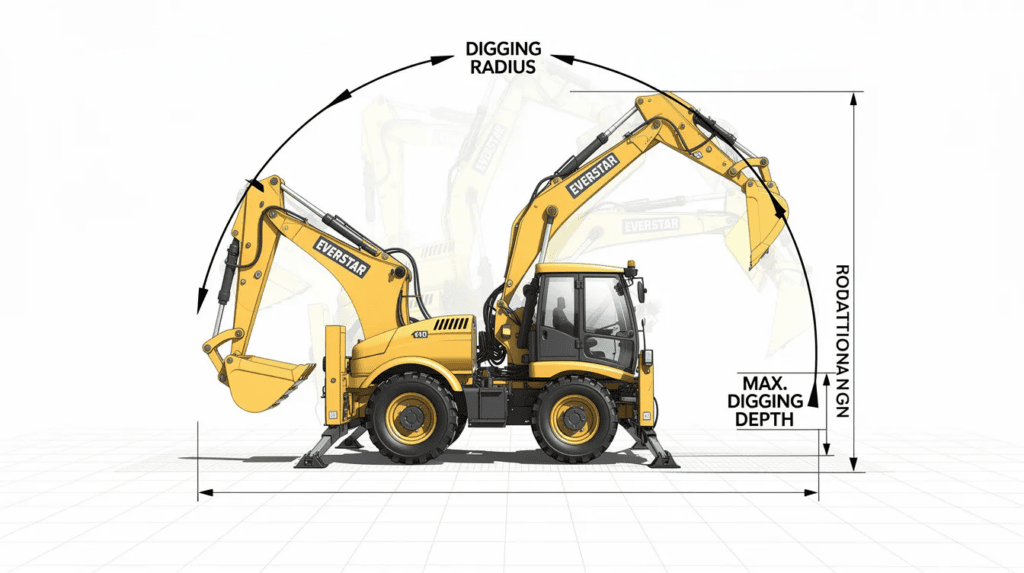
The E4CX’s 6500 mm telescopic radius suits utility and drainage projects, for trench length beyond a single dig position.
The E3CXL’s 6000 mm radius suits residential and commercial projects. Machine weight and a wide wheelbase preserve stability at full radius on uneven terrain, while flat terrain provides the most stable base for reaching maximum digging depth and horizontal reach; lighter equipment loses stability near full extension.
A straight approach makes it easier to lift material with the bucket and load spoil into trucks. Near buried utility lines, follow the U.S. Department of Transportation’s guidance on underground infrastructure.
Auger Attachment for Post Holes: Depth and Soil Condition Limits
Post hole work calls for different attachments and depth range than trenching. The auger targets post holes, not the radius figures above.
Auger Depth and Hydraulic Flow Requirements
A backhoe-mounted auger typically reaches 1200 to 2500 mm, depending on soil and auger bit diameter. The attachment runs off the machine’s hydraulic system, and flow and pressure must match requirements.
Auger length, not rated depth alone, determines how far the bit travels. An auger sized for a hydraulic flow the machine cannot sustain will underperform, and drilling performance drops fastest in hard or rocky soil.
Frozen ground behaves like compacted soil and can stall an auger short of rated depth. Hard, rocky, or compacted soil reduces auger depth, so treat 1200 to 2500 mm as a best-case figure for post hole drilling, not a guarantee.
Post Hole Depth for Fencing, Signs, and Light Structures
Standard fencing and signage post holes need 600 to 1200 mm, within the auger attachment’s range on both models.
Light structure footings, such as pergolas or small decks, typically run 1200 to 1800 mm, still within standard auger capability.
For fence posts, deep holes below the frost line reduce frost heave; structural footings for small outbuildings need the same treatment.
A standard bucket cannot open a hole this narrow, but an auger bit can, and matching bit diameter keeps the hole’s shape in loose soil.
Soil Conditions and Their Effect on Achievable Depth
Published depth figures assume normal conditions. Soil type is the variable most likely to shift digging depth from spec, on both the arm and the auger.
Soft and Medium Soils: Full Depth Achievable
Sandy, loamy, and medium clay soils let the backhoe reach full depth under normal conditions, standard or telescopic, on level terrain.
The E4CX’s 46 kN digging force handles medium to firm soil without losing depth or cycle time.
Depth deviation traces back to operator technique rather than the machine’s ability, inconsistent bucket angle or failing to clear spoil between passes.
Hard, Rocky, and Compacted Ground: Depth Reduction and Pre-Treatment
Hard rock and heavily compacted fill reduce achievable depth on any backhoe loader, and pre-boring or mechanical breaking is usually required before reaching target depth.
The E4CX’s higher force, 46 kN against the E3CXL’s 36 kN, improves performance in compacted ground, but neither overcomes solid rock without pre-treatment. Depth stays consistent on straight runs; buried debris or dense material breaks it.
Choosing the right tool, auger or standard bucket, is the right choice for bucket teeth, bucket edges, and standard bit wear.
Matching bit length to the ground protects specialty buckets and standard bit edges, and control over auger speed plus heavy duty teeth avoids an unplanned equipment change.
FAQs — Backhoe Loader
How deep can a backhoe loader dig post holes for fencing or signage?
A backhoe loader’s auger digs 1200 to 2500 mm, well beyond the 600 to 1200 mm most fencing and signage post holes need, and a standard bucket cannot reach that depth. Depth here depends on soil and auger bit diameter. Confirm code depth requirements first.
What soil conditions prevent a backhoe loader from reaching its maximum specified depth?
Hard rock and heavily compacted fill reduce achievable depth on the machine’s standard arm and auger. Sandy, loamy, and medium clay soils allow full depth under normal conditions. Hard or rocky ground typically needs pre-boring or mechanical breaking first.
Does machine size affect how deep a backhoe loader can dig?
Machine size affects digging force and stability, not depth alone. The E3CXL and E4CX are similar in size but reach different telescopic depths, 5200 mm against 5300 mm, because arm geometry and hydraulic power vary. Confirm depth from the spec sheet first.
Telescopic Configuration and Soil Condition Determine Achievable Depth
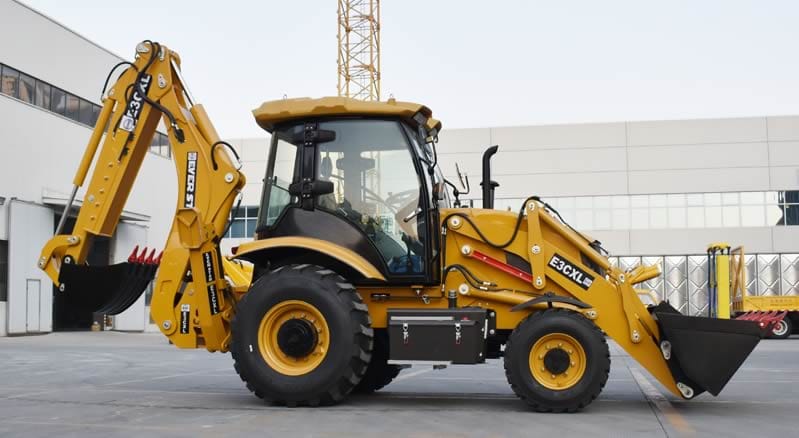
EVERSTAR’s E3CXL and E4CX reach 5200 to 5300 mm telescopic and 4000 mm retracted, well beyond a typical skid steer attachment.
The auger is the right tool for narrow post holes and adds a separate 1200 to 2500 mm range, depending on soil conditions.
Hard or rocky ground requires pre-boring or mechanical breaking before reaching published depth.
Matching arm configuration and attachments to straight trenching or post hole projects determines whether the specification sheet holds up on site.
Contact EVERSTAR for Backhoe Loader Digging Depth Specifications and Auger Attachment Guidance
Contractors and site managers planning excavation or post hole work should confirm arm depth figures and auger compatibility before choosing a machine.
Contact EVERSTAR directly for arm depth data, attachment compatibility, and model recommendations matched to your excavation and soil.

