

Key Takeaways
- Selecting the right post drivers tools reduces installation errors and ensures consistent placement, even in mixed or challenging ground conditions.
- Compact, portable machines enhance productivity on tight or hard-to-access sites, saving time and reducing labor effort.
- Hydraulic systems with versatile accessories enable crews to adapt to varying soil types and post dimensions without changing equipment.
- Following proper workflow and alignment techniques maintains safety, prevents tool damage, and ensures reliable structural performance.
Choosing the right post driving gear directly affects productivity, accuracy, and cost. Posts and small piles behave differently in the ground. Soil, project timeline, mobility, and post size determine the most effective machine.
Everstar’s guardrail post drivers are built for continuous linear work. They drive 2–5.5 m posts (max 6 m), delivering the impact needed for guardrails along roads, highways, and safety barriers where consistent installation is critical.
Small construction sites often need deeper embedment and higher force. Everstar’s dedicated pile drivers handle posts from 3–6 m for solar tasks and light foundations, ensuring precise, stable penetration across varied terrain.
Some jobs prioritize mobility over raw power. Portable handheld drivers provide a lightweight solution for fencing, signage, and temporary structures, especially in tight or hard-to-access areas where larger machinery cannot operate efficiently.
Types of Post Drivers Machines
Post drivers are compact and lightweight tools designed for driving smaller posts into the ground.
Different post drivers exist because of the diversity of project requirements, such as force, depth, or mobility. Each pile machine fits a specific application, from long roadside stretches to scattered light-duty installations or small construction sites.
Guardrail Post Drivers
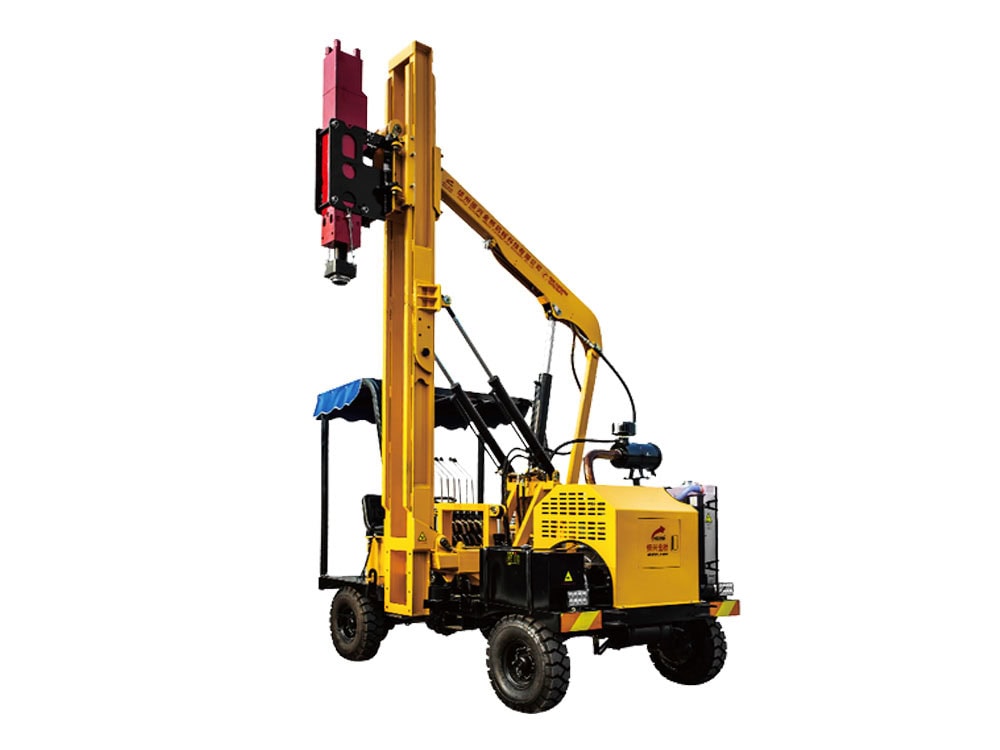
These machines drive posts precisely into the ground, ensuring safety along roads and highways. Many models offer multifunctional capabilities such as pile pulling, drilling, or pile recovery, enhancing versatility on construction sites.
Key Features
- Pile driving height: 3,000–5,000 mm (max 6,000 mm);
- Drilling depth: 2,000–5,500 mm;
- Pile pulling force: 200 kN;
- Engine options: Cummins or Yanmar;
- Suitable for wood, steel, or concrete posts depending on job requirements.
Dedicated Small Pile Drivers
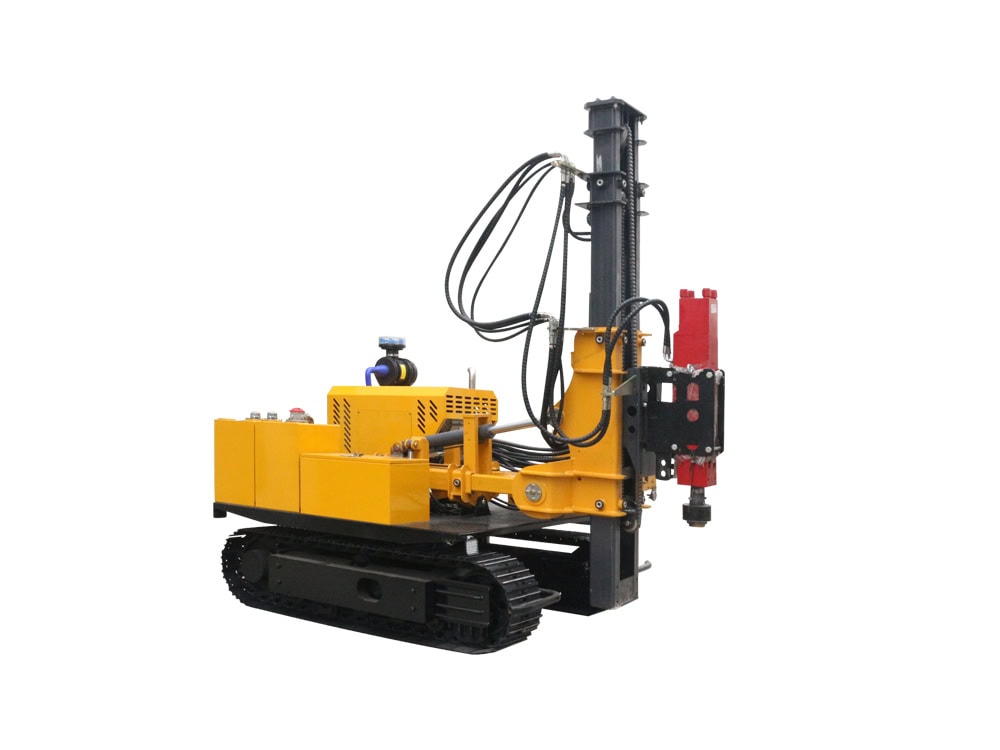
Hydraulic small pile drivers deliver high-impact force for structural posts, solar piles, and medium-scale foundations, making them a key component of comprehensive pile driving solutions. They allow precise control of verticality and embedment depth, ensuring consistent placement even in mixed soils.
These machines support a variety of extensions tailored to specific site conditions. Hydraulic pile hammers handle dense clay or compacted layers, auger drills manage gravel or loose soils, and DTH drill bits tackle hard rock.
Quick swapping of these components maximizes versatility, reduces downtime, and enables crews to meet the requirements of multiple jobs with a single machine. These capabilities make dedicated small pile drivers ideal for projects where precision, speed, and adaptability define the quality of foundation work.
Handheld and Light-duty Drivers
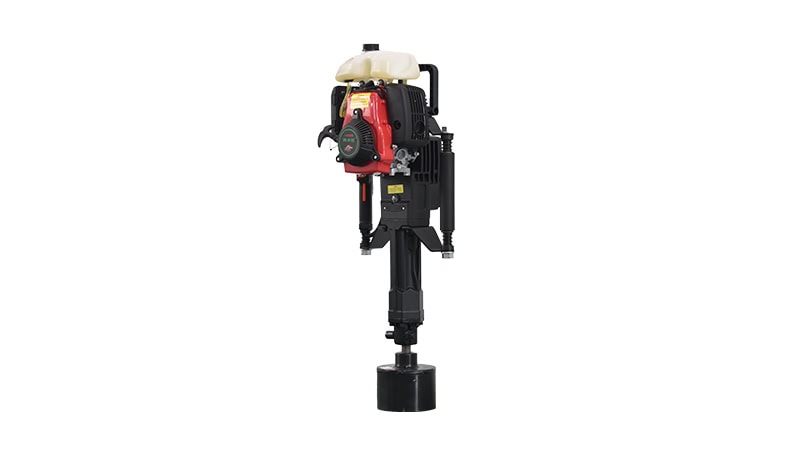
Portable post drivers are manual, easy to operate, and allow crews to install posts or small piles in hard-to-reach areas. Powered by gasoline or electricity, they handle agricultural tasks, fencing, signage, or temporary barriers.
Their main advantages are mobility, ease of use, and quick deployment. Regular maintenance—lubrication, visual inspection, and minor part replacement—extends service life and ensures reliable performance.
Selection Criteria for Different Projects
Selecting the right tool depends on ground conditions, post diameter, capacity, and job type. Accessibility, daily productivity, technology, and budget also influence the decision.
- Construction site accessibility: Handheld drivers excel in tight spaces; larger hydraulic units work best on open roads or solar farms.
- Soil conditions: Clay, gravel, or mixed soils affect post drivers force and gear choice to avoid misalignment or premature wear.
- Capacity: Match tool force to post size and embedment depth for consistent installation without overloading.
- Project type: Roadside guardrails, fencing, or solar posts have distinct safety, precision, and speed requirements.
- Technology: Hydraulic or manual drivers impact productivity, fatigue, and provide versatility.
- Budget: Balancing upfront cost with long-term performance and durability ensures cost-effective and reliable operation.
Structural Demands and Pile Length
Load requirements, embedment depth, and soil hardness dictate tool strength and durability. Longer or heavier posts require higher post driver force and may require specialized extensions. Selecting the right driver improves accuracy, reduces cycle time, and protects both equipment and the installation integrity.
Access, Productivity, and Budget Constraints
Tight sites require lightweight drivers. Smaller-scale projects benefit from machines that balance capacity with maneuverability. Thoughtful budget planning ensures long-term efficiency, minimizes downtime, and maintains consistent performance across varied soil conditions.
Workflow and Best Practices for Each Tool
Proper workflow enhances productivity, precision, and safety. Following recommended methods reduces tool wear, prevents misalignment, and ensures consistent performance across construction and small-scale piling projects. Adhering to OSHA guidelines further minimizes risks for operators and equipment.
Typical Guardrail Post Driving Process
Begin by marking post locations according to job layout, ensuring alignment with road safety standards. Position the guardrail post driver squarely over each location, then gradually drive posts while monitoring verticality and avoiding lateral drift.
Use consistent force application to maintain steady penetration and extend the pile driver lifespan. Adjust depth and driving force based on soil type, and verify final positioning for even spacing. Roadside projects benefit from multifunctional drivers capable of pile pulling or drilling when needed.
Small Pile Driver Workflow for Foundations
Place each pile using a level or laser guide to control verticality. Confirm embedment depth before driving to avoid over-penetration, especially in compressed or gravel layers typical of solar posts drivers and light structural posts.
Monitor hydraulic strikes for smooth, consistent force. Adjust stroke frequency or force to account for soil resistance and prevent bending or misalignment. Periodically check alignment, record installation parameters, and ensure each pile completes structural design standards for safety and durability.
FAQs – T-Post Drivers Tools
When should I choose a guardrail post driver over a small pile driver?
Guardrail post drivers are ideal for linear projects with uniform T-posts, such as roadside barriers. They provide precise alignment, consistent depth, and efficient placement. Small pile drivers are suitable for heavier posts or posts requiring deeper embedment in solar projects or foundations.
Job length, post type, and accessibility guide the decision. Guardrail drivers are built for continuous stretches, while pile drivers handle mixed soils and variable depths with components that offer versatility.
Can the same machine drive both fence posts and structural piles?
Some hydraulic pile drivers can handle a variety of post sizes and light structural piles with the correct attachments. Handheld drivers work well for fence posts but are not ideal for deeper or heavier foundation work.
Using the right machine simplifies operations, ensures durability, and prevents overloading. Adding or swapping extensions enables crews to adapt a single driver to multiple tasks efficiently.
How do soil conditions affect my choice of post driving tool?
Dense clay, gravel, or mixed pipe layers affect post drivers force and machine choice. Lighter posts in soft soil may require only a handheld driver, while heavier posts in compacted ground need a hydraulic unit with sufficient impact power.
Soil type also dictates attachment use. Augers, pile hammers, or DTH drill bits can be used to maintain verticality, reduce wear, and improve penetration, preventing damage to posts and equipment.
Conclusion: Matching Post Drivers Devices to Project Demands

Understanding project loads, pile lengths, and daily productivity helps crews select the right driver for each task. Proper tool selection improves accuracy, reduces wear, and ensures posts drivers or piles meet design specifications with minimal rework.
Everstar’s range covers most roadside T-posts and small foundation scenarios. Consider the pile driver specifications, built for reliability and efficiency, offering a simple way to add versatility with accessories, accommodate a variety of job needs, and speed up construction workflows while making them safer.
Ask Everstar Which Post-Driver Solution Fits Your Job
Contact Everstar experts for advice on guardrail post drivers, dedicated pile drivers, or handheld tools. Learn which product best fits your project requirements and download the catalog to explore the full selection of machines, and accessories.

