
Key Takeaways
- Rated operating capacity (ROC) caps every skid steer at 50% of tipping load, regardless of bucket size.
- Skid steer bucket capacity measures volume; ROC measures weight. Dense materials hit the ceiling first.
- A full-ROC load at maximum lift height is the highest-risk condition a skid steer faces, since lift height and reach affect stability.
- Breakout force decides how well a bucket penetrates hard material, and low force limits skid steer lift capacity on any frame.
- Wheeled skid steers and tracked skid steers in the EVERSTAR EC and ETS series span ROC from 380 kg (EC25) to 1500 kg (EC120/ETS125).
Many contractors focus on bucket size when selecting a skid steer for a job, but this approach overlooks the more critical factor.
Skid steer lift capacity decides how much a skid steer can safely lift: 50% of the machine’s tipping point. Get the calculation wrong, and equipment damage follows.
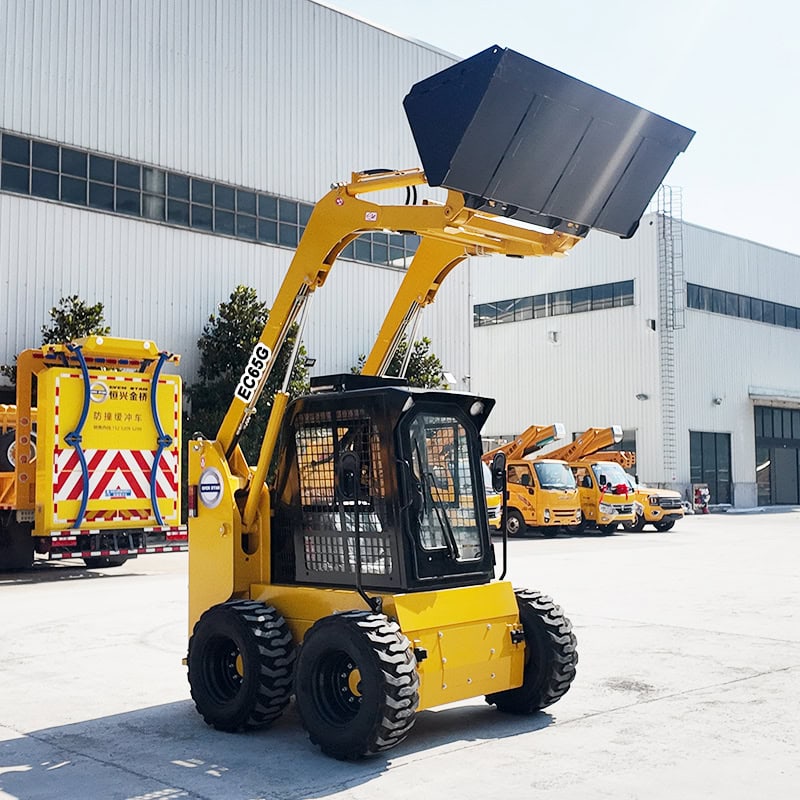
EVERSTAR Machinery builds wheeled skid steers and tracked skid steers, the compact track loaders in the ETS series. A smaller skid steer covers landscaping; a large skid steer handles demolition.
This guide to understanding lift capacity covers how ROC is calculated, how skid steer bucket capacity and weight distribution factor into choosing the right skid, and how much material a job needs.
Rated Operating Capacity: How It Sets Safe Load Limits
Every skid steer has a tipping load, the point where a loaded bucket lifts the rear off the ground. ROC sits at half that figure, a margin for uneven ground and mid-cycle lifting. A skid steer loader exceeding ROC won’t tip immediately, but every extra load raises the odds of equipment damage.
Understanding weight distribution this way keeps that margin intact and maximizes a skid steer’s lift capacity.
How ROC Is Calculated
ROC equals half of tipping load, regardless of attachment or distribution. Skid steer operating capacity climbs in steps:
- EC25: 380 kg
- EC35: 500 kg
- EC50/ETS50: 700 kg
- EC65: 950 kg
- EC75: 1050 kg
- EC100/ETS100: 1200 kg
- EC120/ETS125: 1500 kg
Exceeding that limit on any terrain compromises stability, no matter what the manufacturer’s specifications claim for the machine.
Bucket Capacity vs. Load Density
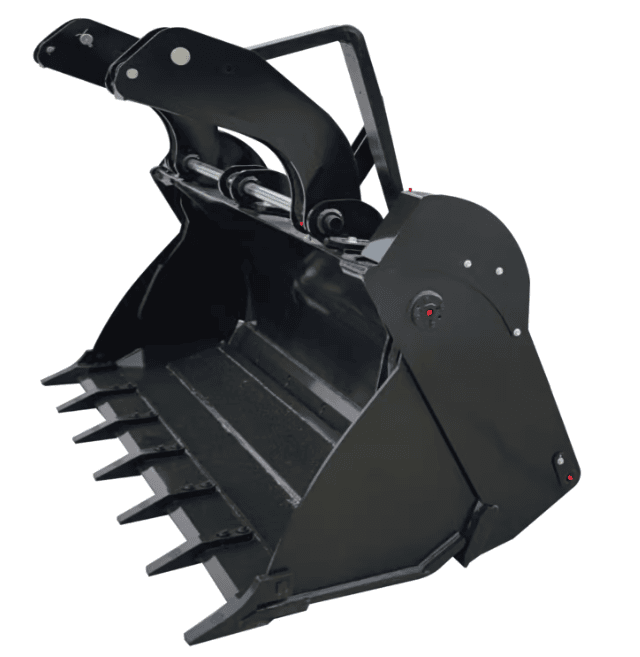
Skid steer bucket capacity measures volume, ROC measures weight, and material type and density decide the limit:
- EC25 carries 0.2 cubic meters, about 7 cubic feet, at 380 kg ROC;
- EC120 carries 0.6 cubic meters at 1200 kg;
- ETS125 carries 0.75 cubic meters at 1500 kg, bucket capacity of a skid steer loaded with debris that looks generous until weighed.
Wood chips and dry topsoil fill skid steer buckets before the weight limit.
Wet soil, livestock feed, or wet concrete hit ROC while the bucket looks half empty, so weigh different materials at the actual fill level rather than trusting the bucket size and capacity rating alone, since heaped capacity and struck capacity mark two different fill lines.
Lift Height, Dump Reach, and Load Capacity
ROC stays fixed, but stability shifts with boom position and total load weight. Lift height sets where a skid steer can place a load, even in tight spaces, and dump reach adds leverage that erodes the ROC margin.
Lift Height and Dump Reach by Model
The EC25 reaches a 2000 mm dump height with 441 mm of reach. The EC50/ETS50 reach 2100 mm with 690 mm of reach. The EC120/ETS125 reach 2450 mm with 700 to 750 mm of reach, for vertical lift skid steer and radial lift machines alike.
Front-axle leverage rises with boom height, so stability drops at maximum lift height. A full-ROC load at maximum lift height is the riskiest combination any vertical lift model faces, and operators should safely lift in stages.
Breakout Force and Bucket Penetration
Breakout force is the hydraulic force that drives the bucket into hard material, independent of ROC. The EC35 delivers 8.5 kN, the EC50/ETS50 deliver 21.8 kN, and the EC120/ETS125 deliver 22 kN, backed by more powerful engines on the larger frames.
Generous skid steer lift capacity paired with low breakout force struggles in compacted soil or demolition debris. Heavy duty attachments add their own weight, so total weight, attachment plus material, must clear the ROC ceiling on every machine.
Matching Lift Capacity to Common Material Handling Tasks
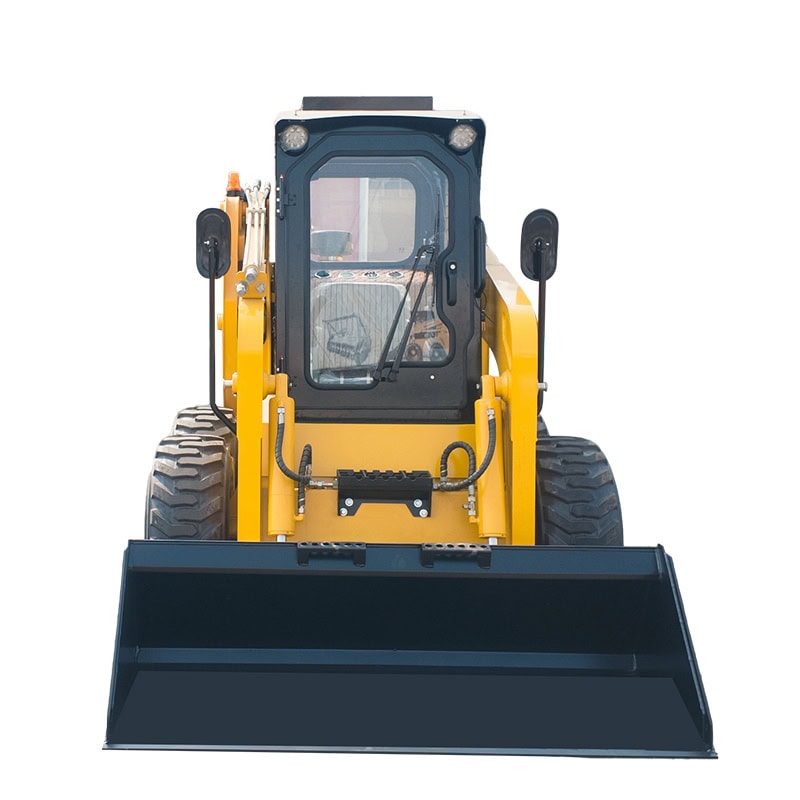
Several factors decide the right skid steer size for a task: material type, density, and volume moved per hour. Key factors like loose, wet, or abrasive materials behave differently than dry, uniform materials, so matching ROC to the load avoids underloading and overloading.
Light to Medium Loads: Landscaping, Topsoil, and Construction Support
Topsoil, mulch, and wood chips typically run 300 to 600 kg per bucket, a safe range for smaller skid steers, and the EC25 through EC65, with ROC from 380 to 950 kg, cover landscaping and snow removal without a full-frame machine.
A large skid steer on these loads adds cost without adding optimal performance. General purpose buckets on a smaller frame get the job done, and wheeled models track well on firm ground.
Heavy Loads: Aggregate, Demolition Rubble, and Industrial Material Handling
Gravel, crushed stone, and steel components reach 800 to 1200 kg per bucket, near the top of most machines’ ROC. Moving more material per cycle without exceeding maximum weight is why the EC100/EC120 and ETS100/ETS125 run full fills where mid-size equipment must partial-fill.
Heavy lifting and heavy loads alike call for higher ROC, not just a bigger bucket. An attachment built for demolition adds weight to the machine, so total load weight must stay under ROC. Check how much weight each attachment swap adds before the next skid steer bucket fills, so much weight never sneaks past the limit.
FAQs — Skid Steer Lift Capacity
What is rated operating capacity and how does it differ from the machine’s tipping load?
Tipping load is the point where a loaded bucket would lift the machine’s rear off the ground. ROC sits at 50% of that figure, a stability margin for soft footing and mid-cycle lifting. That figure comes from a lab test; ROC is the number to check loads against.
How do I know if my bucket load will exceed the skid steer’s rated operating capacity?
Multiply your material’s density by the volume you are loading, not the bucket’s rated volume, and compare that to the machine’s ROC. Dense materials often hit ROC before the bucket looks full. Weigh a representative load or drop the fill level until weight sits under ROC.
ROC and Bucket Capacity Must Both Be Verified
EVERSTAR’s EC and ETS series spans ROC from 380 kg to 1500 kg, a skid steer loader for nearly any material handling job. Selecting a skid steer on bucket volume alone, without checking material weight against ROC, produces an overloaded machine and shortens service life.
Match ROC to the heaviest per-bucket load your project requires. See how skid steers stack up against other equipment in EVERSTAR’s skid steer vs. backhoe comparison.
Contact EVERSTAR for the Right Skid Steer
Contractors, project managers, and procurement teams cancontact EVERSTAR for ROC tables, bucket capacity specs, and model recommendations matched to load profiles and dump height.
Find full specs for every EC and ETS model live on the EVERSTAR Machinery site.

