
Key Takeaways
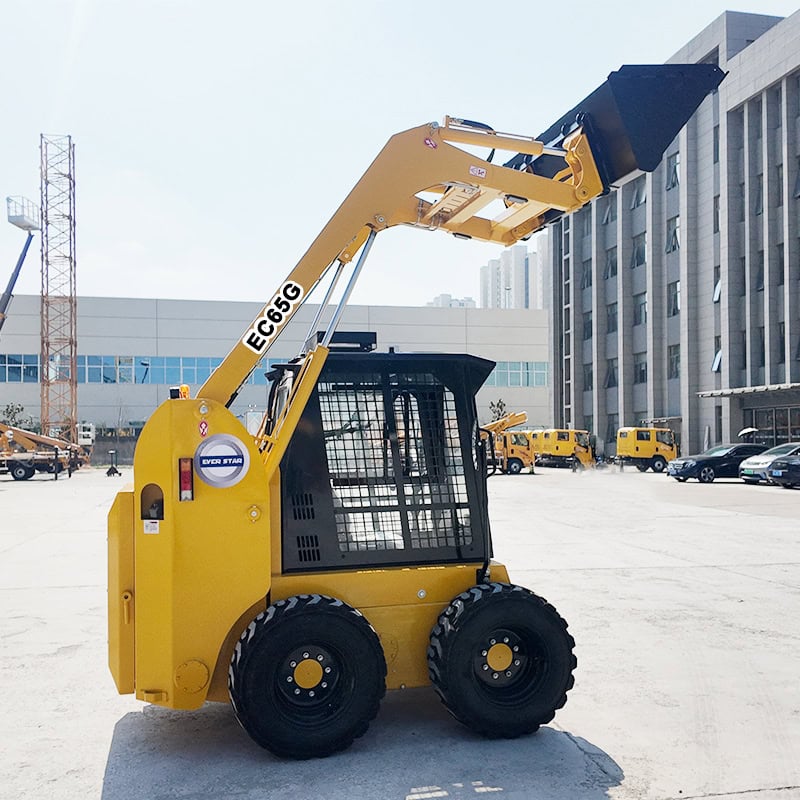
- EVERSTAR’s EC series (wheeled) and ETS series (compact track loader) cover a broader range of rated loads, from mini to full-frame.
- Tracks improve traction and maneuverability in mud, while wheels operate more efficiently on compacted construction sites.
- Attachments add 10-30% to the base price of a fully equipped skid steer.
- Weight, tracks versus wheels, and maintenance determine what a skid steer costs to operate across its working life.
- Renting suits contractors with sporadic need; buying suits operators who operate a skid steer for most of the working year.
Skid Steer Price: Drive Type, Load Class, and Power
A contractor pricing a skid steer for a construction site works through three variables: drive type, rated load class, and engine specification. Get those right and the machine fits the task.
EVERSTAR manufactures skid steer loaders across the EC (wheeled) and ETS series, spanning 380 to 1500 kg rated load. This guide breaks down what changes the price across both lines.
Equipment buyers should treat the skid steer and its attachments as one line item, not two separate purchases. A contractor who underbudgets attachments ends up with idle equipment and no budget left for the tools a job actually needs.
Contractors who run different types of sites need the right skid steer for each task, not one machine for every job. The EC25 and ETS25 load into standard trucks for easy transport between small sites, while a full-frame skid steer needs more planning around weight, power, and trailer capacity.
Skid Steer Types: Wheeled Skid Steer vs. Compact Track Loader
A compact track loader generally costs more than a comparable wheeled skid steer. Tracks, undercarriage components, and higher upkeep drive that price gap.
Operators who work in mud or on soft terrain get enhanced stability from a compact track loader that a wheeled skid steer cannot match. A compact track loader is built to operate in mud where a wheeled skid steer loses grip fast.
Wheeled skid steers operate best on compacted, hard-packed sites at lower cost per hour than tracks do. The compact track loader trades some maneuverability and speed for that traction on soft ground.
At any load class, the compact track loader carries a premium over the wheeled skid steer. The EC25 wheeled model carries 1460 kg of weight; the ETS25 compact track loader carries 1530 kg, and that weight difference reflects the tracks and undercarriage a compact track loader adds.
Rated Load Class: Mini, Mid-Size, and Full-Frame
Mini skid steers (EC25/ETS25, 380-400 kg rated load) sit at the lowest price point. Their compact design and maneuverability suit residential landscaping, farm work, and tight spaces where a full-size machine can’t operate.
Medium frame skid steers (EC60G-EC75/ETS50-ETS65) basically cover the market’s middle range, carrying 850-1050 kg rated load. The EC75 operates at 3460 kg weight with a 75 HP engine, suitable for construction material handling, digging, and excavation capability that mini models can’t deliver.
Full-frame models (EC100-EC120/ETS100-ETS125, 1200-1500 kg rated load) sit at the top of the weight range. The EC120 operates at 4000 kg weight with a 138 HP engine, built to operate at full lift height and full lift capacity on heavy materials.
Cost Beyond the Machine: Attachments and Maintenance

The standard bucket ships with most skid steer models. Every other attachment, pallet forks, a grapple, a snow blade, or an auger, costs extra, and hydraulic attachments must match the skid steer’s flow rate before purchase.
Operators who need various attachments for different tasks should budget for tools and attachments the same way they budget for the machine itself. Every skid steer purchase should include a service reserve alongside the attachment budget, since a skid steer serviced on schedule loses less resale value than one that isn’t.
For sites where trench depth matters more than attachment count, you might find it helpful to explore when a backhoe loader offers advantages over a skid steer attachment.
Wheels need routine tire checks and are cheaper to replace than tracks. Tracks need tension checks and undercarriage wear monitoring, and ground disturbance on hard, compacted surfaces wears tracks faster than soft ground work does.
Servicing the machine regularly, hydraulic oil, engine oil, filters, and lift arms and boom pivot inspection, protects resale value and keeps operation cost predictable. Tracks and wheels both need lift-point inspection before long hauls, but tracks add undercarriage checks wheels never need. A skid steer that must operate 1000-2000 hours annually goes through several service cycles a year.
Matching Machine Class: Budget and Site Profile
Mini skid steers and compact skid steer models built for confined sites operate well in tight spaces, backyards, and landscaping jobs where compact dimensions matter more than lift capacity.
Medium frame skid steers keep maneuverability high while covering general contractor tasks efficiently: material handling, digging, light excavation, and snow removal. Higher travel speed and ground speed between positions improve efficiency on multi-position construction sites.
Operators who rent equipment for occasional landscaping or construction work find capable medium frame machines at most equipment rental services. Renting suits sporadic use; buying suits operators who operate a skid steer for most of the working year.
The ability to connect various attachments and lift materials at height is a key capability across every load class. A machine equipped with a grapple, bucket, snow blade, and pallet forks carries construction materials and basically covers material handling without needing a full-frame skid steer. Pallet forks carry loose landscaping materials just as easily as a bucket handles gravel, and stability stays high when the load stays under rated capacity.
FAQ — Skid Steer Pricing
What is the price difference between a wheeled skid steer and a compact track loader of the same rated load?
A compact track loader costs more than a wheeled skid steer at equivalent rated load. Tracks, undercarriage components, and maintenance drive the gap, which widens from mini to full-frame classes. Contact EVERSTAR for current EC and ETS series pricing.
What does a standard skid steer purchase include, and what costs extra?
A standard purchase includes the machine, bucket, engine, and safety features such as ROPS and operator restraints. A grapple or an auger requires separate purchase and must suit the machine’s hydraulic flow to ensure compatibility, and boom pivots and lift arms stay inspection points regardless of drive type. Operators should not start the loader or raise lift arms from outside the cab.
Contact EVERSTAR to Find the Right Skid Steer for Your Project
Consult EVERSTAR to compare EC and ETS series models, rated load, and attachment compatibility matched to your site profile and budget.
If you want to know more about prices, Reach EVERSTAR directly for pricing across every skid steer class in the EC and ETS lineup, plus full specifications across the skidsteer product line.

