
Discover the key differences between impact vs vibratory pile drivers. Compare their performance, soil suitability, and applications in modern solar pile installations and heavy construction. Choose the appropriate equipment for your project!
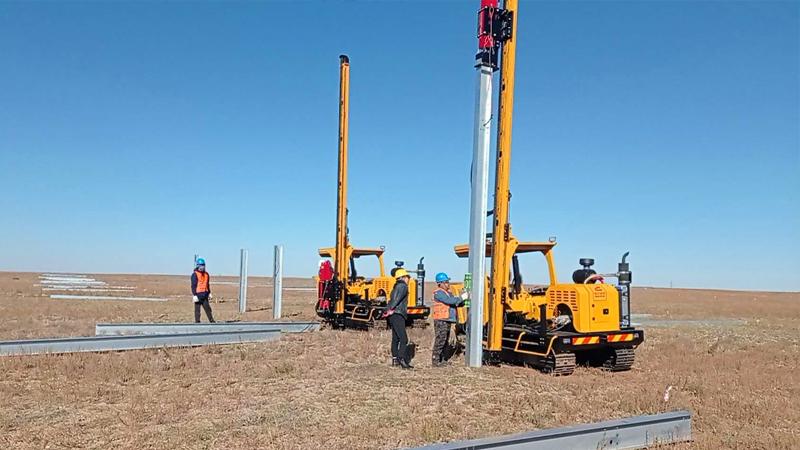
Key Takeways
- Impact hammers overcome soil resistance through repeated blows, making them suitable for hard, dense soil layers. In contrast, vibratory hammers reduce friction through high-frequency vibrations, achieving higher construction efficiency in loose, granular soils.
- Impact hammers deliver greater force, making them ideal for heavy infrastructure projects and dense soil layers with high resistance. Vibratory hammers offer higher efficiency, making them well suited for solar pile driving, sheet piling, and high-speed, large-scale installation in loose soils.
- Impact hammers generate intermittent, high-intensity impact noise and vibration, while vibratory hammers reduce some impulsive noise but still produce continuous vibration. Therefore, noise impacts must still be taken into consideration.
When planning modern infrastructure and clean energy initiatives, understanding the core differences in foundation equipment is vital. Whether constructing large-scale bridges or executing residential developments, selecting the correct machine ensures long-term structural stability. Today, we examine how different types of pile driver systems perform on various site conditions, comparing conventional traditional methods with advanced technology solutions.
How Impact and Vibratory Pile Drivers Work?
Impact and vibratory pile drivers are two widely used types of pile driving equipment in foundation construction, solar farm installation, and infrastructure projects. Although both are designed to drive piles into the ground, they use different mechanisms to overcome soil resistance, which directly affects their performance, efficiency, and suitability for specific ground conditions.
Impact pile drivers drive piles into the ground through repeated hammer blows. The hammer transfers high-energy impacts to the pile, allowing it to penetrate dense soil layers and, in suitable conditions, harder ground. This makes impact pile driving a practical choice for projects that require substantial driving force and reliable pile installation at specified depths.
Vibratory pile drivers, by contrast, use high-frequency vibrations to reduce friction between the pile surface and surrounding soil. The vibrating mechanism helps the pile move downward under its own weight and the applied driving force. Vibratory pile driving is often faster in loose to moderately dense granular soils, making it attractive for projects where installation speed and operational efficiency are priorities.
The main difference is straightforward: impact pile drivers rely on repeated striking force, while vibratory pile drivers use vibration to reduce soil resistance. Understanding this distinction is the first step toward selecting the right pile driving method.
Hydraulic Pile Driver Applications: When Should You Choose Each Type?
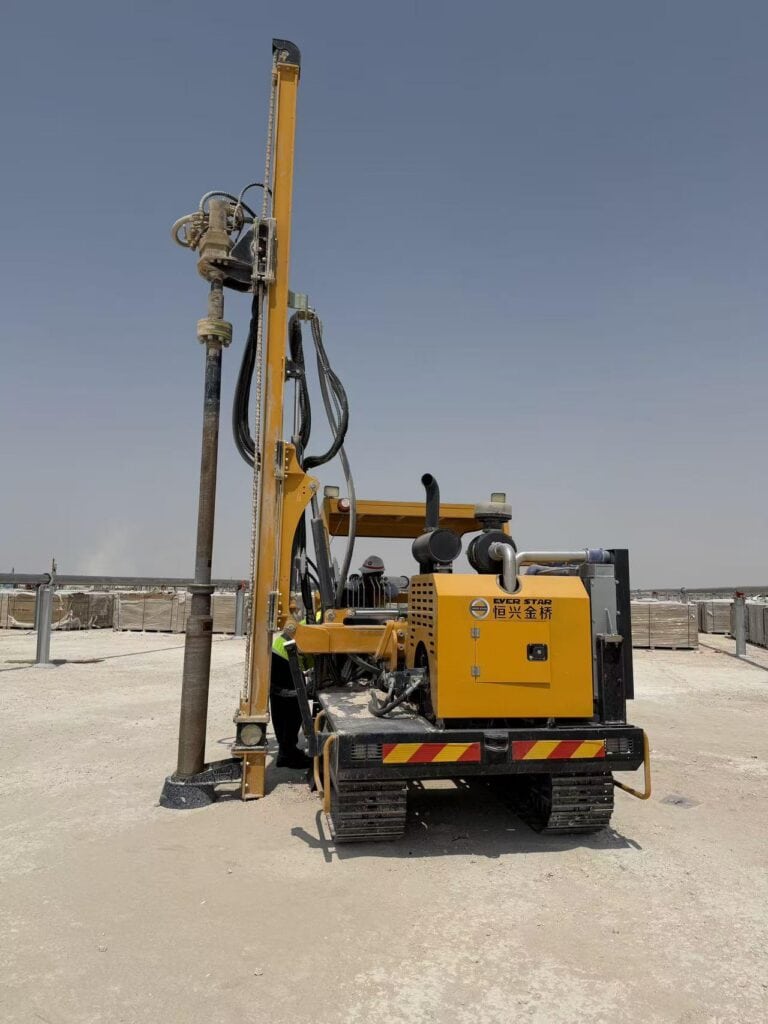
The best pile driving equipment depends on the project’s foundation requirements, soil conditions, pile specifications, and surrounding environment.
Impact pile drivers are commonly used in bridge foundations, heavy infrastructure, industrial construction, and projects involving piles that must achieve specific penetration or load-bearing requirements. Their ability to deliver concentrated impact energy makes them suitable for driving piles into dense or resistant soil layers. When pile capacity and installation criteria are critical, impact driving can also provide useful information through driving records and, where appropriate, dynamic testing.
Vibratory pile drivers are frequently used for solar mounting structures, sheet piles, temporary foundations, retaining walls, and other applications involving steel piles. In utility-scale solar projects, a vibratory or vibration-assisted pile driving system can help contractors install large numbers of posts efficiently, particularly when site conditions are favorable. Their relatively rapid installation cycles can reduce the time required to complete repetitive piling operations.
However, neither method is universally superior. Impact driving may be preferable when penetration resistance is high or strict foundation criteria apply, while vibratory driving can offer greater productivity when soil conditions allow rapid penetration. Contractors should evaluate geotechnical reports, pile design requirements, and project specifications before making a final decision.
Performance Comparison: Driving Speed, Force, and Efficiency
The rapid growth of the solar industry has dramatically shifted how pile foundations are installed. For any major solar project, utilizing a specialized solar pile driver designed for solar pile installations is critical. These specialized solar pile units are engineered to handle repetitive ramming tasks efficiently across expansive terrain. Because every single solar project demands exact alignment, the right operator can contribute immensely to project success, ensuring the power generation system operates without interruption.
Driving speed is one of the most important factors when comparing impact and vibratory pile drivers, especially on projects involving hundreds or thousands of piles.
Vibratory pile drivers can achieve high installation rates in suitable granular soils because vibration reduces the resistance between the pile and the surrounding ground. This advantage is particularly valuable on large solar farms, where repetitive installation tasks make cycle time a major contributor to overall project productivity. Faster installation may also reduce labor hours and equipment operating time per pile.
Impact pile drivers generally operate through repeated hammer strikes, so their driving cycles may take longer in conditions where vibratory equipment can penetrate efficiently. Nevertheless, impact driving can be more effective when piles encounter dense soil, stiff layers, or other conditions that require concentrated impact energy. In these situations, the ability to maintain penetration can matter more than achieving the highest possible driving speed.
It is important to distinguish between installation speed and overall project efficiency. Actual productivity depends on pile length, soil resistance, equipment power, pile alignment, operator experience, repositioning time, and the need for predrilling or supplementary methods. A vibratory driver that performs exceptionally well in one soil condition may become less effective in another. Likewise, an impact driver may provide better overall value when difficult ground conditions would otherwise cause repeated delays.
Noise, Vibration, and Environmental Considerations
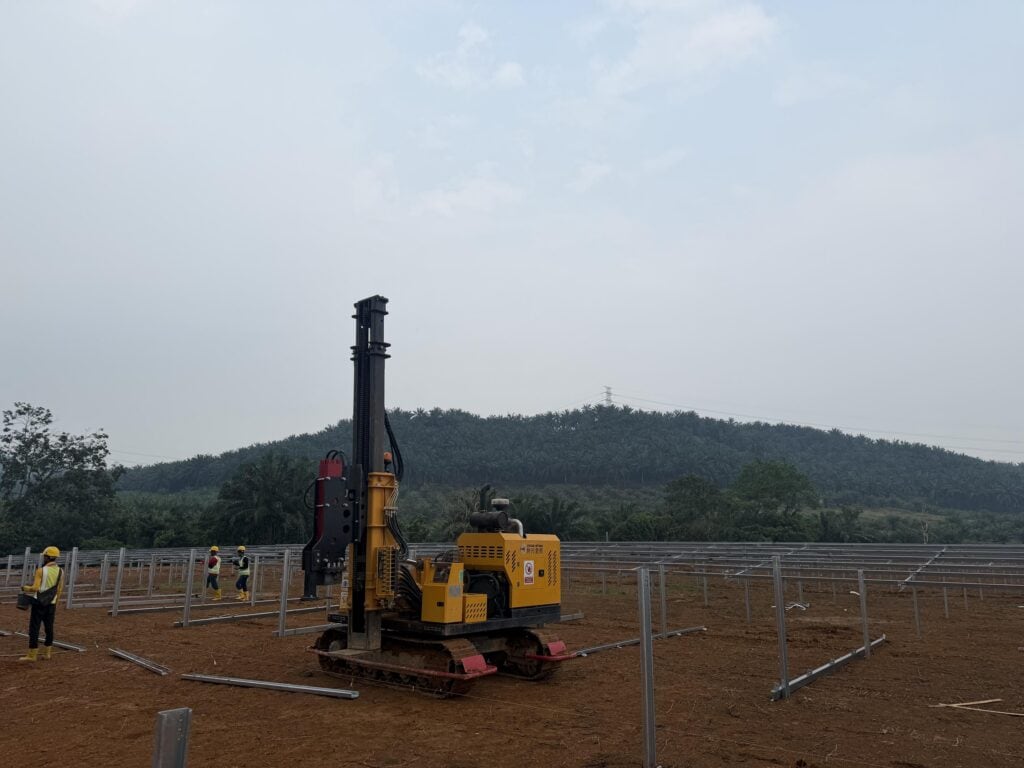
As the demand for clean energy continues to rise, modern construction professionals require dependable equipment that can adapt to challenging geological factors. Whether you need a standard pile driving unit or specialized machinery for unique soil conditions, finding a trusted service provider with competitive price options is essential. If you wish to learn more about upcoming technology trends or need assistance selecting the ideal system, feel free to contact our team to explore what the future holds for foundation engineering.
Pile Driving In Solar Projects
Noise and ground vibration can influence equipment selection, particularly in urban construction, environmentally sensitive areas, and projects located near existing buildings or underground utilities.
Impact pile driving generates repeated hammering noise and ground vibration. These effects may require additional monitoring, working-hour restrictions, or mitigation measures, depending on the project location and applicable regulations. The magnitude of the impact varies with hammer type, pile characteristics, soil conditions, and distance from nearby structures.
Vibratory pile driving typically produces a more continuous vibration pattern and may reduce some of the impulsive noise associated with impact hammers. However, it is not a vibration-free or universally quieter solution. Vibratory equipment can transmit substantial ground vibrations, and its suitability near sensitive structures must be assessed through engineering evaluation and, where necessary, vibration monitoring.
Contractors should therefore compare both methods in terms of noise exposure, ground movement, nearby structures, and environmental requirements. Selecting equipment based on site constraints can help prevent disruption, reduce project risks, and support compliance with local construction standards.
Conclusion: Hydraulic vs Vibratory Systems
The modern construction sector relies heavily on powerful machinery to secure piles into the ground. An impact hammer utilizes high-velocity force, often powered by a diesel engine or a specialized hydraulic system, to drive heavy steel beams deep into dense soil. In contrast, a vibratory driver utilizes rotational force and rapid oscillations to liquefy surrounding terrain friction, allowing the pole or structural element to slide smoothly into place with exceptional precision.
A robust hydraulic pile driver is typically equipped with a sturdy mast and specialized hydraulic components, ensuring maximum capacity and operational efficiency. Depending on the industry, choosing the right attachment can significantly reduce installation times while optimizing the overall budget. Top manufacturers and suppliers offer a diverse range of units directly from the factory, catering to both domestic and international sales.
In conclusion, selecting between impact and vibratory pile drivers requires a thorough evaluation of project demands, ground conditions, and equipment capabilities. Modern machinery is supplied with essential safety features that ensure reliable, high-precision operations across various tasks—from driving standard structural piles to handling traditional wood posts or heavy steel beams. Whether using a versatile skid steer attachment or a specialized hydraulic rig, every operational aspect from ramming depth to multi-purpose hydraulic functions is fully covered to optimize structural stability, site safety, and overall ROI for modern foundation projects.
FAQs
How do impact pile drivers and vibratory pile drivers differ in application across different soil conditions?
Impact pile drivers use a high-energy hammer to drive piles into heavy, cohesive, or dense soil conditions through direct downward force. In contrast, vibratory pile drivers use continuous high-frequency vibrations to reduce friction between the pile and the ground, making them ideal for granular, soft, or sandy soils. Choosing the right machinery depends on factors like soil density, noise restrictions, and project structural requirements.
Which pile driver is better for solar pile installations and foundation stability?
Both methods are widely used in the modern solar industry, but hydraulic impact pile drivers (often integrated as specialized solar pile drivers or excavator attachments) are frequently preferred for high-precision, heavy-duty solar pile installations. They ensure maximum load-bearing capacity and stability in challenging terrain. However, vibratory drivers excel at fast ramming in looser soils, significantly accelerating installation speed for large-scale solar projects.
Contact EVERSTAR for Solar Pile Driver Machines
Ready to optimize your next solar pile installation or structural foundation project? Contact our engineering team today to find the ideal hydraulic pile driver tailored to your soil conditions, site specifications, and budget. Request a custom quote or schedule a free technical consultation today!

